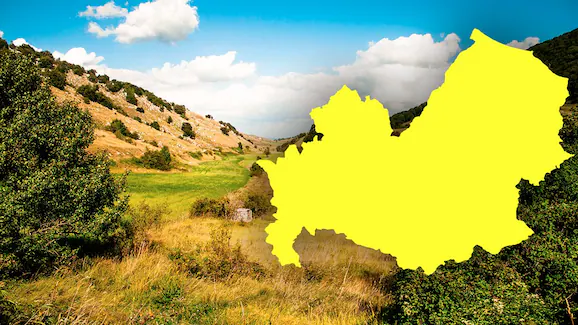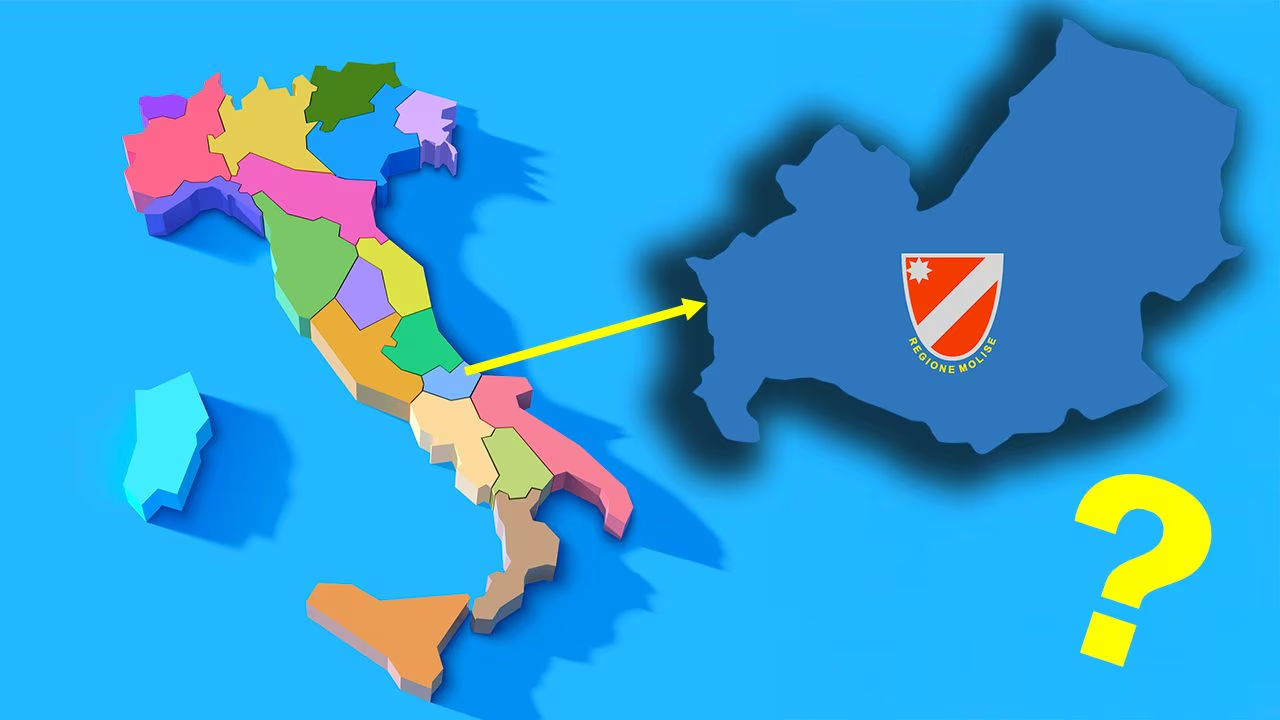
Among the many memes circulating on the web, one in particular has been consolidated on our social networks for some time now, namely “Molise does not exist”. But where did this idea come from?
Molise is one of the smallest Italian regions, the second to last in terms of surface area and population after Valle d’Aosta, which is located in southern Italy. Overlooking the Adriatic Sea with a short stretch of coast and developing inland close to a wonderful hilly and Apennine landscape, this region is the youngest in our country: it was born in 1963 from the separation with Abruzzo, or, better said, from the dissolution of what was originally the Abruzzi and Molise region, established in 1948 by the Italian Constitution. Molise currently has two provinces, that of Campobasso and that of Isernia, and borders Abruzzo, Lazio, Campania and Puglia, regions with which it shares important landscape treasures, among which we certainly find the Meta Mountains and the Abruzzo, Lazio and Molise National Park.
Therefore, despite a well-defined and nationally recognized identity, Molise is often considered “invisible”, so much so that the ironic phrase “Molise does not exist” has gone from being a simple meme on social media, with hashtag as molesn’tto becoming something more rooted in pop culture.
The reasons are many and at the basis of this conception there is certainly a combination of several factors: to begin with, and as we have already said, Molise is among the smallest and least populated regions in Italy, with today less than 300 thousand inhabitants distributed over an area of 4,459.80 square kilometers.
Secondly, the region does not host large infrastructural hubs or important communication routes, such as airports or ports of importance in international trade, and the media resonance, both in Italy and abroad, of its historical, environmental and artistic riches, all too often takes second place when compared to those of the giants of Italian cultural heritage, such as Veneto, Lazio, Tuscany, Campania and Sicily.
In short, Molise almost seems to escape the radar of the media and public opinion, remaining shrouded in its velvet silence which makes it even difficult for those who don’t know it well to appear on maps. Stating that “Molise does not exist” is therefore more an ironic way to highlight its discretion, especially at a media level, rather than real misinformation or simple ignorance. In fact, the region exists and tells a thousand-year history, in which culture, nature and landscape are closely linked, transforming its territory into one of the many gems of our country, but, fortunately, not yet suffocated by mass tourism.
Paradoxically, in recent years the iconic phrase has been able to bring Molise back to the center of attention, characterizing itself almost as a slogan, if not even an invitation, to discover authentic places that are part of the history of Italy and no less worthy of attention than the most popular places in our country.