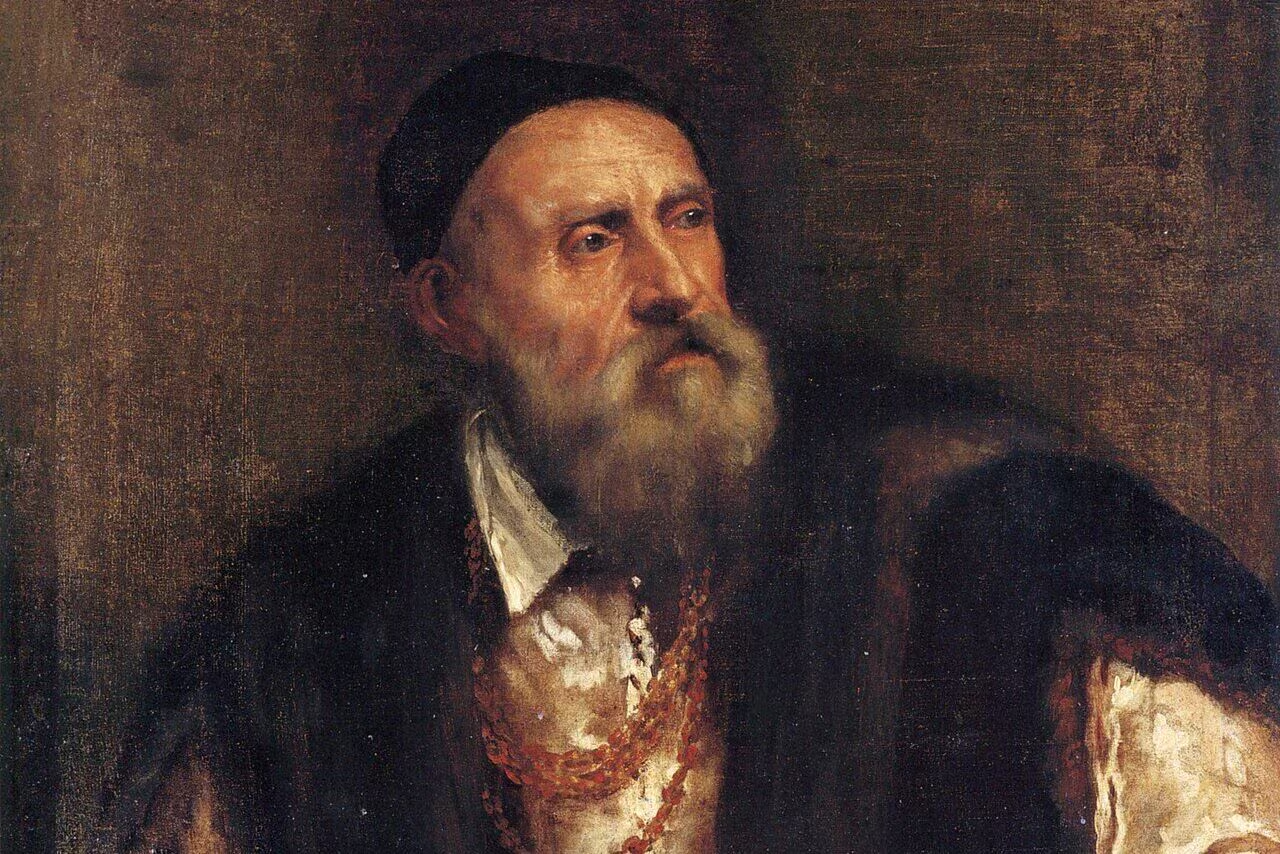
It was the end of the summer of 1576, and the plague was claiming victims in Venice: exactly on August 27, 450 years ago, the most illustrious of these victims died, the great Venetian Renaissance painter Tiziano Vecellio (Pieve di Cadore, 1488/1490 – Venice, 1576), then at the height of his fame. A success so out of scale that it overcame the restrictions imposed by the health emergency, guaranteeing him a funeral with great pomp in San Marco and burial in the Basilica dei Frari. But how did Titian come to have such a celebrity in his lifetime? Here are the five fundamental facts to get closer to the official painter of the Serenissima, whose most famous work is the Venus of Urbino, painted in 1538.
He was a great experimenter with colour: Titian red
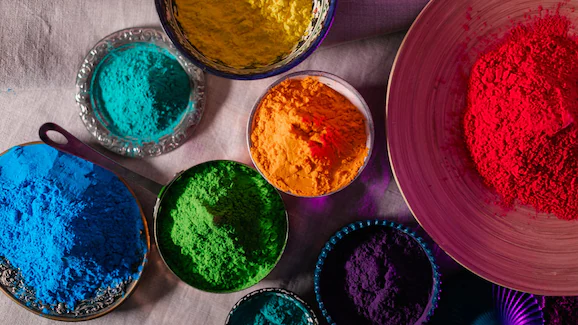
Titian was a great experimenter with color throughout his life, always making innovative use of it. The most famous of these experiments led him to create particular shades of red with cochineal, an insect from the Americas that contained a large quantity of carminic acid: once pulverized, it could be used as a pigment. Titian contributed, together with Giorgione, to the development of tonal painting, reaching an almost impressionistic use of color at the end of his career.
He changed European painting within the best courts: the masterpieces
Titian profoundly renewed European painting, producing a profound influence on the baroque art that would follow him with a great variety of themes and works, from official portraits to religious scenes, from self-portraits (many of which have unfortunately been lost) to works of a pastoral nature. This level of influence would not have been possible if he had not had access to the best courts in Europe. From the extraordinary Assunta dei Frari (1516-1518), which marked his affirmation in the Venetian panorama, to the famous portraits of the Holy Roman Emperors Charles V and Philip II, throughout the 16th century there were no doors that did not open for Titian.
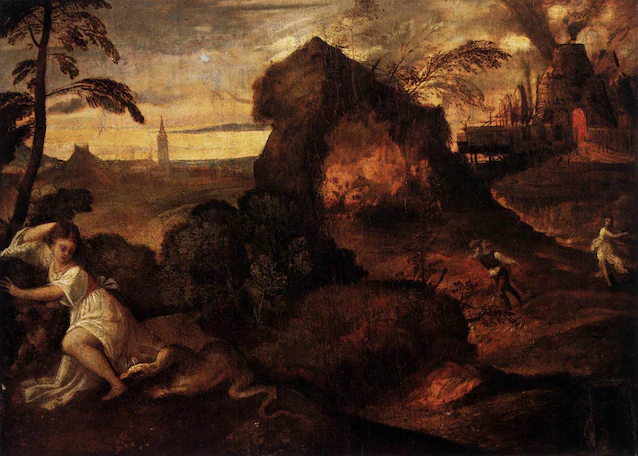
The landscape becomes the protagonist
According to the leading Titian experts, with his work the landscape ceases to be just a decorative element, as was customary in the Renaissance, and becomes an essential visual component: figures and landscape are fully integrated. This new landscape concept developed greatly in the first half of the sixteenth century (especially in Veneto) also thanks to two of Titian’s collaborators, Giulio and Domenico Campagnola, becoming a model for all European landscape artists until the first half of the nineteenth century.
He has had a very long career and has never stopped innovating
It cannot really be said that Tiziano ever shied away from working. In fact he continued to paint until his death, which occurred at the age of approximately 86, crowning a career that covered much of the sixteenth century. Not only that: his latest works show how he continued to experiment, such as the Pietà dell’Accademia (1576), created with quick and almost unfinished touches.
Despite his success he never forgot the country he came from
Although his success took him to the most important European courts throughout his life, Titian never forgot his native Pieve di Cadore. In the Brief Compendium of Titian’s Life of 1622, the painter Tizianello, his descendant, recalls the Master’s desire to be buried in the family chapel. Unfortunately, as we know, this was not possible due to the plague that gripped Venice: however, his birthplace remains in Pieve (now a museum).