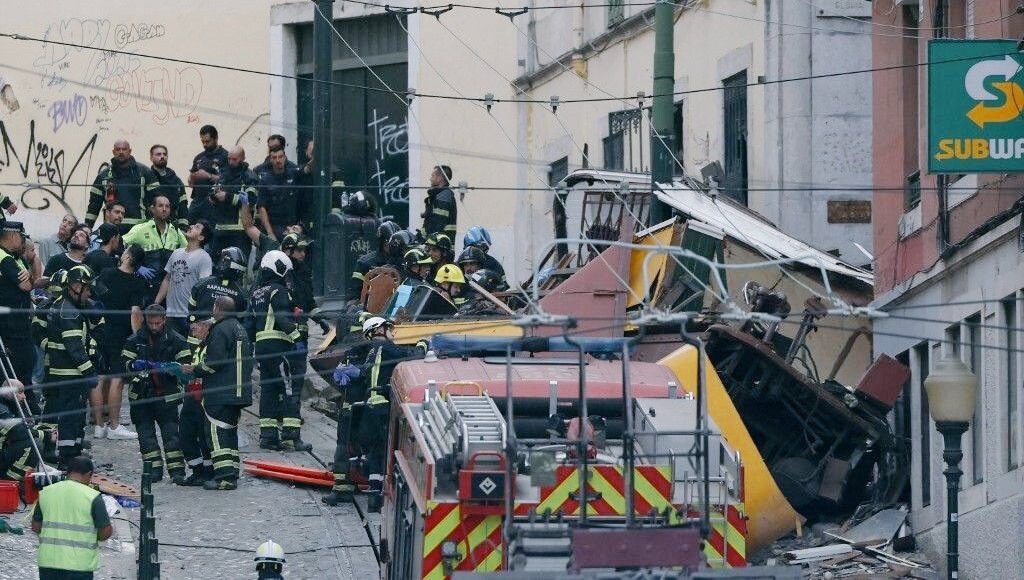
The glory funicular in Lisbon, a national monument, is derailed by the tracks, crashing into a house and causing the death of 17 people and the injury of at least 20. The carriage of the Alla elevador line from Glória, one of the three funiculars of the city that connects Praça Dos Restauradores with the Jardim de São Pedro de Alcântara, has lost control around 6.15 pm on September 3, 2025. He went down precipitating for the steep descent. The causes of the accident, which took place in Rua da Gloria in the stretch that connects Restauradores Square to the central district of Lisbon Barrio Alto, are still under consideration by the authorities, in the meantime the company that manages the Portuguese transport Carris has declared with an official press release that the maintenance protocols have been carried out and respected. According to the first reconstruction of the local firefighters, a cable failure would be at the origin of the tragic race of the vehicle.
In the aftermath of the tragic event, Portugal declared national mourning, while the city of Lisbon three days of city mourning. The Portuguese Ministry of Health has communicated that among the victims of the accident there are both foreign and foreign people. Among the wounded there would be an Italian, as reported by Ansa.
The accident of the funicular to Lisbon: what happened
Around 6.15 pm on 3 September 2025, a carriage of the glory funicular in Lisbon is derailed by the tracks losing control and crashing into a building in Rua de Gloria. Ocular witnesses on the road and in the square below described that they saw the funicular “descending at full speed”, abnormally and without any apparent control. The racing of the wagon, which can transport 43 people in total, ended violently against a building adjacent to the tracks, close to the end of its path in the lower part of the city. The impact was described as “brutal”, so much so that the wagon “crumpled like a box”, trapping passengers between the sheets.
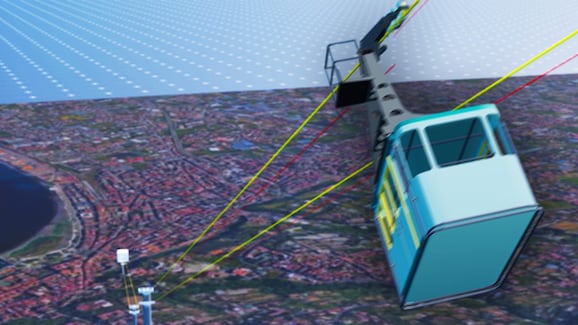
The funicular is a bound -driving terrestrial means of transport that transports one or two wagons with a rope (monofune), that is, it uses a cable that passes through a pulley to raise a wagon on a slope while the other goes down, with a movement called “A va e Ci”. So the purpose of a funicular is to connect places that are at the end of particularly steep slopes to transport people such as in the case of the famous funicular in Lisbon, inaugurated in 1885 and electrified three decades later, which connects Restauradores Square to the central district of Lisbon Barrio Alto. Also in Italy there are more than 30 plants of this type currently in operation, with Genoa, Naples and Bergamo in the lead by number of funicular, given the morphology of their territories.
The possible causes of the derailment of the glory funicular
The investigations to establish the causes of the tragedy are underway by the Portuguese authority. The first hypothesis, advanced by the firefighters immediately, is the Feeling of a cable. A structural failure to the towing cable would have made the function control lose control, leaving it at the mercy of the slope until the crash against the building. The second hypothesis, considered equally probable, is a Faning system failure of the vehicle. In this case, a central point of the investigation will be to understand the presence, role and any malfunction of the emergency braking systemwhich should have taken action to block the uncontrolled race of the vehicle and prevent the catastrophe.
The company that manages Portuguese transport Carris has declared with an official press release that the maintenance protocols have been carried out and respected. Specifically, he confirmed that both long -term planned interventions have been completed – the four -year general maintenance (carried out in 2022) and the biennial intermediate repair (carried out in 2024) – ose routine inspections on a monthly, weekly and daily basis.