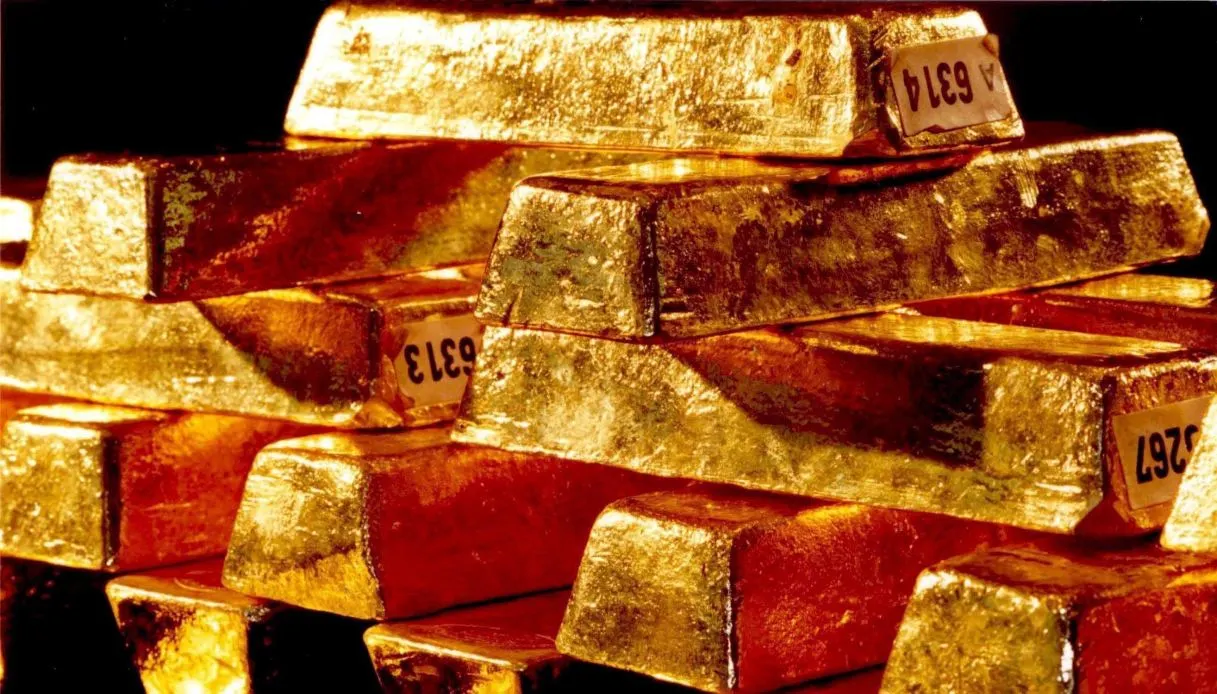
Since the start of the war in Iran, gold has lost 16% of its value, going from January peaks of 5,500 dollars an ounce to less than 4,500 dollars an ounce at the end of March. An apparently counterintuitive behavior for the asset that should be the liquidity refuge par excellence in times of instability.
However, the mechanism, experts explain, is perfectly coherent. Gold is not bought in a moment of crisis, but in anticipation of a difficulty, to defend liquidity and still have it available. The war in Iran has forced several state and financial institutions to sell their gold reserves to cover the unexpected expenses that the conflict entails.
Because gold has lost 16% of its value since the war began
Gold is a safe haven especially for central banks and financial institutions, such as banks and investment funds. These entities purchase it when they fear that liquid money may suddenly lose value, due to inflation or a decrease in interest rates.
When the crisis actually arrives, many institutions find themselves forced to spend liquidity to deal with unexpected events. Profit losses, cost increases, rising inflation. Any reason that leads banks, funds, companies and states to spend money can be the cause of a massive sale of gold.
In this context, John Reade, market strategist at the World Gold Council, explained to Ansa, gold works like an insurance policy. You pay the premium when you purchase it and, in times of crisis, it provides the resources you need to deal with unexpected expenses.
Who needs to sell gold and why
The war in Iran has pushed various institutions, both state and financial, to sell massive quantities of gold. An example is the Arab states of the Persian Gulf. Affected by Tehran’s retaliation, Saudi Arabia, the United Arab Emirates, Qatar, Bahrain and Kuwait are trying to support their economy in crisis also through the sale of gold.
Then there are investment funds such as ETFs, listed on the stock exchange. The decline in stock values means these entities must find resources to pay investors the promised returns even when they fail to beat the market. For this reason, many ETFs maintain significant stocks of gold, approximately $450 billion in value.
Then there are the central banks. Some need to sell their gold reserves out of necessity, such as the Turkish one to stabilize the lira in crisis or the Polish one, to support state expenditure in the defense sector. Others do it out of opportunism, like the French one, which made a significant capital gain of 12.8 billion euros by selling 129 tons of ingots stored in the USA to buy the same number in France.
Will gold start to rise in price again?
Given the way it behaves in the financial markets, gold can also be used to understand the state of the crisis it is reacting to. In the case of the conflict in the Middle East:
- an increase in the price of gold would mean that the markets believe that the crisis is over;
- a drop in the price of gold signals that sales continue and that the crisis is worsening;
- the stability of the gold price means that the crisis is at a standstill.