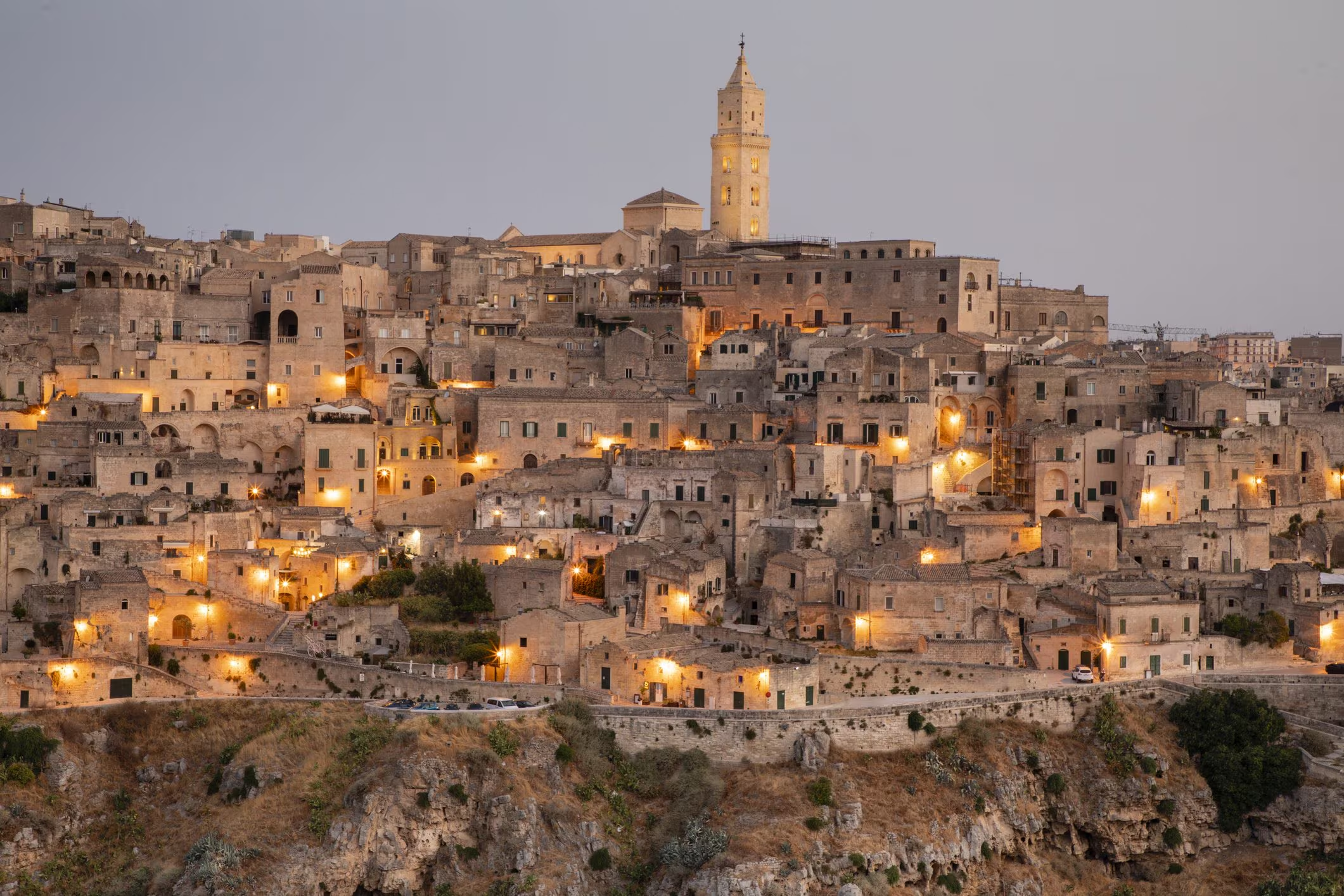
Maratea is nicknamed the “city of 44 churches”, due to the countless places of worship present in its territory: almost one for every 100 inhabitants. Its particular position and geographical conformation, in addition to making it the Pearl of the Tyrrhenian Sea, has in fact determined a development of places of worship spread far beyond the historic center of the city: from the Basilica of San Biagio on the hill where the statue of the Redeemer stands to the many parishes present in the hamlets. Let’s see in this article its history and why it has so many churches.
1 asked for every 100 inhabitants: why Maratea has so many churches
When it comes to the city with the most churches in the world, the absolute primacy goes to Rome, which hosts the largest church in the world. But if we instead consider the relationship between religious buildings and inhabitants, Maratea stands out. This small town in Basilicata in fact has around 4500 inhabitants, but is nicknamed the city of 44 churches. Doing the calculations, an impressive density emerges: almost one church for every 102 inhabitants!
This peculiarity is due to its truly unique history.
The origin of the city is very ancient: based on archaeological finds found in the caves of Fiumicello beach, it is even thought that it dates back to the Paleolithic era, almost 100 thousand years ago. The spread of churches, however, is mainly linked to the medieval and modern era. Thanks to its strategic position on the Tyrrhenian Sea, Maratea was in fact an important transit point for merchants, pilgrims and religious orders, who left traces of their passage by building votive chapels, oratories and sanctuaries dedicated to the various patron saints or corporations.
Another element that makes it unique is the geographical conformation: Maratea is in fact made up of numerous hamlets distributed between the coast and the hills of the hinterland. This territory has favored the birth of many small local communities, each of which has developed its own religious identity, building a reference church. Over time, other buildings of worship linked to brotherhoods, monastic orders and popular devotions were added to these, creating a religious heritage that is widespread throughout the area and not concentrated in its historic centre, as usually happens.
The most famous churches in the city
The main place of worship is the Basilica of San Biagio, dedicated to the patron saint of the city. Its importance is also linked to its position: it is in fact located at the top of the mountain of the same name, near the statue of the Redeemer, where the remains of ancient Maratea stand, and which represents one of the most spectacular panoramic points in the area.
Another particularly ancient church is that of San Vito: it dates back to around the year 1000, when the inhabitants began to build the first houses in the upper part of the current historic centre.
Another important place of worship is the Church of Santa Maria Maggiore, also known as the Mother Church, the Church of the Annunziata with its characteristic bell tower, and that of the Addolorata, in front of which stands the obelisk of the same name with the statue of the Madonna Addolorata.
In the valley area there are also monasteries and convents linked to the various religious orders that have inhabited the area over time. What they have in common are the sixteenth-century frescoes in which a Madonna with Child on the Throne is almost always depicted, with the Saints at her sides.
All the hamlets also have their own church, each dedicated to the Saint to whom the local community is particularly devoted. This dense religious heritage shows how the relationship between geography, population and faith can shape a territory with unique characteristics, making Maratea a place where each church tells a piece of local history.