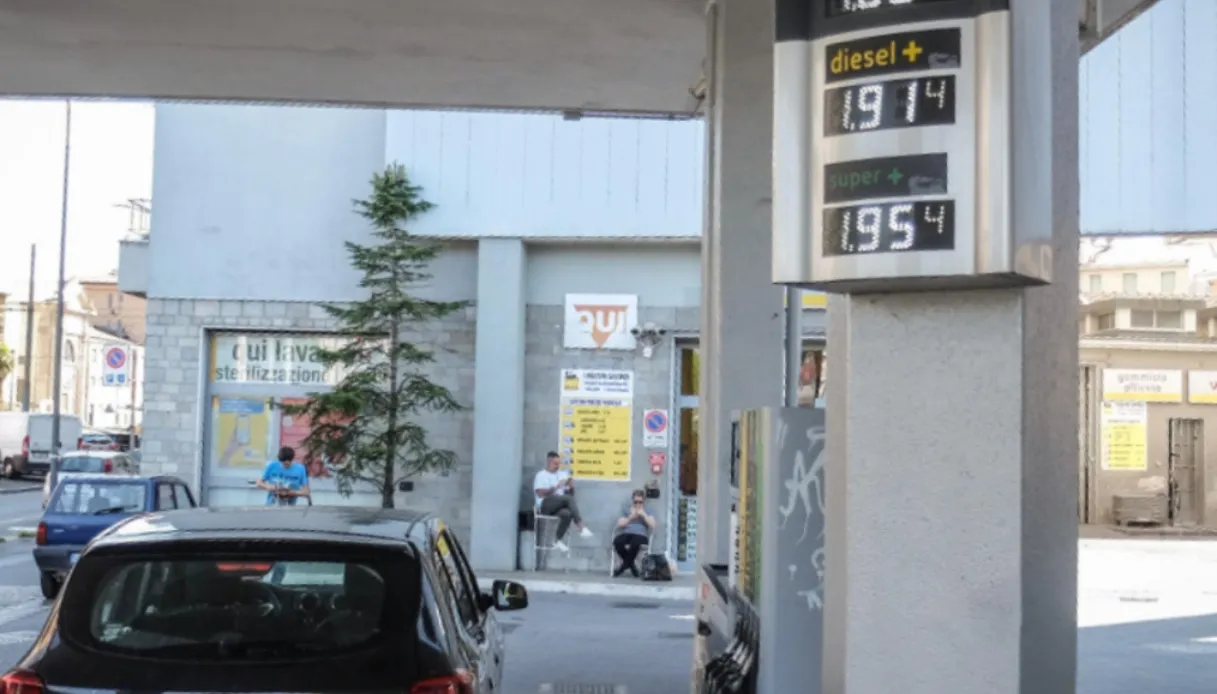
Italy remained in suspense over the excise duty cut. The Council of Ministers met to decide, among other things, on the measure expiring on the night between 1 and 2 May. Without an extension – the worst scenario for motorists and others – the impact on prices would have been high: the 24.4 cents discounted by the cut would have immediately returned to show up at the pump.
The expiring cut has already cost a lot and the resources have been recovered from other sectors. The estimate for the 30-day extension was an additional cost of around 400 million euros. The Council of Ministers therefore approved an extension, but a reduced one: 21 days and differentiated between diesel and petrol.
Mini-extension approved
On the agenda was the excise duty cut, its sustainability and what other cards the executive has at its disposal to support citizens and businesses in what has been defined as the worst energy crisis in history.
In the hours before the Council of Ministers, Prime Minister Giorgia Meloni had already specified that alternative plans were being evaluated, such as a cut in excise duties reduced to some categories.
He explained:
We are evaluating not to cut horizontally. Petrol increased by 6% on average, diesel by 24%. It could be a cut that has a greater impact on the price of diesel.
So the reduced extension of 21 days and differentiated for diesel and petrol does not come as a surprise. The discount for diesel remains unchanged at 20 cents per litre, while petrol will only be discounted by 5 cents per litre.
The resources for this further extension come from Antitrust sanctions and VAT extra revenue. As regards wheeled transport, a specific measure will have to be awaited after a comparison with the category.
Petrol and diesel prices during the war
The prices of diesel and petrol during the war came close to and exceeded (in the case of diesel) the threshold of 2 euros per litre. Sky Tg24 he put the data in a table, showing the distance between prices before and during the war.
At the beginning of the conflict, petrol was priced at 1.6 euros per litre, while diesel was around 1.7 euros per litre. In March the surge occurred: petrol shot up to 1.9 euros per litre, while diesel soon reached 2.1 euros per litre.
However, the cut in excise duties failed to absorb and cancel the increases dictated by the international scenario. After the “discount”, petrol continued to fluctuate between 1.6 and 1.7 euros per litre, while diesel ran up to 2.2 euros per litre.
Prices without the excise duty cut
Without the excise duty cut, Italy would have been the European country with the most expensive diesel. Without the extension the situation will be the same, with petrol approaching 2 euros per liter (according to estimates by Staffetta Quotidiana and Mimit it will stop at 1.99 euros per litre), while diesel will reach 2.3 euros per litre.
The extension
The excise duty cut measure was designed to be temporary, in response to a war that Donald Trump had announced would last a few weeks, maximum 4-5 weeks. The stalemate on the Strait of Hormuz and the negotiations brought oil to 107 dollars a barrel, down from the 126.4 dollars reached on the evening of April 29th.
The uncertainty about the end of the conflict made the need to act beyond the temporary measure immediately evident. However, the Council of Ministers discussed the possibility of extending the cut in excise duties which, after May 1st and for another whole month, will cost around 400 million euros. So far it has cost around 20 million euros per day.