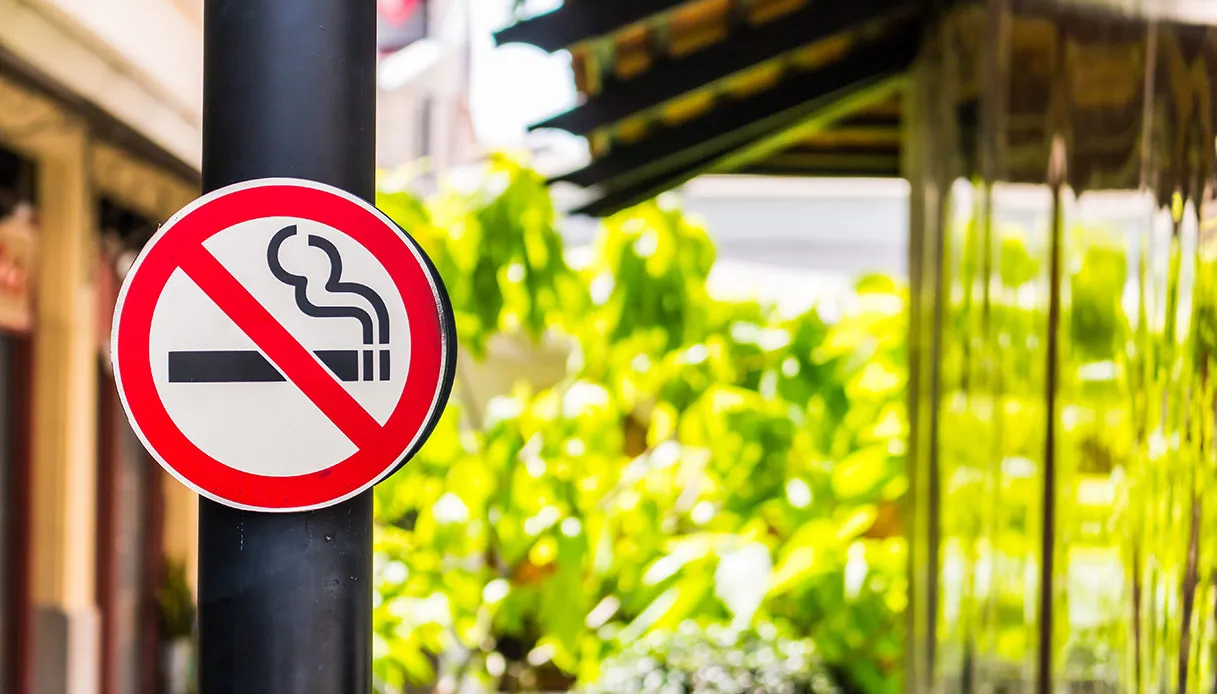
The European Conference on Tobacco or Health (ECToH), the main European summit on tobacco control, opens in Milan, with a very clear political and scientific mandate: “Nicotine-Free Spaces for Healthier Cities“, i.e. nicotine-free spaces for healthier cities. The event is organized for the first time in Italy by LILT, the Italian League for the fight against tumors.
The numbers speak for themselves. There would be almost 700 thousand deaths per year in the European Union due to an epidemic that still has 179 million tobacco and nicotine consumers on a continental level and as many as 12.4 million in Italy, including traditional cigarettes and new products. A context in which there is still a lot to do, also certified by the Tobacco Control Scale report according to which Italy has lost 14 positions in just 4 years, slipping from 18th place in 2021 to 32nd in 2025.
“Free” urban centers
The objective of ECToH Milan 2026 is to guide urban centers towards a radical transformation. In the coming years, cities will no longer be simple living spaces, but will have to become ecosystems that actively promote health. To do this, the congress strategy envisages a total de-nicotinization of public spaces: from schools to parks, from streets to public transport hubs, freeing the air not only from traditional smoke, but also from the aerosols of emerging products.
“ECToH brings together experts, policymakers and activists committed to promoting tobacco control across Europe. We have made important progress, but we now face new and evolving challenges. The rapid emergence of new nicotine products, combined with changing patterns of consumption, makes our work more urgent than ever. Robust policies and a shared commitment are essential to protecting public health. This year’s theme reflects a clear aim: cities must be environments that promote health, well-being and sustainability. From schools to parks, from streets to public transport, every space should make healthy choices the simplest choice.”
explains Juha Pekka Turunen, president of the European Cancer Leagues, who created and promoted the event for ten years.
In Italy, it should be remembered that advertising campaigns for electronic cigarettes and heated tobacco products are still permitted. Furthermore, the use of these new products remains permitted in numerous indoor environments, including bars, restaurants and workplaces, significantly contributing to the worsening of the Italian score within the Tobacco Control Scale report.
The actions of nicotine
For those who want to quit, the “addiction” to nicotine is particularly intense in the first days of cessation, then progressively decreases. Nicotine performs various actions, but often in a “biphasic” manner. Each of its activities can in fact be stimulating or depressant. The body’s final response to nicotine is therefore the sum of the different, often opposite, effects of the substance.
Nicotine can, for example, increase heart rate and blood pressure by acting on the local control centers of the “sympathetic” nervous system, on the adrenal medulla (a portion of the small gland that is located above the kidneys and produces catecholamines such as adrenaline and norepinephrine), and by activating particular chemical receptors present near the aorta and carotid artery. All these means induce the response which after a few minutes, the times depending on the quantity of nicotine, is however overwhelmed by the control mechanisms which induce an exactly opposite reaction.
Nicotine has an initial stimulating action on the nervous system, especially on breathing. But even in this case, after a short time the depression of these responses is greater. Finally, nicotine increases bowel movements because it acts positively on the nerves that control the intestinal muscles. When the substance is present, therefore, there is a slight tendency to increase bowel movements which are followed by periods of constipation when smoking is stopped.
LILT’s commitment
“For LILT, prevention is not just a set of information campaigns or health interventions: it is a cultural and social vision that focuses on people’s right to live in healthy environments, free from addictions and avoidable risk factors”
reports Francesco Schittulli, breast surgeon-surgeon and oncologist, President of LILT Nazionale.
“In the fight against tobacco and products containing nicotine and/or carcinogenic substances, prevention represents the first and most effective tool for protecting public health. It means acting before the disease can develop, reducing exposure to risk factors, protecting above all young people and the most vulnerable groups of the population, and promoting a culture of collective responsibility. For this reason we are committed, starting from the LILT of Milan, on several levels: first of all through health education, which involves schools, families and local communities, with programs aimed in particular at young people to combat early initiation into smoking and the use of new forms of consumption of nicotine and harmful substances, which are now increasingly widespread and often mistakenly perceived as harmless, is represented by support for smoking cessation, through our clinics, multidisciplinary courses, counseling and support activities aimed at those who wish to free themselves from smoking.