The Ebola epidemic in the Democratic Republic of Congo is advancing rapidly. According to the latest data updated by the World Health Organization, there are 136 deaths and another 543 suspected cases. For this reason, the body convened the emergency committee to deal with what was defined as a “public health emergency of international concern”, or the second highest alert level.
Italy is also moving forward with the activation of health surveillance for staff employed in the virus outbreak areas. In a circular, the Minister of Health refers to the epidemic event as potentially serious due to the lack of therapies or vaccines. For this reason it has decided to apply supervisory measures for the staff of governmental, non-governmental organizations and other bodies employed in the country concerned and who will move to the territories of the Democratic Republic of Congo and Uganda.
Ebola epidemic: spread and cases
On Sunday 17 May, the World Health Organization declared the Ebola epidemic that broke out in the Democratic Republic of Congo an international health emergency. Current estimates, however very difficult to make, speak of 543 cases and 136 deaths, some of which in Uganda.
WHO director Tedros Adhanom Ghebreyesus said he was deeply concerned about the size and speed of the epidemic.
We remind you that the first victim of the new Ebola epidemic was a healthcare worker who showed the first symptoms on April 24, but the tests did not arrive until May 15.
According to them, the virus belonging to the Ebola family is a strain with a mortality rate of 32% called “Bundibugyo”. This is a strain for which there is no vaccine or drug to treat symptoms and for which there are still few testing tools.
It developed in a very complex area, between health deficiencies and an ongoing civil war, poorly controlled by the government and which in recent months has welcomed 100,000 displaced people. For this reason, it is suspected that the virus had been incubating since March and therefore had a long time to spread.
The WHO admits that some of the people who contracted the virus died before being isolated and this means that the data counted at the moment are only the tip of the iceberg.
Italy’s move: controls activated
The epidemic could therefore be much more widespread and has already crossed African borders. Peter Stafford, an American doctor, fell ill while working in the Nyankunde hospital in the area of the epidemic. Now his wife and another operator are at risk contacts and have been isolated.
The United States has banned non-American citizens from Uganda, the Democratic Republic of Congo and South Sudan from entering its territory. Italy has instead activated health surveillance.
NGOs that employ staff in areas where the epidemic is active will have to notify their return to Italy. However, if the symptoms appear during the flight, the plane will have to be diverted to Rome Fiumicino or Milan Malpensa, which are the two airports equipped for the isolation of passengers.
How does special surveillance work?
The special surveillance implemented by the Ministry of Health is therefore divided into some fundamental practices, which can be summarized as follows:
- those who employ personnel in the affected areas are required to communicate to the ministry the operator’s details, travel itinerary and entry details into Italy at least forty-eight hours before returning;
- if during the flight a passenger shows symptoms compatible with Ebola (fever, vomiting, weakness, bleeding), he or she must report it to the flight staff and the plane will be diverted to the two airports equipped for the isolation of passengers;
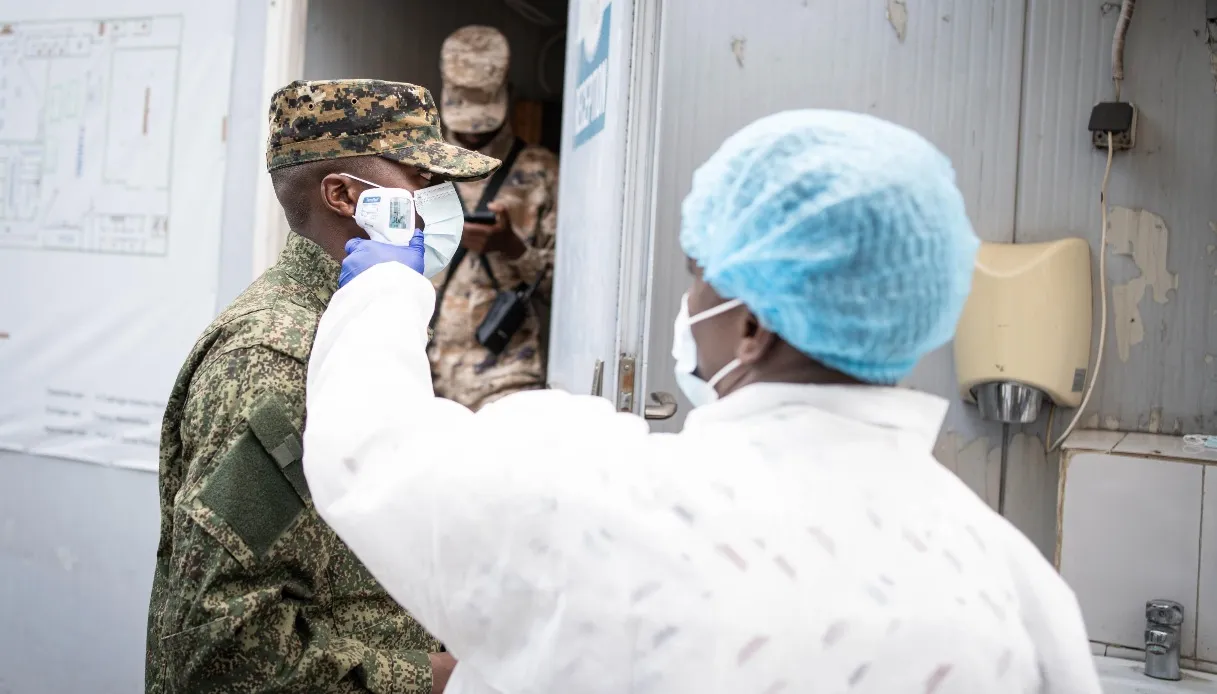
- if the operator is asymptomatic, upon arrival he must wait for the staff at the exit gate to check the medical history sheet and measure the temperature. If negative, surveillance is activated, if positive, the procedure provided for by the Usmaf ordinance and contact tracing are triggered.