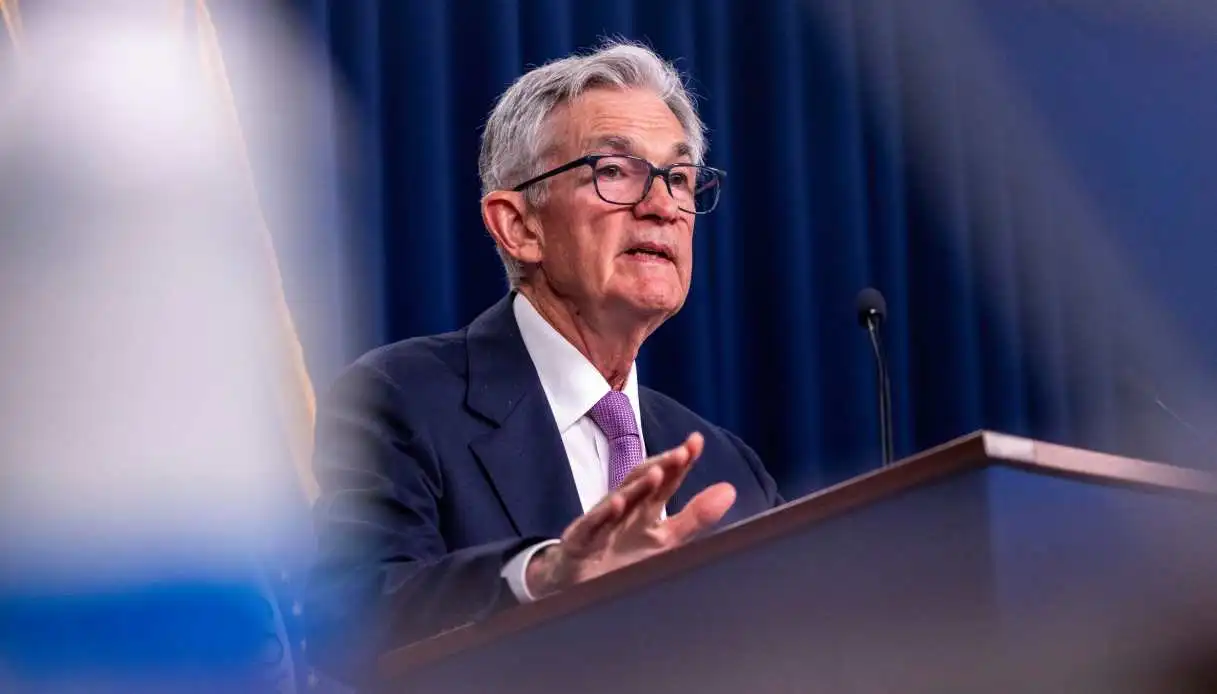
“Thanks everyone. We won’t see each other next time.” With these joking words, Jerome Powell, outgoing President of the Federal Reserve, greeted the journalists present at the press conference following the two-day meeting of the FOMC, in view of the expiry of his mandate on May 15th. To tell the truth, Powell will not leave the Monetary Policy Board, but will remain within it, at least until the legal investigation against him is concluded. In the meantime, the helm will pass to Kevin Warsh, his successor: just yesterday the Senate Banking Committee approved his election.
The Federal Reserve, meanwhile, has left interest rates stable in a range between 3.50% and 3.75%. A decision that surprised no one, considering the difficult macroeconomic situation after the start of the war in Iran. A picture characterized by rather high inflation, due to the surge in oil prices which yesterday reached around 120 dollars a barrel again, and a job market that is no longer growing as in the past.
A sharply divided FOMC
The decision to hold rates was approved by an 8-4 majority, the most dissents since 1992. Three members – Beth Hammack (Cleveland Fed), Neel Kashkari (Minneapolis Fed) and Lorie Logan (Dallas Fed) – supported holding rates, but objected to the statement’s inclusion of an “easing bias,” which suggested possible future rate cuts. Governor Stephen Miran instead voted against the decision, calling for a 25 basis point cut.
Inflation is excessively high
“Inflation is high, partly reflecting recent increases in global energy prices,” we read in the statement with which the FOMC announced, justifying its monetary policy decisions. On the other hand, “Middle East developments – underlines the Fed – are contributing to a high level of uncertainty regarding the economic outlook”.
The Board – it is confirmed – “pays attention to the risks on both sides of its dual mandate”, i.e. an inflation rate around 2% and full employment, the latter concept not numerically explicit, which therefore lends itself to multiple interpretations.
Powell confirms: difficult situation
President Powell confirmed in a press conference that the Fed is facing an “unusually difficult situation”, but specified that in this meeting “no one talked about increases” in interest rates. The Fed’s number one left the door open to any action, explaining “if we have to raise we will certainly do so and we will signal it. If we have to cut we will certainly do so”.
Powell will remain on the Board as governor
As expected, Jerome Powell will not leave the FOMC immediately, but will remain within it as governor after his term as President expires. The confirmation comes from Powell himself, who confirmed what he had previously anticipated, namely that he will remain until the criminal investigation against him and the investigation that the Department of Justice is conducting into the matter of the restructuring of the Fed headquarters is concluded. “I am staying because of the actions that have been taken, I previously expected to leave,” said Powell, explaining that this investigation “is an unprecedented action” that could “put at risk the ability to conduct monetary policy without taking political factors into consideration” and therefore the same independence of the Fed.