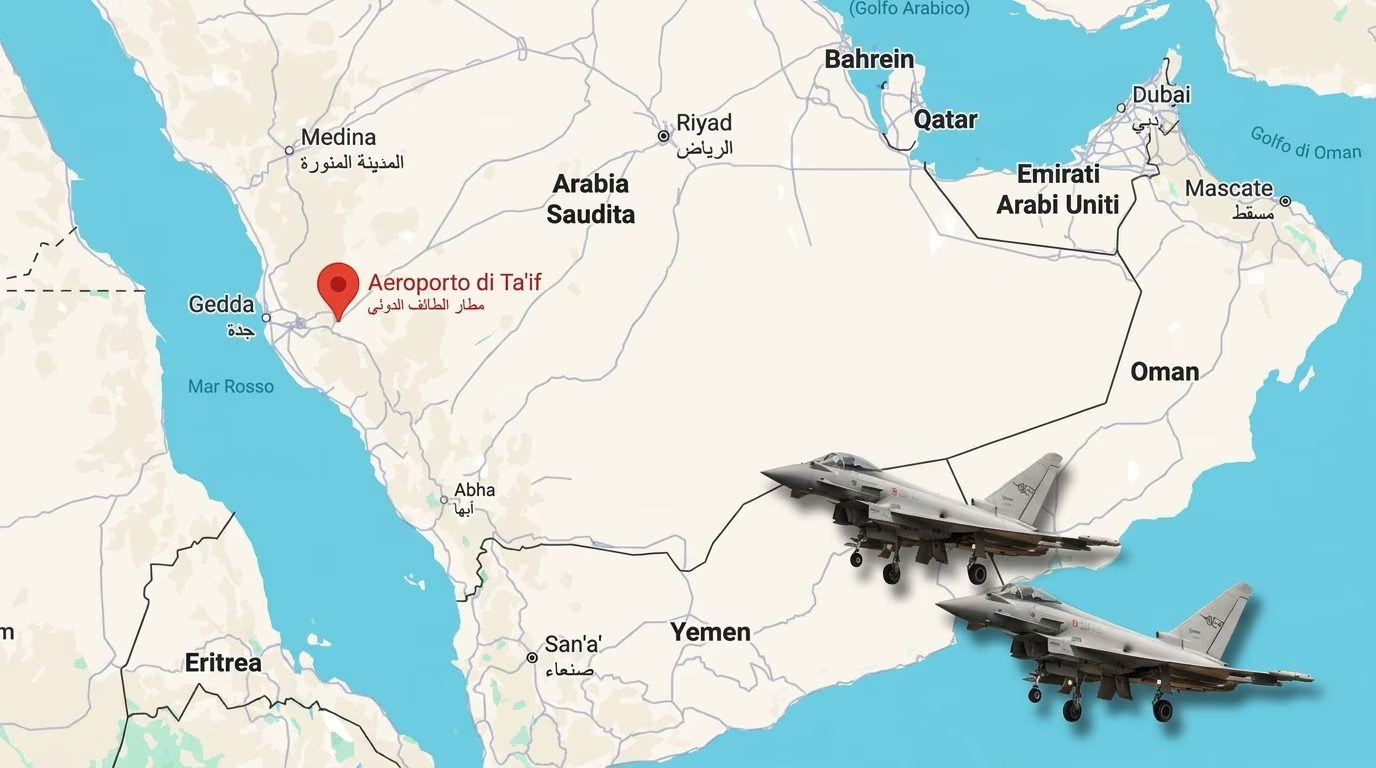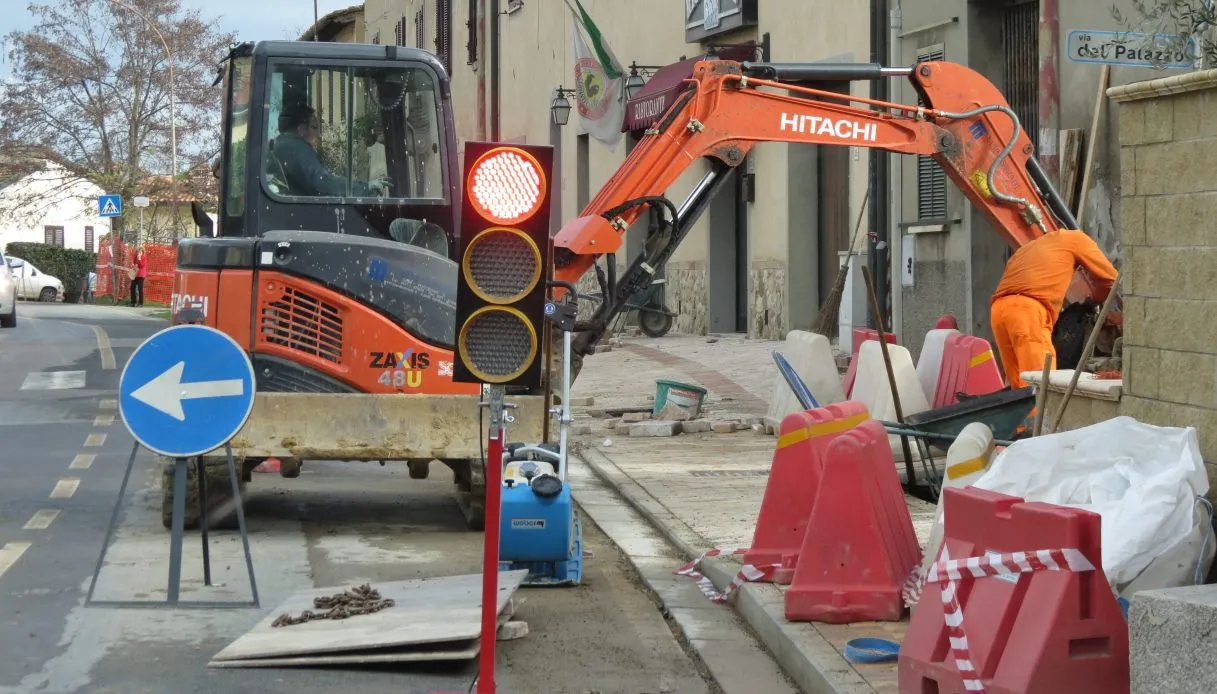
In recent weeks some Provinces and Municipalities have announced that they will not be able to completely asphalt the roads as planned. The reason is the price of bitumen, which has increased by almost 50% in recent months. Italy imports much of the bitumen it needs from the Middle East and the war in Iran, and the consequent closure of the Strait of Hormuz, has increased its price.
However, it is not just a problem of potholes in the roads. Many companies that won contracts for maintenance work on Italian roads proposed prices based on the cost of bitumen at the beginning of the year and now find themselves having to complete the construction sites at very high costs. Some, according to the main trade association, are at risk of closing.
The war in Iran and the potholes in Italian roads
In recent days the newspaper The Press published an article dedicated to road maintenance in the province of Asti. The president of the Province, Simone Nosenzo, warned that at the moment, of the 1,200 kilometers of roads that the Province should asphalt, maintenance is only expected for a stretch of 30 kilometres. “It will take us 30 years to finish,” commented Nosenzo, but the situation is also critical in other parts of Italy.
Similar situations are found in Castelfidardo, in the province of Ancona, but also in the province of Perugia, “Here we need urgent government measures if we don’t want to see fundamental works blocked. But not like those relating to excise duties on fuel, here we need courageous and strong choices” commented the president of the Province, Massimiliano Presciutti.
In all cases the problem is always the same: bitumen. A fundamental material for making asphalt for roads, which in the last two months has increased in price by almost 50%, exceeding 200 euros per ton. The provincial budgets were calibrated on much lower prices and now there is a lack of funds to asphalt the roads.
What is bitumen and why its price is increasing
Bitumen is the heaviest result of oil refining. It is obtained with the same process that produces petrol or diesel. Exactly like these fuels, therefore, its price was heavily influenced by the war in Iran and the closure of the Strait of Hormuz.
The increase in oil prices has therefore also led to an increase in the cost of bitumen production, which is having repercussions on road maintenance. Italy is one of the largest European producers of bitumen, with 2.6 million tonnes in 2023, according to data released by Unem, 62% of which is reserved for sale in the domestic market.
However, refining capacity is decreasing, because it is a very polluting process. Companies, therefore, tend to prefer the conversion of plants to more sustainable production. This is increasingly exposing Italy to foreign imports.
Because companies in the sector risk closing
Lack of road maintenance is not the only consequence of the increase in the price of bitumen. In fact, many companies that deal with asphalting roads are taking on heavy losses due to increased costs due to the war in Iran.
Most of the commissions of companies in this sector are public. This means that, in recent months, they have won public contracts, offering the local authorities that manage the roads prices based on the cost of bitumen before the start of the war.
They now find themselves having to spend much more than expected. Already in March Siteb, the main association of companies in the sector, had asked the government to intervene with extraordinary measures to address the situation.