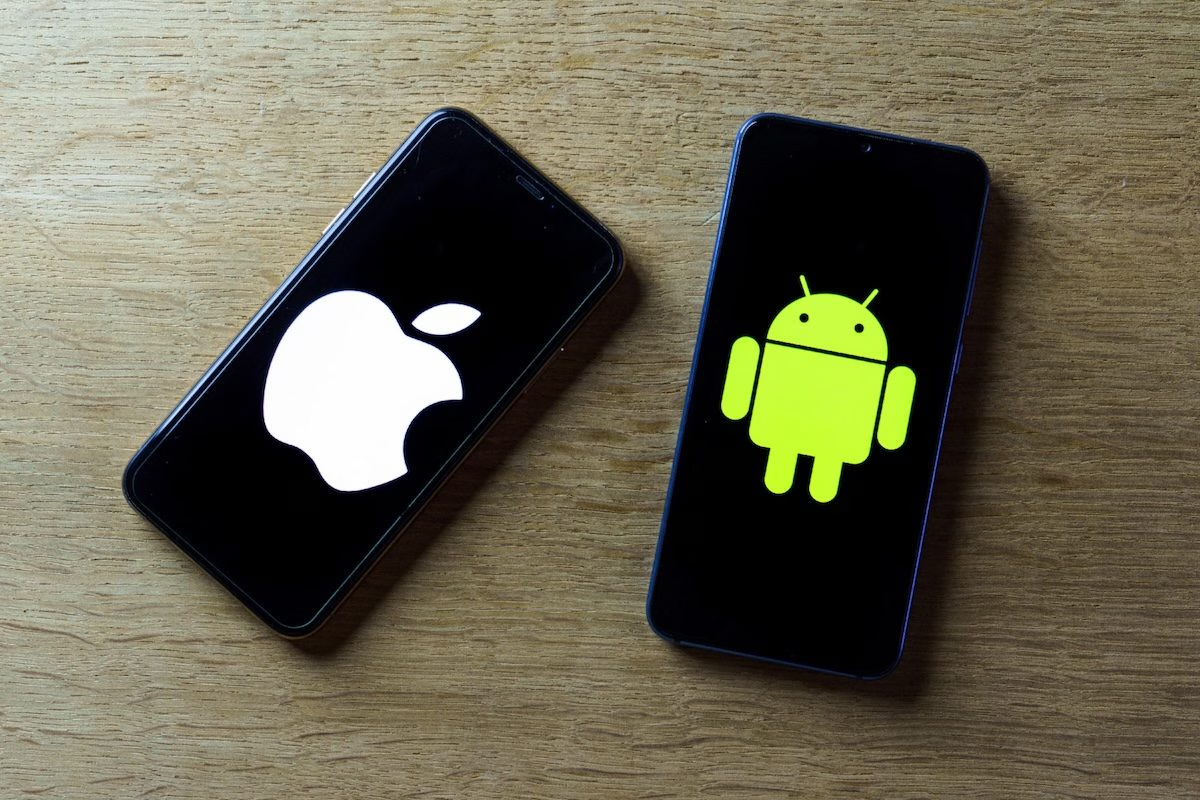
Changing smartphones without losing data, settings and functionality has always been more complicated than Big Tech has told us. Those who switched from an iPhone to an Android phone (or vice versa) often found themselves faced with incomplete transfers, disappeared chats, passwords that had to be re-entered from scratch and services that stopped working as before. From 1 June 2026, however, Europe will enter a new phase thanks to the Digital Markets Act, the European Union regulation designed to reduce the power of large digital platforms and restore more freedom of choice to users. The goal is to ensure that staying in the same technological ecosystem stops being a necessity dictated by the fear of missing out.
The new features concern not only contacts, photos and messages, but also passwords, saved Wi-Fi networks, application data and even the e-SIM. The relationship between iPhone and non-Apple accessories will also change: smartwatches, headphones and other third-party devices will be able to access functions that were previously reserved almost exclusively for “made in Cupertino” products. Let’s take a closer look at what will actually change.
From iPhone to Android: what changes from June 1st for smartphones
The most notable change concerns the complete transfer of data between iOS and Android. Apple and Google are developing a wireless solution that will allow you to move your information from one ecosystem to another directly while setting up your new phone. To tell the truth, similar tools already exist, but they often work only partially: some apps do not transfer data, certain settings are lost and many users find themselves completing the step manually. With the new system, however, the transfer should include contacts, calendar events, messages, photos, documents, passwords, access data to Wi-Fi networks and data from third-party applications. It is the so-called data portability, the possibility of moving one’s digital information from one service to another without losing it, the central principle of DMA, which will allow users to freely choose their device without feeling like prisoners of an ecosystem.
The management of the e-SIM also changes. Apple and Google have already started introducing tools to simplify phone number switching between Android and iPhone, with support from several European and international operators. Regarding this innovation, the European Commission explained that «Overall, data transfer solutions for devices and eSIMs will reduce reliance on a single operator and expand users’ freedom of choice».
What’s new for smartwatches, headphones and other devices
The news doesn’t stop at phones. By June 2026, Apple will have to implement new forms of interoperability, or the ability of different systems to communicate and work together, for third-party accessories. Non-Apple smartwatches will be able to fully view and manage iPhone notifications, including interacting with messages and alerts, an experience that has so far been almost exclusive to the Apple Watch. Quick pairing will also change: headphones, speakers and smartwatches themselves will be able to be paired with the iPhone simply by bringing them closer to the smartphone. There will also be the extension of automatic audio switching, the function that moves the audio of wireless headphones from one device to another without user intervention, even to non-Apple products.
Data transfer for mobile browsers
Data portability and interoperability are two concepts that will also be applied to browsers. Transferring browsing data between browsers has always been more difficult on smartphones than on computers, due to the restrictions of mobile operating systems. Apple has developed new APIs – software interfaces that allow applications to communicate with each other – to allow the bidirectional transfer of bookmarks, history and passwords between Safari and alternative browsers (such as Chrome or Vivaldi, two web browsers that are already equipped to import data from Apple’s browser), directly between apps and without going through the cloud.