What do a runner found frozen after a snowstorm have in common, another capable of pedaling 430 kilometers on dirt roads and a young climber who breaks away from Indurain on the Mortirolo in the rain? All three are protagonists of some of the most extreme stages in the history of the Giro d’Italia — a race that, more than any other, transformed the bicycle into a challenge to the limits of human endurance. Today, that eternal struggle between man and nature is repeated in the 109th edition currently underway. While the asphalt of the recent closed stage on the Naples seafront is still burning, the caravan is already looking towards the mountains. After the unprecedented departure from Bulgaria and the efforts of the recent stops in Naples and the Formia-Blockhausthe caravan and absolute champions like Vingegaard and Bernal are today engaged in the 156 km that separate Chieti from Fermo.
- 1 Il Bondone of 1956: Gaul emerges from the storm
- 2 The Lucca-Rome of 1914: 430 kilometers of effort
- 3 The Cuneo-Pinerolo of 1949: “A single man in command”
- 4The Mortirolo and the Stelvio in 1994: the myth of Pantani was born
- 5 The Gavia of 1988: the white hell
The Bondone of 1956: Gaul emerges from the storm
On 8 June 1956, the caravan leaves Merano in a freezing rain. The stage includes five hills, the last of which is Monte Bondone above Trento. Among the 87 runners in the race, unaware of what awaits them, is Charly Gaul, a 23-year-old climber from Luxembourg 17 minutes behind the pink jersey.
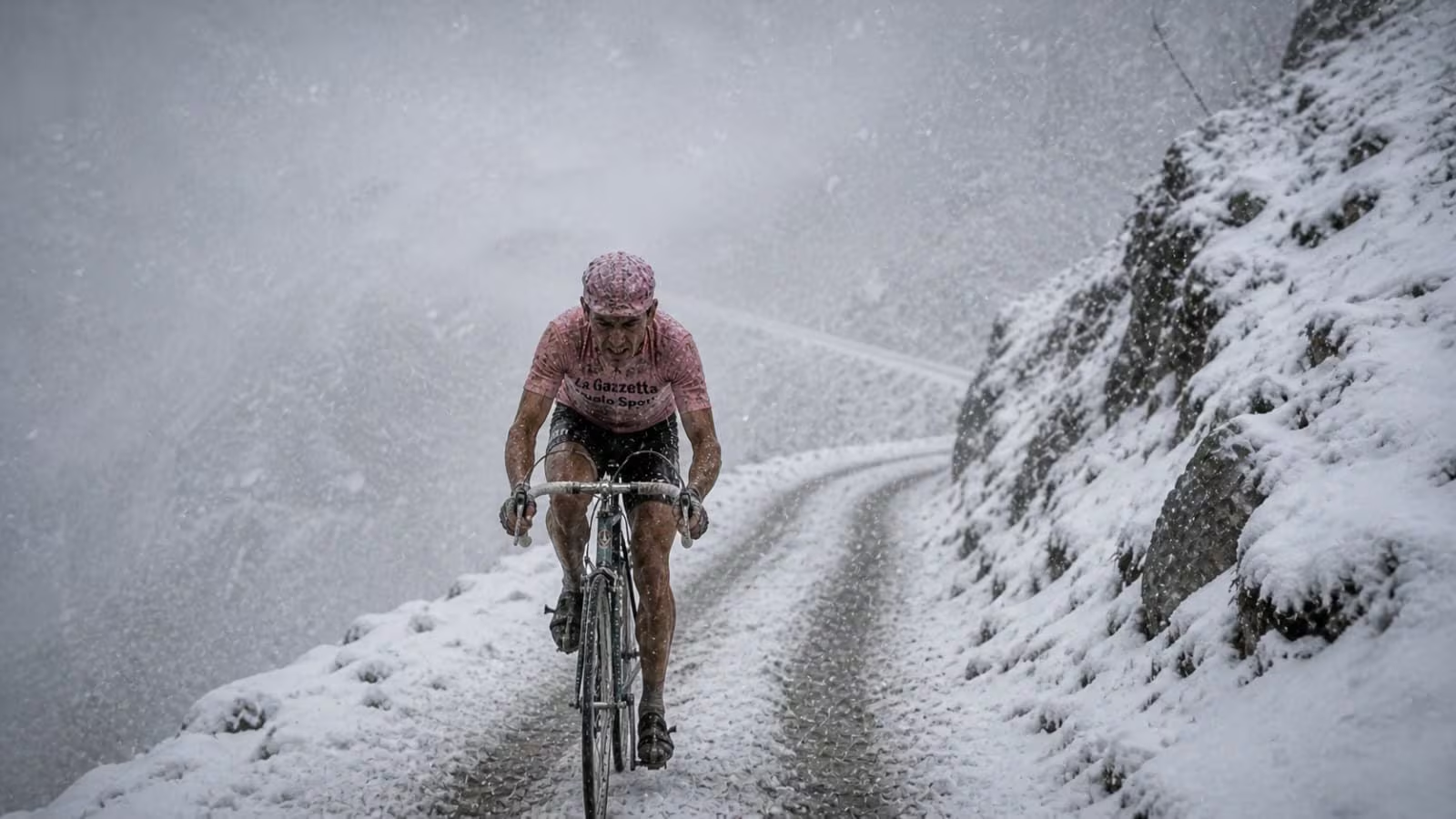
On Bondone the rain becomes a blizzard: 40 centimeters accumulated, temperatures below zero, visibility almost zero. The runners fall one after the other – over 44 withdraw due to frostbite – and some take refuge in the taverns along the road. Gaul doesn’t stop and reaches the finish line alone. They lift him bodily off the bike, with his hands still so tight on the handlebars that they have to force them off. Then, the darkness: he faints. They cut his frozen shirt with scissors and it will take him a whole hour, between rescues, to regain full consciousness and understand where he is.
The second place finisher arrives almost 8 minutes late. Fiorenzo Magni is third: he has a broken shoulder and is holding the handlebars with a strap between his teeth, an epic feat.
Thanks to this stage Gaul recovers 24 positions and wins the Giro.
The Lucca-Rome of 1914: 430 kilometers of effort
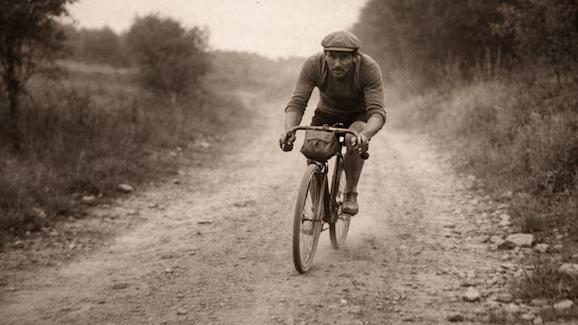
The 1914 edition of the Giro is considered the toughest stage race ever, a grueling challenge on dirt roads with stages with an average length of almost 400 kilometres, traveled at 23 km/h. The result was a sporting massacre: out of 81 starts, only 8 runners managed to cross the final finish line, marking a withdrawal percentage of 90%.
The absolute distance record belongs to the third stage: the Lucca-Rome measures 430.3 kilometers and is still today the longest stage ever held in the Giro, a record that no one has approached even more than a century later. The very young Costante Girardengo wins it in 17 hours, 28 minutes and 55 seconds – and wins in a sprint, after a whole day in the saddle.
During that stage, the longest solo escape in the history of the Giro was also born: the rider Lauro Bordin took advantage of a closed level crossing to escape from the group and remained alone in the lead for 350 kilometres, before being caught again a few kilometers from the finish line, exhausted after 14 hours of pedalling.
The Cuneo-Pinerolo of 1949: “A single man in command”
The seventeenth stage of the 1949 Giro connects Cuneo to Pinerolo – 50 kilometers as the crow flies – but to get there it passes through France climbing five large Alpine passes: Maddalena, Vars, Izoard, Monginevro and Sestriere. In total 254 kilometers and over 5,000 meters of altitude difference.
Fausto Coppi already sprints up the first hill and never looks back: 192 kilometers of solitary escape, one of the most spectacular athletic feats in the history of cycling. What also makes that day immortal is the voice of radio commentator Mario Ferretti: “A single man is in command, his shirt is white-blue, his name is Fausto Coppi.” Gino Bartali arrives in Pinerolo more than 11 minutes late.
In 2012 the Gazzetta dello Sport asked around a hundred journalists from all over the world to choose the most beautiful stage in the history of the Giro: the 1949 Cuneo-Pinerolo victory, which over time has become the emblem of heroic cycling.
The Mortirolo and the Stelvio in 1994: the myth of Pantani was born
The Mortirolo Pass is one of the most feared climbs in cycling: 12.5 kilometers with an average gradient of 10.5% and peaks of over 20%. The Giro climbed it for the first time in 1990, but it was in 1994 that this mountain became legend.
The stage starts from Merano and arrives in Aprica after crossing some of the hardest climbs in the central Alps: first the Stelvio, then the Mortirolo from the Mazzo side, the most ferocious, and finally the ascent towards Aprica. It’s a cold day, run in the rain and with over 5,000 meters of overall altitude difference.
A young Marco Pantani – as can be seen in the video below – attacks the Mortirolo ramps and overtakes Gianni Bugno, Claudio Chiappucci and Miguel Indurain one after the other, climbing at a speed never seen before on that mountain. He reaches the finish line in Aprica with more than two minutes on his first pursuers – Induráin pays more than three minutes and the pink jersey Berzin more than four. In just one stage Pantani went from sixth to second place in the general classification.
From that day on, the Mortirolo became a symbolic climb of the Giro d’Italia and of the rise of the Pirate. Today the climb is also officially known as “Cima Pantani”.
The Gavia of 1988: the white hell
On 5 June 1988, the stage from Chiesa Valmalenco to Bormio: 120 kilometres, apparently manageable, but with a passage over the Gavia Pass at 2,621 metres. The forecast announces the possibility of snow, but we decide to run anyway.
Runners start out in shorts and short-sleeved shirts. On the Gavia the situation worsens: first rain, then thick snow, finally a storm. The Dutchman Johan van der Velde attacks without a jacket or gloves, he goes down the hill first but has a complete crisis on the descent towards Bormio, tackling it without even wearing a cape. Frozen, he stops in a shelter along the road to try to warm up before setting off again. Many other riders arrive at the finish line in a state of hypothermia, unable even to get off their bikes without help.
The only truly prepared team is 7-Eleven: the sports director had bought balaclavas, waterproof gloves and thermal jackets to distribute to their runners a few meters from the top. Andy Hampsten wears them, survives the descent and wins the pink jersey, becoming the first non-European to win the Giro d’Italia. Years later he would recall: “we could spend hours trying to explain how cold it was.”