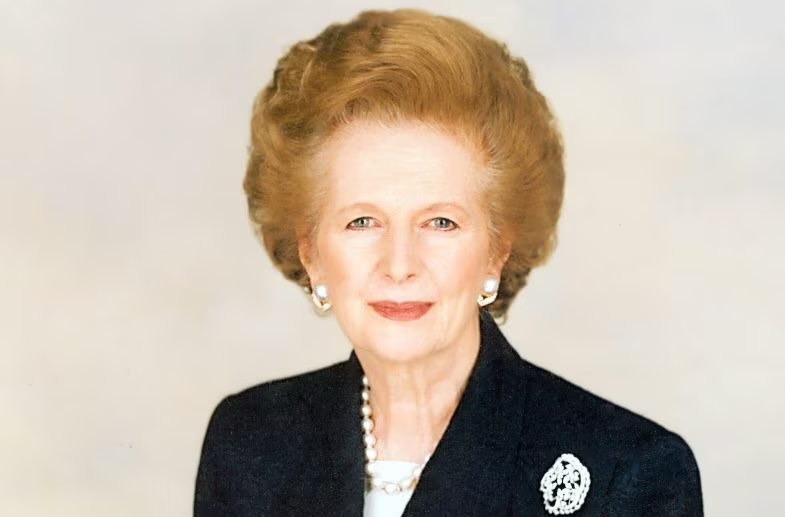
Margaret Thatcher, born in 1925 in Grantham with the name Margaret Hilda Roberts and died in London in 2013, was Prime Minister of the United Kingdom from 1979 to 1990. She was nicknamed the Iron Lady (iron lady) for the inflexibility shown in his political choices, but also a milk thief (milk snatcher), because as minister he abolished the free distribution of milk to children in schools.
As prime minister, he promoted neoliberal policies, which reduced inflation but caused a dramatic increase in inequality and unemployment. In foreign policy, he defeated Argentina in the Falklands War and tied himself closely to the United States, but showed strong distrust of the European Union. In 1990, having now become unpopular in large sectors of British public opinion and in her own party, she resigned as Prime Minister.
Education and first political experiences as a young man
Margaret Hilda Roberts was born in Grantham, Lincolnshire, on 13 October 1925. She belonged to a middle-class Methodist family.
After graduating, he enrolled in the chemistry faculty at Oxford University. As a student she began to take an interest in politics, developing right-wing beliefs and joining the Conservative Party. He graduated in 1947 and found work at a plastics company. In 1949 the party decided to nominate her in the general elections in the constituency of Dartford, Kent, where she moved. She found work in a canning company and, during a party initiative, she met Dennis Thatcher, whom she married in 1951, taking on his surname. He stood for election in 1950 and 1951, being defeated in both cases, despite achieving an increase in votes.
National positions: secretary of state and leader of the opposition
Thatcher continued her political career and in 1959 was elected to the House of Commons in a London constituency. He stood out for some positions that were different from those of the majority of conservatives: he voted in favor of the decriminalization of male homosexuality, but against the abolition of the death penalty. In 1970, when she had become a very visible figure, she was appointed Secretary of State (equivalent to a minister) for education and science in the government led by her party comrade Edward Health. Among the most significant measures she introduced as minister was the abolition of the free distribution of milk to pupils aged 7 to 11, which earned her the nickname milk snatcher (milk thief), and the raising of compulsory schooling to 16 years.
Thatcher left office in 1974, when the embattled Health government was replaced by a Labour-led executive. Thatcher challenged Health for the leadership of the Conservative Party and defeated him in 1975, becoming leader of the party and opposition during the Labor governments of Harold Wilson (1974-76) and James Callaghan (1976-79). As opposition leader she delivered a harsh speech against the Soviet Union, which earned her the nickname the Iron Lady.
What Thatcher did as Prime Minister of the United Kingdom
On May 3, 1979, the Conservatives defeated the Labor Party in the elections, which was in difficulty due to the economic crisis. The next day Margaret Thatcher was appointed Prime Minister: she was the first woman to obtain the position.
Economic policy and internal politics
Margaret Thatcher followed a neoliberal political line, tending to reduce public spending and the power of trade unions, favoring the financial markets. The context was favorable to it: after the crises of the 1970s, neoliberal ideology asserted itself throughout the West and, in particular, in the United States, where President Reagan introduced policies similar to those of Thatcher.
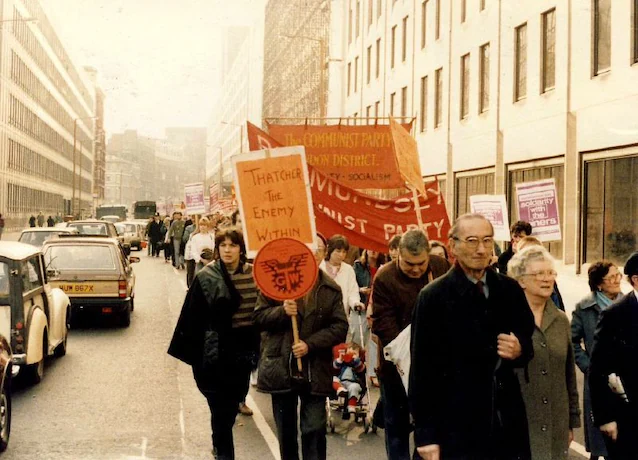
Among various measures, in 1984 Thatcher changed the legislation on strikes, with the aim of limiting the role of trade unions, provoking harsh reactions among workers. Furthermore, he privatized numerous public companies, such as British Airways and British Communications, and promoted policies of deregulation of the financial markets, facilitating speculation.
The effects of the reforms were controversial: GDP increased and inflation decreased, but social inequalities and unemployment increased significantly: from 5.3% in 1979, the rate rose to 12% in 1984, before decreasing in the following years and reaching 7.5% in 1990. Millions of people found themselves without work.
Thatcher also proved inflexible towards those who protested. In 1981 he had to face a hunger strike by detained Irish IRA terrorists, who were demanding the reinstatement of his political prisoner status, abolished by the previous government. Thatcher did not give in to their requests, despite the pressure she received from various quarters, and only after more than 200 days was it possible to find mediation.
The prime minister also showed herself to be inflexible towards the miners who went on strike in 1984 against the closure of many coal mines and the consequent loss of jobs. The police, at the instigation of the government, used brutal methods against the workers and the strike ended after almost a year, without the miners’ demands having been met.
Foreign policy: the Falklands war and relations with the European Union
Thatcher found herself ruling the United Kingdom in the last decade of the Cold War. In 1982 he found himself facing a dangerous crisis, because the armed forces of Argentina, on orders of the military junta that led the country, invaded the Falkland/Malvinas Islands, an archipelago in the South Atlantic belonging to the United Kingdom. The Thatcher government reacted decisively, sending an expeditionary force and reconquering the islands. The Prime Minister’s popularity increased throughout the United Kingdom.
Thatcher showed strong distrust of the European Union, of which the United Kingdom was then a member. His attitude is at the origin of the conflicted relationship between British and European institutions, which led to Brexit in 2017. On the contrary, he linked himself to the United States of President Reagan, with whom he shared the liberal political line. It was also an enemy of the Soviet Union, but in the second half of the 1980s, when Mikhail Gorbachev became secretary of the Soviet Communist Party, relations underwent a relative détente.
The resignation and the last years
Thatcher’s economic policies proved harmful to large sectors of the British population. In the late 1980s the prime minister’s popularity began to decline. In 1989 the prime minister promoted a reform of the local tax system, introducing an equal tax for all citizens, regardless of income, which also caused strong discontent in the conservative party. In 1990 Thatcher resigned from the party leadership and the post of prime minister, being replaced in both roles by John Major. Two years later Queen Elizabeth – with whom she had always had difficulties – made her a baroness, which allowed her to have a lifetime seat in the House of Lords. Thatcher continued to follow politics, but as the years passed her health worsened, forcing her to reduce her public outings. She died on 8 April 2013 in London, aged 87, following a stroke.