In 2017, a Vice reporter took his backyard to the top of the TripAdvisor list – with plates made of kitchen sponges, shaving cream and his own foot photographed as a slice of ham. Oobah Butler started a social experiment by creating the fictional restaurant ‘The Shed at Dulwich’, revealing just how fragile our perception of reality is online.
The problem of fake reviews and the birth of the social experiment
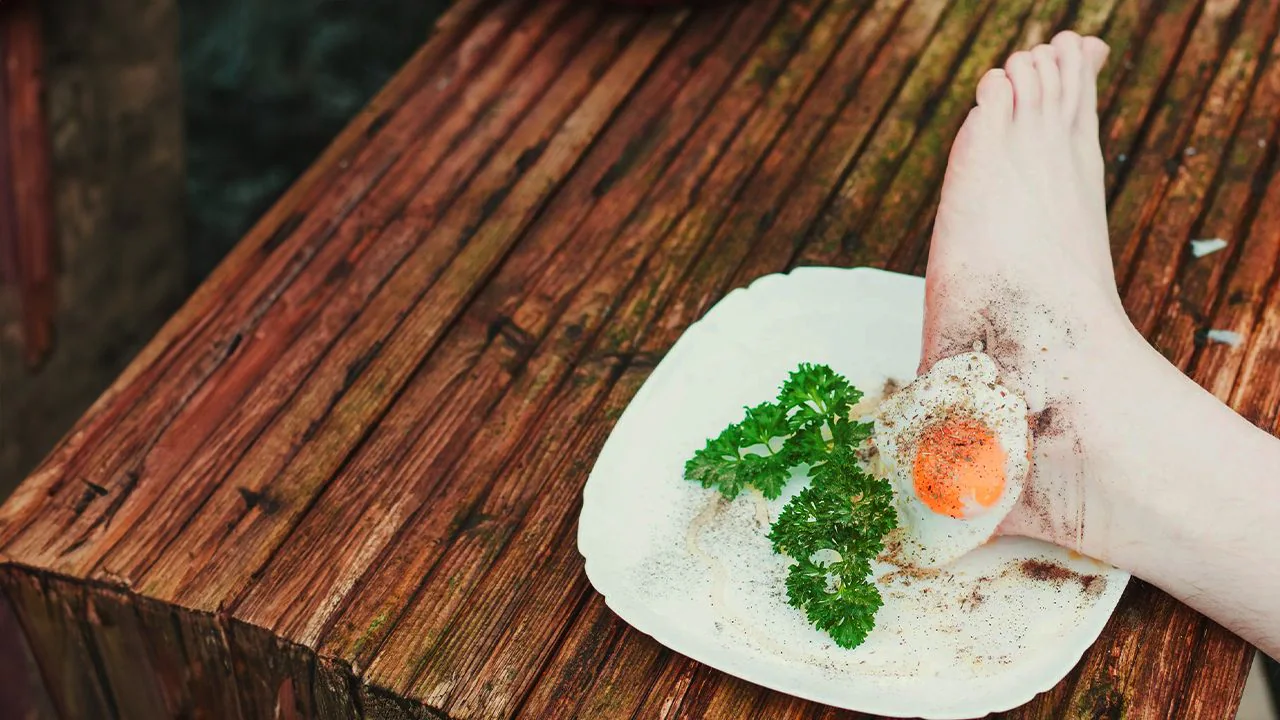
In the autumn of 2017, the number one restaurant in London on TripAdvisor had no kitchen, no dining room, no chef. Its venue was the garden of a house in South London. His dishes were inedible — kitchen sponges painted brown like chocolate cakes, shaving cream like cream, and the founder’s foot photographed at such an angle that it looked like a slice of ham.
The founder, Oobah Butler, 25, had previously worked as a ghostwriter of fake reviews for restaurateurs – ten pounds a pop, places he had never eaten at. From that experience a question was born: what would happen if it wasn’t just some reviews that were false, but the restaurant itself?
The online review site did not verify the physical existence of the premises it registered. And so Butler opened “The Shed at Dulwich” (Shed = garden shed, Dulwich = the suburb of London) with a menu of dishes named after emotions (you could order “love”, “empathy”, “contemplation”), no specific address and a mobile number for mandatory reservations. On May 5, 2017 he received the confirmation email from the platform. Ranking position: 18,149th out of 18,149 London restaurants.
Why we tend to follow the opinions of others: what is social proof
The paradox is that everything that should have discouraged potential customers attracted them with increasing force. There are two underlying mechanisms, both well documented in psychology. The first is social proof: when we are uncertain, our brain does not think independently but looks for the shortcut of others – if many people have chosen something, we tend to infer that it is worth it. The second is the scarcity effect: the more difficult something seems to obtain, the more valuable it is perceived to be. The two biases amplified each other: the more inaccessible the Shed seemed, the more people wanted it. The more people wanted it, the higher the algorithm pushed it. The higher he got in the rankings, the more legitimate he seemed.
A positive reinforcement loop built entirely on an illusion.
The revelation of the truth, the dinner and the explanation of neurogastronomy
In November 2017, with resumes arriving for nonexistent positions and packages delivered to the approximate address, Butler opened the restaurant for just one evening.
The menu featured ready meals from the £1 supermarket, carefully plated and with names that evoked intense emotions.
Customers were blindfolded at the entrance, ushered inside among real chickens and patio heaters, to an atmospheric soundtrack. The blindfold eliminated any visual reference to reality and let the brain construct the experience from months of accumulated expectation. It worked: most diners wanted to book again. Neurogastronomy explains why expectations literally modify sensory perception, activating the brain areas associated with pleasure even before tasting. You might be able to serve pound food and people will find it excellent, if you’ve built the right context around it and primed your brain for an unforgettable experience.
The consequences of the Butler experiment: does the problem of fake reviews still exist?
On December 6, 2017, Butler told all in a Vice article. TripAdvisor blocked the profile and stated that completely fictitious profiles are rare because there is no real incentive to create them. Technically true. But the problem of fake reviews in general is far from solved: according to the platform’s 2025 Transparency Report, 8% of the 31.1 million reviews received in 2024 were fake, more than double the number in 2022. In 2024 alone, TripAdvisor removed 2.7 million fraudulent reviews and 214,000 pieces of AI-generated content. The practice of paid reviews that Butler started with has not disappeared. It has evolved.