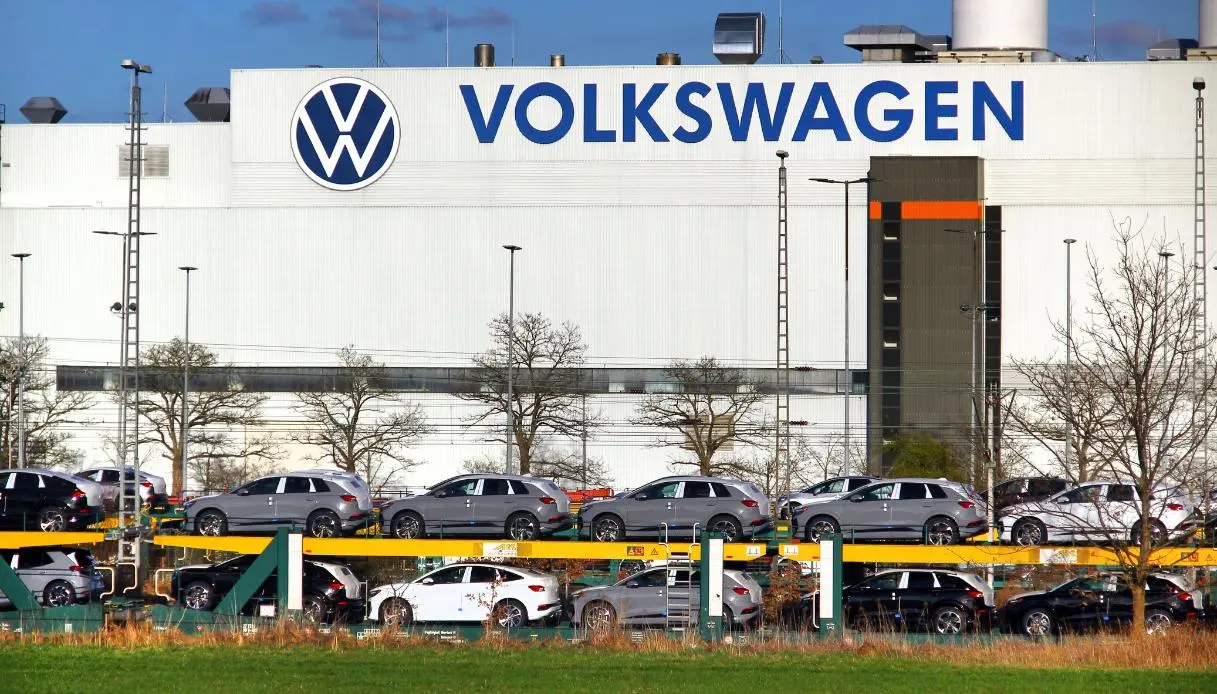
The possible cut of 100,000 jobs and the sale of 51% of Everllence shares tells much more about Volkswagen’s crisis. The restructuring of the Wolfsburg group is at stake, put to the test by Chinese competition, investments in electric vehicles and the slowdown of the European market.
The reduction in staff and the sale of part of the company, however, could indicate something other than an industrial catastrophe.
Volkswagen does not sell diesel engines in cars
The company instead decided to sell 51% of Everllence, formerly Man Energy Solutions, to the American fund Bain Capital, maintaining the remaining 49%. The operation is worth approximately 7.4 billion euros. The aforementioned section deals with the production of large diesel engines for the naval sector, energy production systems, turbines, compressors and systems also used in data centers.
This is why talking about the sale of the diesel division is misleading.
Why sell a part of a healthy company?
And this is precisely the most interesting aspect. Everllence is not a company in difficulty. It has around 16,000 employees, generates almost 5 billion euros in revenues and is one of the world’s leading producers of large industrial engines.
Volkswagen’s board of directors may have decided to capitalize to reinvest in a different way in the translational automotive sector, which will require increasingly greater resources in the coming years between electrification, software and digitalisation.
Has diesel really come to an end?
In Germany, diesel continues to represent an important part of the market, especially for company fleets, large SUVs, commercial vehicles and those who travel many kilometers every year. Volkswagen, like BMW and Mercedes-Benz, also continues to develop and sell diesel models.
What is changing is not so much the technology but its strategic role. For decades, diesel has been the symbol of the German automotive industry. Today it is a mature technology, which continues to generate revenues but on which car manufacturers can no longer build their future.
2035, the end of the heat engine?
The European regulatory framework also weighs on this.
In recent years, 2035 has often been talked about as the year in which it would be forbidden to sell new cars with internal combustion engines. In reality the path is proving to be more complex.
The objective remains to drastically reduce CO₂ emissions from the automotive sector, but the European debate has shifted to how to achieve this. The Commission has in fact opened up the possibility of a 90% reduction in emissions, rather than an absolute zero, leaving room for technologies such as e-fuels and other tools that allow part of the internal combustion engines, and therefore of the European automotive industry, to be kept alive.
Diesel and petrol are not destined to disappear in the short term but will be progressively confined to specific market segments, while the share of electric cars will continue to increase.
A crisis that concerns the German model, but not only
The probable cut of 100 thousand jobs, and the consequent closure of at least four factories, and the sale of Everllence are two pieces of the same transformation.
Volkswagen needs liquidity and finds it by selling part of an activity no longer considered strategic. On the other hand, it is trying to reduce costs and production capacity to regain competitiveness in a market increasingly dominated by Chinese manufacturers.
The central issue, however, is not diesel. It is the industrial model that has made Germany the world automotive capital: production in large numbers of very efficient cars with internal combustion engines, to be exported especially to China. A model that has no longer worked for at least ten years.