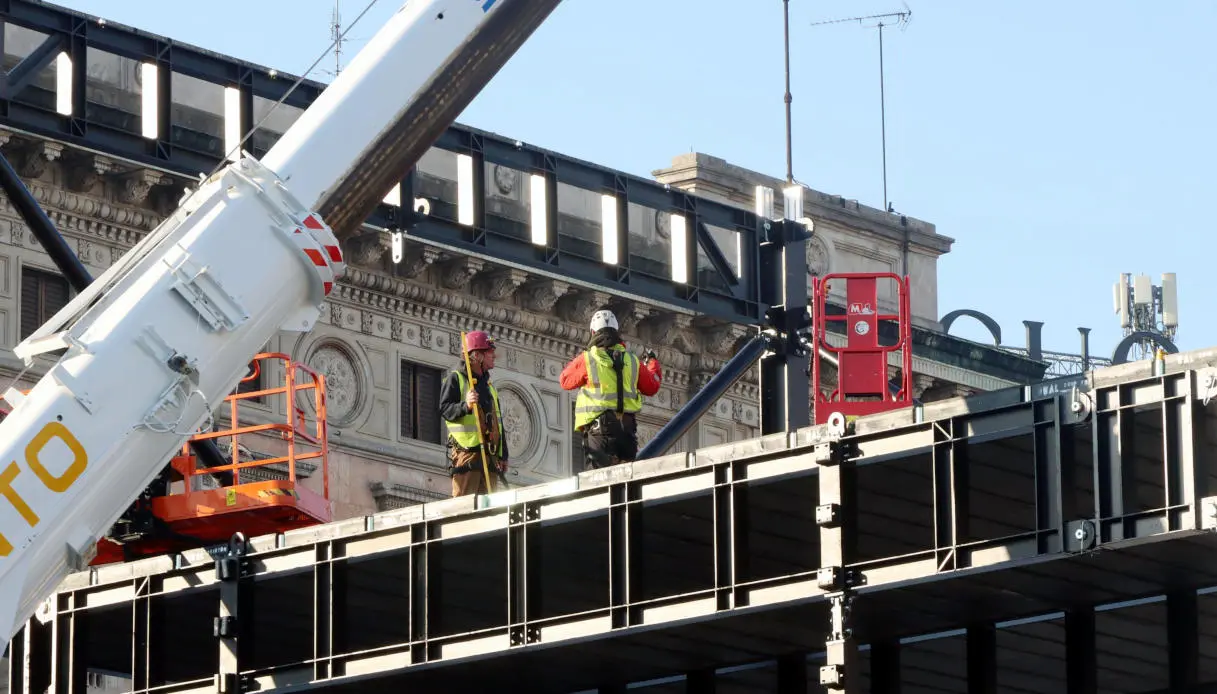
Pnrr, the moment of truth has arrived: after the deadline of 30 June, Regions and Municipalities are busy reporting on the interventions financed with European resources, while data on the progress of the works continues to arrive.
From hospitals to infrastructure, from digitalisation to the ecological transition and support for businesses: as regards the use of funds from the National Recovery and Resilience Plan, the picture that emerges is that of a country proceeding at very different steps. Some particularly virtuous administrations have already completed all the objectives, while others have remained behind.
Pnrr, Piedmont and Tuscany complete the objectives
Among the Regions, Piedmont and Tuscany stand out, both at 100% of the expected objectives.
Piedmont records around 39 thousand projects activated in the area for a value of more than 10 billion euros. The share managed directly by the Region amounts to 1.78 billion euros distributed across 2,419 projects. Tuscany also achieves all the objectives assigned and sees 95.47% of the planned projects launched.
The Municipalities with the best results in the Pnrr
Among the large municipalities, Florence and Bologna are among those that have intercepted the greatest number of Pnrr resources.
Turin has completed 100% of the objectives assigned, while Naples has invested approximately 1 billion euros of Pnrr funds, reaching 90% of the projects planned by the deadline of 30 June.
In Milan, 93 interventions were completed thanks to investments exceeding 840 million euros, within a framework that sees over 2,500 projects managed directly and overall investments in Lombardy amounting to 3.4 billion euros.
Healthcare, work and the environment concentrate resources
The largest investments continue to concern health and work, together with programs dedicated to the ecological transition. In Trentino-Alto Adige the ecological transition absorbs 614.9 million euros, equal to 39.1% of the total resources. In Trentino alone, over 125 lines of intervention and around 11,800 initiatives are activated, for funding of around 1 billion and 570 million euros.
Community houses and hospitals
The situation changes a lot regarding the healthcare sector.
Liguria exceeds the targets set for community homes and hospitals by 10%.
Veneto also records results exceeding the objectives, with 99 community homes and 33 community hospitals activated, compared to an objective set in 30 hospital facilities.
The targets were also achieved in Sardinia, while in the Marche region 28 community houses out of 29 planned were completed. However, the progress recorded in Friuli-Venezia Giulia and Lazio is more limited.
Puglia, Calabria and the other Regions
In Puglia, eight interventions were completed in the sewerage and purification sector, for over 42 million euros, in addition to 12 projects dedicated to hydrogeological instability for around 50 million. In healthcare, the Region has 83 community houses distributed among the various provinces: 18 in the Bari area, 16 in the Leccese area, 27 in the Foggiano area, 13 in the Tarantino area, 5 in the Brindisi area and 4 in the Barletta-Andria-Trani province.
Calabria is allocated 10.369 billion euros for 12,382 projects.
In Alto Adige the Pnrr makes 1.75 billion euros available for 4,610 approved projects, of which 3,165 have already been completed.
Molise received approximately 9.9 billion euros as part of the resources distributed to Italian municipalities.
In the Marche region, there are 18,699 projects financed totally or partially by the Pnrr, of which approximately 11,900 have been completed according to the latest regional report of 13 June.
Approximately 8 thousand interventions supported by approximately 4.4 billion euros are planned for Abruzzo.
The Minister for European Affairs, the Pnrr and Cohesion Policies, Tommaso Foti, said he was “proud” of the results obtained and then added:
It takes patience. Net of the fact that several billion euros still have to be accounted for and spent, in order not to lose what has been done now, after the end of the Pnrr it will be necessary to be ready at EU level on the competitiveness front.