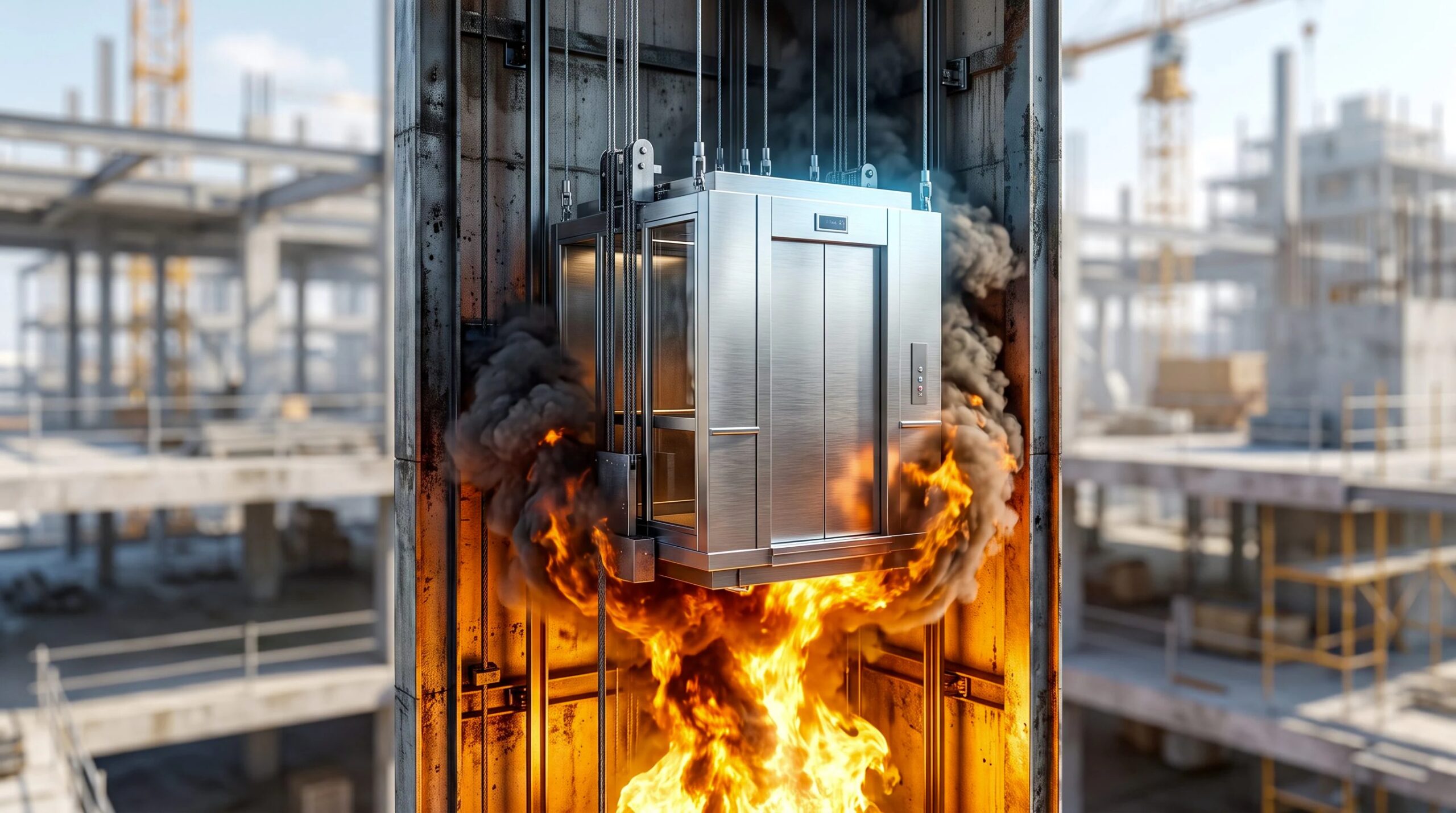
A large fire broke out in Brussels on the construction site of the Oxy Tower, a building under renovation in the city center, a few steps from Place De Brouckère. The toll of the accident, which occurred on 14 July, was confirmed by the Brussels Labor Prosecutor’s Office: six national workers, unfortunately, lost their lives. The bodies were found inside the building’s elevator shafts, both of which collapsed during the fire, where rescue teams worked for hours before gaining access.
The victims were predominantly Belgian nationals, including young workers; the authorities clarified that there are no Italian citizens among the deceased, after having ascertained the nationality of all the missing. At the time of the fire there were around 200-250 people on the construction site, evacuated in the following hours and welcomed by the Red Cross who promptly activated a psychological support service.
The causes of the fire have not yet been clarified: the Auditorat du Travail, the Belgian prosecutor’s office responsible for violations of labor and social security, has opened an investigation to reconstruct what happened. According to initial information, however, the six victims lost their lives inside the elevators: we interviewed Martina Bellomia, architect and fire prevention professional, to better understand what the fire safety procedures require for the use of elevators in the event of fire and how it works for buildings under renovation.
What we know about the dynamics of the fire
According to initial reconstructions, the fire started between 7.30 and 8 am on the second floor of the building, intended for shops. The flames were apparently partially put out, but then spread to the shaft of one of the elevators, where a second, more intense outbreak developed, also extending to an underground level.
The death toll rose on Tuesday, from four to six deaths, as recovery operations continued among the debris. In the evening, the labor prosecutor Valentina Marocchi clarified that both elevators on the construction site collapsed, without however specifying whether the victims were inside the cabins, were crushed or fell into the shaft.
There are still no official indications on the causes: the investigation will have to establish what started the fire and why it spread so quickly in the elevator shafts.
Why elevators should not be used in the event of a fire: what the regulations say
A multi-storey building is crossed by continuous vertical ductsincluding elevator shafts: if not adequately isolated from the rest of the building, they can behave like a fireplacequickly conveying smoke and hot gases to the upper floors even when the fire has started elsewhere. It is to limit this risk that in Italy the Ministerial decree of 15 September 2005 distinguishes different types of shaft based on the level of protection: come on open compartmentsfor which the use of non-combustible materials is sufficient, up to protected spaces and to those smoke proofisolated from the rest of the building using special filters.
However, a ministerial clarification in 2008 corrected this a widespread misunderstanding even among professionals: being in a “smoke-proof” compartment it does not in any way make the elevator usable during a fire. That protection only serves to prevent the compartment from becoming a path for smoke to spread, not to ensure a safe system to use while the building burns.
The case offire lift real, built with specific technical requirements – dual electrical power supply, protected areas on each floor, autonomous emergency lighting – which can remain operational during emergency and, if foreseen by the project, be used for the assisted evacuation of people with mobility difficulties.
THE’emergency liftfinally, it is confidential exclusively to the Fire Brigadefor the transport of equipment and for rescue operations managed directly by rescuers.
Regardless of these classifications, it is still an ordinary elevator not recommended during a fire for two very practical reasons. The first is theelectrical power supply: if it is interrupted while the cabin is moving, the occupants remain stuck between two floors until help arrives, and it is precisely for this reason that the technical standards of the sector require ordinary elevators to automatic recall to a pre-established plan and decommissioning as soon as a fire is detected.
The second concerns theexposure to fumesthan in most fires they kill more than the flames themselves: an elevator does not guarantee that the arrival floor is still a safe place, and the cabin doors could open onto an environment already filled with smoke.
Finally, it should be remembered that this regulatory framework concerns buildings already completed and testedwith fully compartmentalized elevator shafts. In a construction site under renovationlike that of the Oxy Tower, this condition may not yet be completely achieved: fire walls, filters and certified doors may not be completed, even though the hoistways remain present as continuous vertical cavities in the structure.
An element that investigations initiated by the Belgian labor prosecutor’s office will probably have to consider to understand why the fire spread so quickly right into the elevator shafts, up to compromising their stability and causing them to collapse.