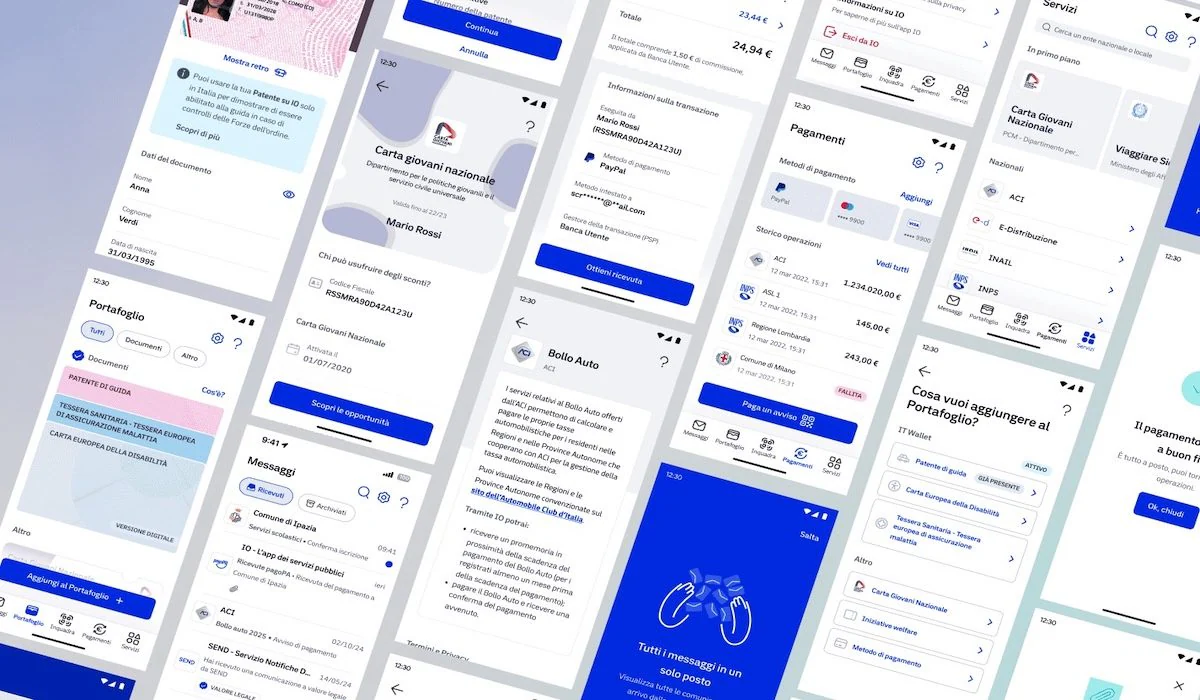
The IO app is preparing to significantly expand the functionality of the IT-Wallet digital wallet. In addition to the driving licence, the health card and the European Disability Card, already available in the IO app, it will soon be possible to add other personal documents and certificates: the ISEE, diploma or degree, school or university registration, residence, registration on the electoral lists and the electoral card.
The objective is to concentrate an ever-increasing number of official documents on the smartphone, simplifying access to public services and, in the future, also to private ones. The innovations are contained in the Guidelines of the IT-Wallet System and in the rules that will govern the new testing phase of the platform, not made publicly available, but consulted in preview on the portal Key4Bizwhich disclosed the main innovations of the measure in a dedicated article.
The documents, signed by the Undersecretary to the Presidency of the Council with responsibility for technological innovation Alessio Butti, together with the Minister of Economy Giancarlo Giorgetti and the Minister for Public Administration Paolo Zangrillo, still await publication in the Official Journal. Only after this step will they be able to fully enter into force, starting the new phase of development of the digital wallet.
What changes with the new digital documents on It Wallet: what’s new
Among the main innovations is the opening of the system also to private entities, who have so far been excluded. The process will be supervised by AgID, the Agency for Digital Italy, the body that defines technological standards and coordinates the digital transformation of public administration. Its tasks will include the registration and updating of the list of subjects authorized to operate within the IT-Wallet System, while the dedicated official portal will become the reference point for the service and will be available at https://wallet.gov.it (which at the time of writing this article is not yet available for consultation).
The Guidelines also establish the ways in which the technical specifications of the platform will be tested and updated, establishing the rules necessary to guarantee high levels of security, reliability and availability of the system. Everything must comply with the European eIDAS regulation, the European Union regulatory framework that regulates digital identity, electronic signatures and trust services, with the aim of making digital identities safe and recognized between the various EU member countries.
As has already happened with the digital versions of the driving license and health card, the insertion of the new documents in the digital wallet will be neither automatic nor mandatory: each citizen will decide whether to request them and add them to the IO app. Among the certificates available there will be the ISEE, theEquivalent Economic Situation Indicatorthe parameter used to determine access to numerous benefits and social benefits, with data provided directly by INPS.
It will also be possible to view the qualification obtained and school enrolment, thanks to the information made available by the Ministry of Education and Merit, while the Ministry of University and Research will make available the data relating to academic qualifications and university enrolment. Personal information will also become part of the digital ecosystem: it will be possible to request certificates relating to residence, enjoyment of political rights, registration on electoral lists and some age-related requirements, with data coming from the ANPR, theNational Registry of the Resident Populationthe unique database that collects the personal information of Italian citizens.
How to access ISEE, qualifications and electoral card in the IO app: the CIE
To obtain some of the certificates mentioned above, however, the SPID will not be enough: it will be necessary to use the CieID app, connected to the Electronic Identity Card, which will allow you to request the Electronic Certificate of Personal Identification Data, the digital document that certifies the identity of a natural person or a person authorized to represent another.
The Guidelines also clarify that, within 30 days of the adoption of the technical specifications, AgID will have to define the administrative procedures to register the subjects who will become part of the system. In the meantime, the Government is working on two new DPCMs (decrees of the President of the Council of Ministers) intended to further expand the scope of the IT-Wallet. Today the service is already used by around 5 million citizens and hosts around 9 million digital documents: numbers destined to grow with the arrival of new certificates and with the opening to private entities.