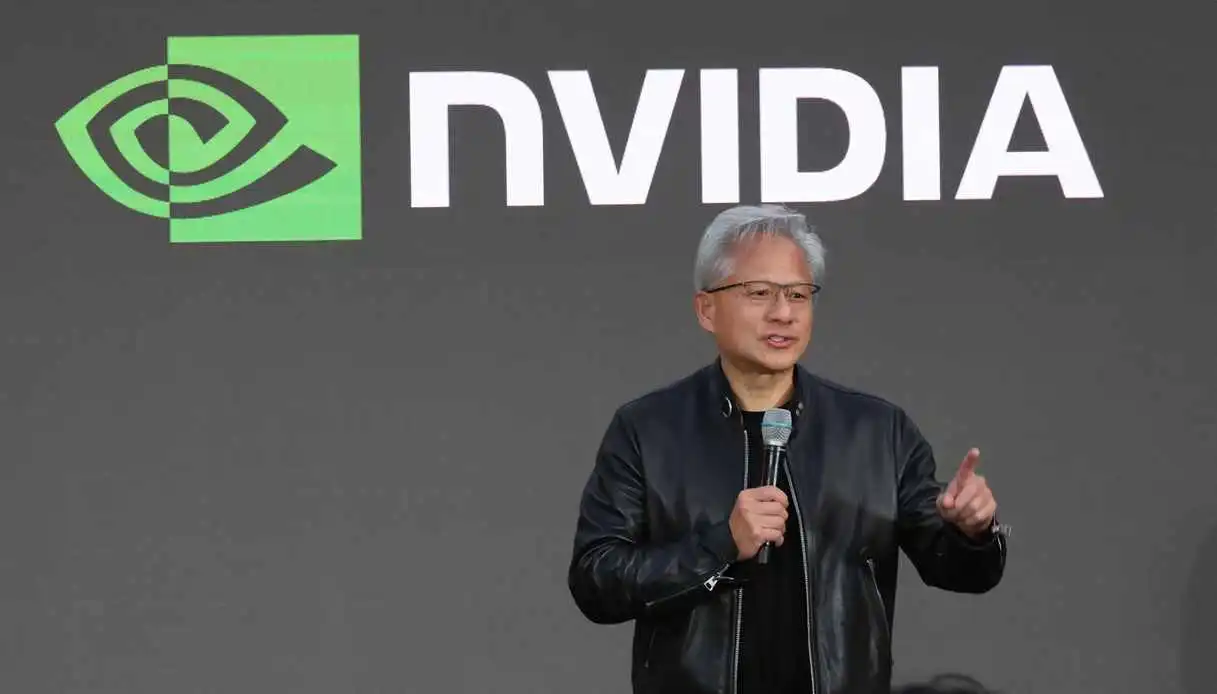
The AI giant, Nvidia, exceeds expectations and aims for 108 billion in revenues in the next quarter, but its results also concern those who do not directly own the stock: according to the ECB, Eurozone families have around 440 billion euros exposed to US technology stocks, especially through funds and ETFs.
Nvidia continues to grow at an exceptional rate. In the second quarter of fiscal 2027 the group recorded 96.22 billion dollars in revenues, 106% more than a year earlier and above Wall Street expectations. The data center business alone has caught up 89 billion dollars, +117%, while for the current quarter the company expects revenues of approximately 108 billion. THE Nvidia quarterly results they therefore confirm, at least for now, that the race to invest in artificial intelligence has not stopped.
The quarterly report, however, does not only concern those who bought Nvidia shares. Investors in an S&P 500 ETF, Nasdaq or many global stock funds may already have the stock in their portfolio without ever purchasing it directly.
And it is precisely the growing weight of the large American technology groups in the main indices that makes the Nvidia accounts important financial news also for many European savers.
Because Nvidia also concerns those who didn’t buy the title
A ETFs it can replicate an index made up of tens, hundreds or even thousands of stocks. If the index is weighted by stock market capitalisationcompanies that are worth more on the market generally carry greater weight.
Nvidia is now one of the dominant companies on the US stock market and is part of the so-called Magnificent Seven together with the other large American technology groups.
Consequently, a strong movement in Nvidia stock can impact not only those who directly own its shares, but also the performance of funds and ETFs that replicate or follow large international markets.
The point is important because owning a lot of stocks through an ETF doesn’t necessarily mean you have little exposure to larger companies. Diversification remains, but a significant portion of performance may depend on a relatively small number of companies.
440 billion in European savings exposed to US big tech
The size of the phenomenon was highlighted directly by the European Central Bank.
According to a recent ECB analysis on European exposure to US technology stockseuro area families have approx €440 billion of exposure to US tech stocks, without necessarily being aware of the related concentration risk. Most of the exposure comes through mutual funds and ETFs and not through the direct purchase of individual stocks.
Naturally, the data does not mean that 440 billion are invested in Nvidia. The figure includes overall exposure to large American technology groups.
Nvidia has become one of the most important components of this universe and that is why its quarterly report can have much broader consequences than the simple movement of a single stock.
The ECB also highlights that the strong presence of the Magnificent Seven in the most popular global indices, such as MSCI World, represents a possible channel for transmitting corrections in the American market to European investors.
The AI boom continues, but maintaining it costs more and more
Nvidia numbers show that demand for artificial intelligence infrastructure remains very strong.
Big tech companies should spend overall over $730 billion in AI infrastructure in 2026, fueling demand for processors, data centers and computing capacity.
The quarterly report also shows the other side of growth.
Nvidia expects gross margin to fall from about 75% to 74% in the next quarter, while costs related to the new generation of processors and memories increase. At the same time, competition is growing from AMD, Intel and the big tech companies themselves, which are developing proprietary chips to reduce costs and dependence on Nvidia.
The growth of AI, therefore, continues, but supporting it requires ever-increasing amounts of capital.
Record accounts do not eliminate concentration risk
And this is where the Nvidia results become particularly interesting for investors.
Just because the company continues to nearly double its revenue doesn’t mean the prices of big tech stocks can grow without limits. The ECB itself draws attention to the concentration that has been created in the stock markets and, indirectly, in European portfolios.
The risk is that apparently different products end up being owned by many of the same companies.
An investor could, for example, own an ETF on the US market, a global one and a technology fund and find himself repeatedly exposed to Nvidia and the other big tech companies.
For this reason it is useful to look not only at the number of instruments present in your own financial portfoliobut also to the companies actually contained within them.
How to understand if Nvidia is already in your ETF or fund
Verification is relatively simple. The main holdings and their percentage weight are normally indicated in the ETF or fund information sheet.
Who owns a product that replicates a financial index it can also control the composition of the index itself.
It is therefore not necessary to have bought Nvidia directly to be exposed to the performance of the stock. And this is precisely the most interesting financial message of the new results.
THE Nvidia’s 96.22 billion revenues confirm that the boom in artificial intelligence continues, but also show how few companies have become decisive for the performance of global markets and, indirectly, for a part of European savings, aeven those who have never directly purchased an Nvidia share.