Do you remember the last time you did something just for the pleasure of doing it? Not to improve yourself, not to make a career, not to produce something monetizable or “postable” on social networks. Something that maybe you’re bad at, but that you do simply because you like it. If you struggle to answer, you are not alone: in contemporary society, having a hobby in the purest sense of the term has become increasingly rare.
But before understanding why, we must make a fundamental distinction. “Hobby” is a word we often use inappropriately. Watching a TV series is not a hobby, it’s a pastime. Going to the gym to stay fit is not a hobby, it’s an investment in your health or a habit. A real hobby is an activity you do for yourself. It doesn’t make you healthier, it doesn’t advance your career, and it doesn’t generate profits. You do it because you like it, period. The rule of thumb is simple: if you have to do it to survive, it’s not a hobby. If you do it because someone pays you, it’s not a hobby.
Today, this condition (devoting time to something “useless” for practical purposes) has become very difficult to justify, especially to ourselves.
The paradox of free time
Yet, free time exists. According to theAmerican Time Use Survey of 2024 (the largest time use statistical survey conducted annually in the United States), 94% of adults over age 15 spend time on leisure activities or sports. The problem is how we use it. Also in 2024, the clearly dominant leisure activity was watching television, averaging 2 hours and 36 minutes per day. More than half of available free time is taken up by passive screens. At the same time, OECD data show a worrying decline in direct socialization: in 2024 only 30% of people socialized in their free time (compared to 38% in 2014), dedicating on average only 35 minutes.
What is crushing the space dedicated to real hobbies? Mainly three forces.
The “second job” trap: 61% of Gen Z monetize their passions
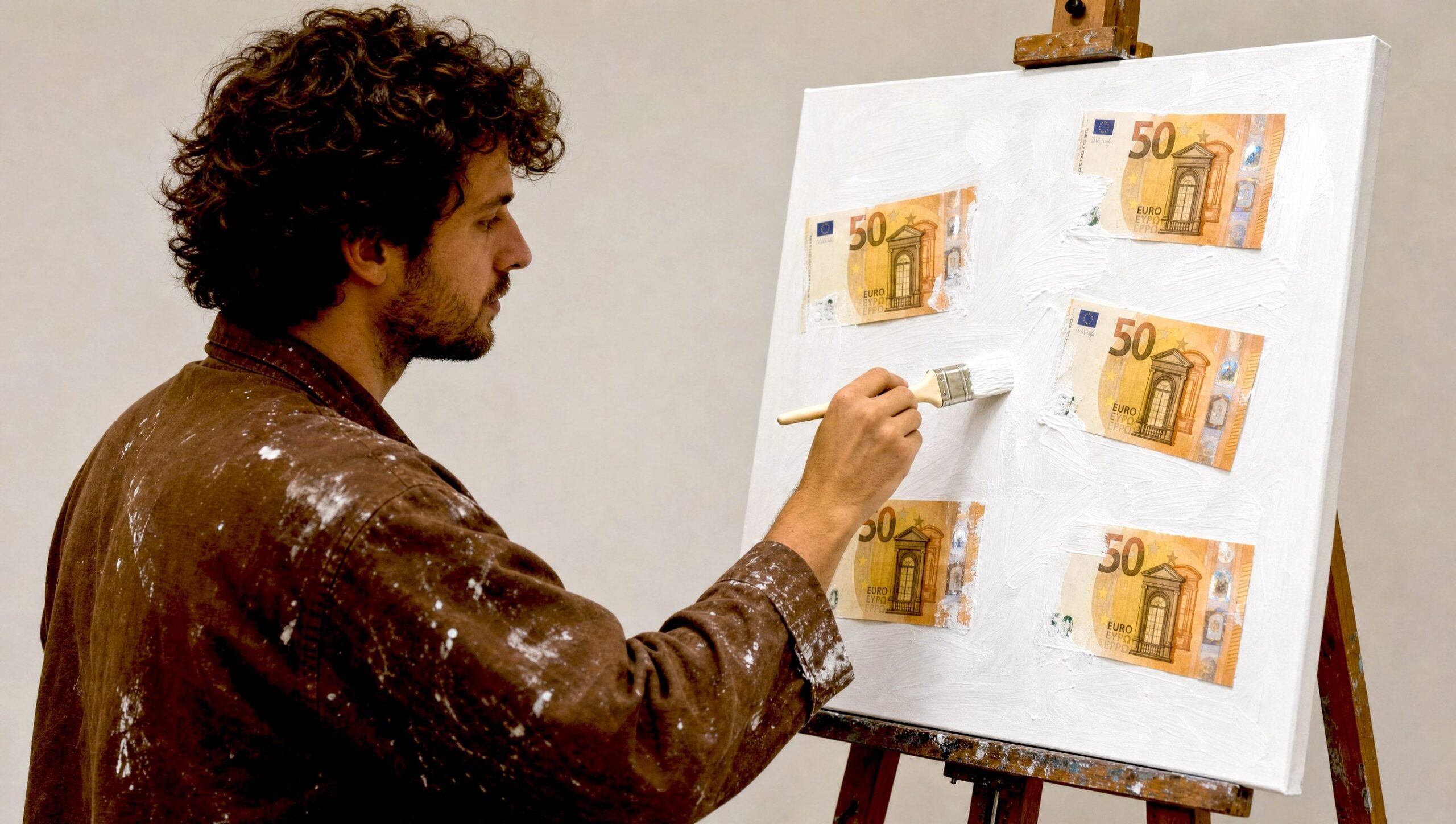
The first force masquerades as opportunity. It is the constant pressure to “monetise one’s passions”, transforming every interest into a side job (the so-called side hustle). According to research Bankrate48% of Gen Z and 44% of Millennials already have a parallel business, and 61% of very young people say they feel social pressure to turn their hobbies into a source of income.
Social psychology has studied this phenomenon, naming it “excessive justification effect”. When you receive external compensation for an activity you do only for intrinsic pleasure, your brain recalibrates. Learn to do that thing no longer “because I like it”, but “because they pay me”. And when they stop paying, the original motivation doesn’t return. Transforming a passion into work is often not free: it destroys exactly the precious part of the hobby, its gratuitousness.
Hobby inflation: a luxury for the upper middle class
The second barrier is brutally cheap. In recent years we have witnessed the so-called hobby inflation: the costs of equipment, courses, rentals for rehearsal rooms or clubs have exploded, well above general inflation. From golf to cycling, from photography to ceramics, many passions have become a luxury for the middle and upper-middle class.
It is not just an individual loss, but a social one. As sociologist Gary Alan Fine of Northwestern University has shown, hobbies create “social worlds.” A fishing club or a chess club are among the very few places where people from very different social backgrounds or generations meet as equals. When these spaces close due to unsustainable costs, we lose an irreplaceable form of social cohesion.
The smartphone screen as a passive way out
The third force is the most subtle, because it wins by convenience. A hobby requires an “activation effort”: you have to sign up, get up, pick up an instrument, accept the frustration of not being able to at first. The smartphone screen, on the other hand, asks nothing and does not judge if you are denied. In a society experiencing chronic exhaustion (the well-known burnout), the residual mental energy at the end of the day is often not enough to overcome that activation effort. And so, the screen wins hands down.
What we lose (and what science says)
What we lose is not just leisure. Neuroscientific research tells us that the brain has two modes: the directed attention network (used for working or scrolling through feeds) and the Default Mode Network (the default mode network), which turns on only when the mind is free to wander, perhaps while the hands are busy with manual labor. This second network is crucial for creativity, imagination, and long-term cognitive health. Passive use of screens blocks the activation of this vital network.
Even more impressive are the medical data. A meta-analysis published in Nature Medicine in 2023 showed that having a hobby is associated with fewer depressive symptoms. A colossal 2025 study conducted by Fudan University of Shanghai, published on Journal of Global Health and based on nearly 80,000 adults in 19 countries, it has certified that pursuing hobbies significantly reduces the risk of mortality from all causes. Having a “useless” passion is, in all respects, a protective factor for public health.
Starting again from imperfection
If you have a guitar gathering dust or a camera in the drawer, where do you start from? Experts recommend two counterintuitive things. First: drastically lower expectations and abandon the logic of performance. A crooked ceramic or an ugly painting are worth as much as a masterpiece, because the point is the process, not the result. Second: resist gamification (the apps that give you points if you train every day), which reintroduces the anxiety-inducing logic of “duty”.
In a world that continually asks us to produce, monetize and justify every minute spent, carving out an hour to do something “useless” requires a strange form of contemporary courage. The permission to do something just for ourselves does not come from outside: we must give it to ourselves.