Euro banknotes are about to change their face: the European Central Bank has in fact announced the ten finalist proposals for the next series of euro banknotes, launching a public survey, open to all European citizens. This is the first complete redesign of the euro banknotes since their entry into force in 2002, i.e. after more than twenty years.
As ECB President Christine Lagarde explained, euro banknotes are not just a means of payment, but one of the most tangible expressions of the European Union. The online survey will remain open until 21 September 2026: citizens will be able to vote for their favorite design, choosing between two different themes, “European Culture” and “Rivers and Birds” (with 5 proposals each). The ECB Governing Council is expected to select the final proposal by the end of the year. The denominations will range from 5 to 200 euros, given that the 500 euro banknotes have been out of production since 2019 (although they still retain their validity).
What the new banknotes could look like: from Beethoven to Da Vinci
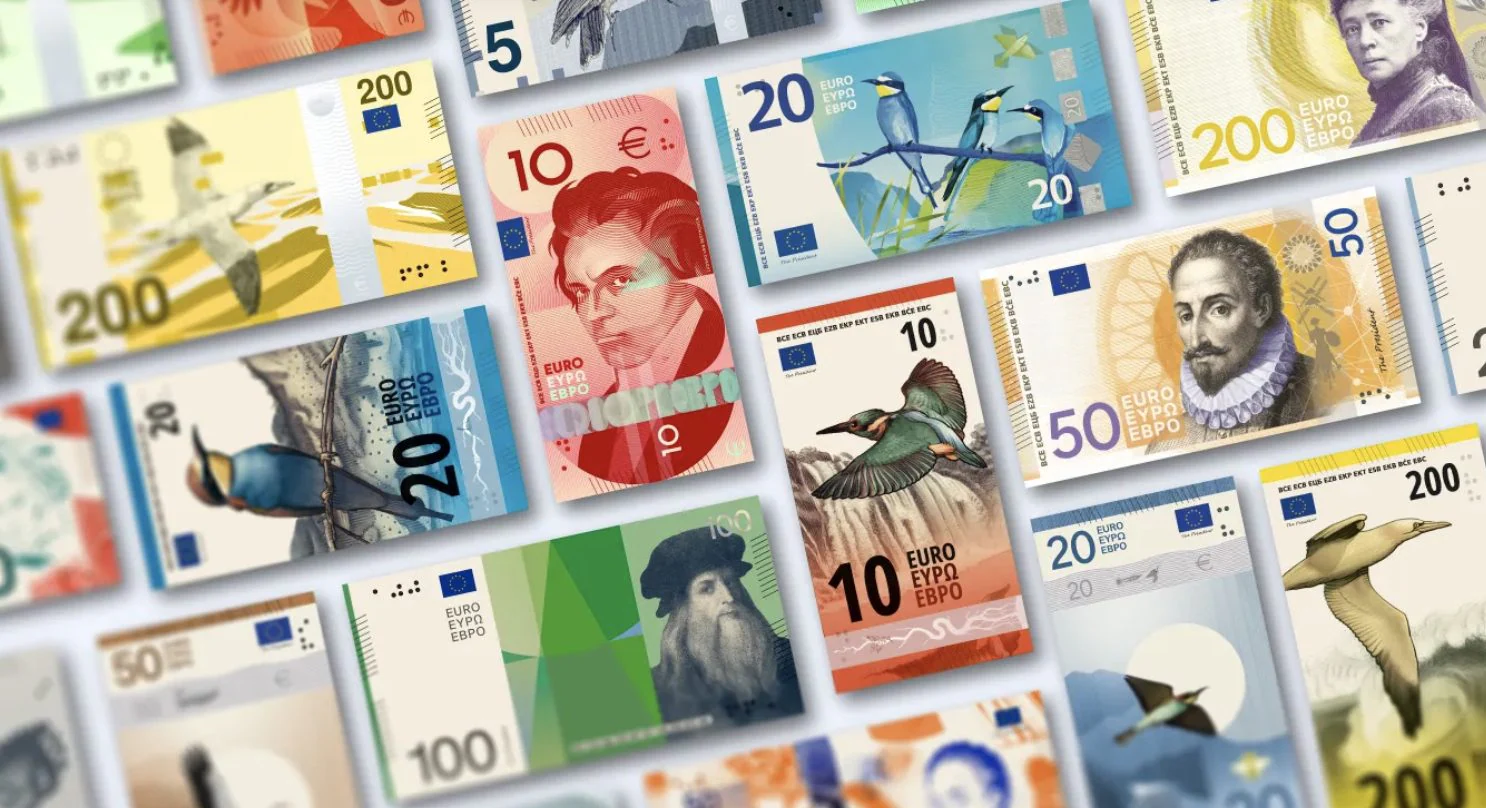
The ten competing proposals revolve around two different themes, chosen by the ECB Governing Council as early as November 2023: “European Culture” and “Rivers and Birds”. The first theme focuses on the cultural heritage of the continent, with the aim of celebrating «the rich cultural heritage and dynamism of Europe’s creative and cultural sectors, which strengthen our common European identity, creating a shared sense of belonging».
Among the faces that appear in the various proposals are the soprano Maria Callas, the composer Ludwig van Beethoven, the scientist Marie Curie, the writer Miguel de Cervantes and the genius Leonardo da Vinci, together with the winner of the Nobel Peace Prize Bertha von Suttner.
The second, however, concerns nature: «rivers and birds know no borders and are a symbol of freedom and unity among European citizens», as well as embodying the link with the environment and its protection. In this case, each denomination depicts a species of European bird in its habitat and the higher the value of the banknote, the closer the landscape comes to the sea.
Thus they range from the wallcreeper (on the 5 euro denomination) to the kingfisher, from the bee-eater to the white stork, up to the avocet and the gannet, which on the highest denomination banknote flies above the great waves of the ocean. On the front of the banknotes there is a bird with a river scene, while on the back there are the headquarters of the European institutions, from Parliament to the Court of Auditors.
Beyond the aesthetic aspect, the renewal of the euro banknotes (which until now portray bridges as a symbol of union) also has very concrete objectives: the new banknotes will be equipped with new and more advanced security features to make counterfeiting more difficult and facilitate their recognition and accessibility, even by people with visual impairments. In addition, the ECB aims to reduce the environmental footprint of banknotes by making them more resistant to wear and using more sustainable materials and production processes.
How to choose the winning design: the survey and the choice by the end of the year
The path that led to the ten finalists, in reality, began some time ago with the official competition, announced at European Union level, which collected over 1,200 applications from graphic designers: of these, 25 were then contacted again to develop a proposal for one or both themes.
The first screening was done by an independent jury made up of 21 experts from different disciplines (graphics, communication, neuroscience and history), each designated by the Central Bank of their own euro area country.
Now the public comes into play: in addition to the online survey open to all (which can be accessed from this link), a second survey with the same questions will be conducted in parallel by an independent research company on a representative sample of euro area citizens.
The final decision, however, will take into account several elements: the Governing Council should choose the design by the end of the year, based on the jury’s conclusions, a technical evaluation and the results of the two surveys. And here comes the part that requires patience: once chosen, the proposal will be further developed and tested before going into production, with release expected in several years. It should be specified that, obviously, all previous series of banknotes will retain their value and will continue to circulate together with the new ones.