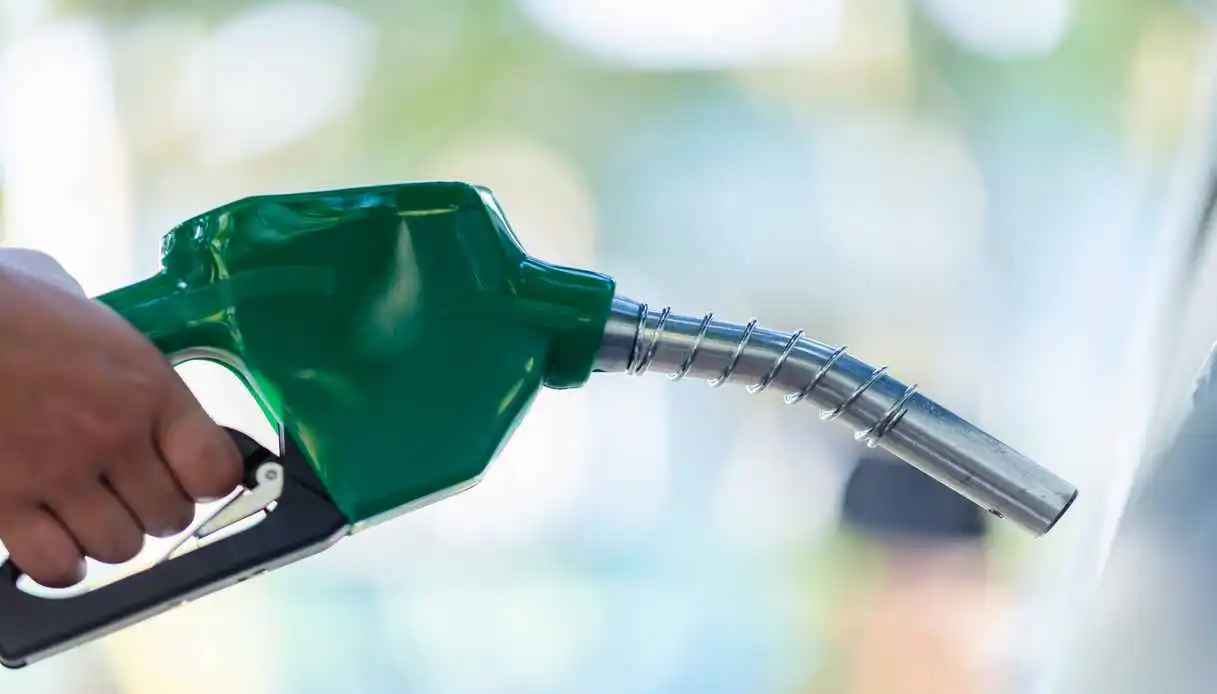
The return of oil above 100 dollars raises the alarm about fuel during summer departures. In Italy, self-service petrol has not yet exceeded 2 euros on average across the entire road network, but the threshold has already been crossed on the motorway and in numerous individual facilities.
According to the latest data from the Ministry of Business and Made in Italy, self-service petrol costs on average 1,981 euros per liter on the ordinary network e 2,071 euros on the motorway. The situation is even more difficult for diesel, which reached respectively 2.184 and 2.255 euros per litre.
The Government is therefore evaluating a new intervention to slow down price increases. There are two hypotheses at the center of the comparison: a temporary measure, indicated in the reconstructions as bridging decree, and the return to the mechanism of mobile excise duties, through which the State uses part of the extra VAT revenue produced by the increase in prices to reduce taxation on fuel.
At the moment, however, there is still no official text of the bridge decree. There is an ongoing political evaluation, accompanied by the hypothesis of activating the mobile excise tax again. The difference is important: it is not yet a question of a discount already decided, but of instruments on which the Government must establish duration, amounts and coverage.
Because oil is back above 100 dollars
Brent, the international benchmark for European oil, exceeded 100 dollars a barrel on July 23, driven by worsening tensions in the Middle East and attacks on oil tankers and energy routes. Subsequently the price returned below that threshold, falling to around $97, but with very large fluctuations and a weekly increase of close to 10%.
The point, therefore, is not just the temporary exceeding of 100 dollars. It is the risk that crude oil will remain expensive and volatile for a long time.
The market especially fears problems in the strategic passages through which oil and refined products travel.
The International Energy Agency describes a market still conditioned by the availability of supplies, the trend of demand and refining capacity. The seasonal recovery in consumption may further increase pressure on petroleum products, even in the presence of overall weak annual demand.
What is the bridge decree on fuels
The expression “bridge decree” does not identify, for now, a measure already approved. It is used to describe a possible immediate and temporary intervention, intended to reduce prices, while the Government calculates the resources available through the VAT extra revenue.
The logic would be to prevent families and businesses from having to wait several weeks before mobile excise duties are activated. The problem is finding coverage that allows the discount to be financed without further increasing the deficit.
Previous excise duty cuts have been progressively scaled back because they were particularly costly for the public budget. During 2026 the discount went, at different times, from 20 to 10 and then to 5 cents per litre.
A new bridge decree could, therefore, anticipate or accompany the mobile excise duty, but until the publication of the text it is not possible to know with certainty:
- the size of the discount
- the duration
- the fuels involved
- the resources used
- the date of entry into force.
How mobile excise duties work
The principle of mobile excise duty is relatively simple. When the international price of oil increases, the taxable price of fuel increases. Since VAT is calculated as a percentage, the State collects more revenue. Part of this increased revenue can be used to temporarily lower excise taxes.
In essence, the State returns to motorists part of the additional VAT caused by the increase in energy prices. The mechanism is linked to the change in the international price of oil expressed in euros and must respect the minimum taxation levels established by European legislation. The proposals examined in Parliament also provide that the reduction does not produce new or greater burdens on the state budget.
However, mobile excise duties have a clear limitation: they do not act before the increase, but after. First the price of oil and fuel rises. Then the State collects the additional VAT. Subsequently, the Government quantifies the extra revenue and establishes how much it can allocate to the reduction of excise duties. For this reason the discount is neither automatic nor immediate.
Because cutting excise duties may not be enough
The Government can intervene on taxes, but it cannot control the international price of oil, the exchange rate with the dollar or the cost of refining. A temporary tax cut can ease the burden and slow the transmission of price increases to the economy. However, it does not eliminate the cause of the crisis.
If Brent remained around or above $100, the effects would not only affect motorists. They would also increase:
- the cost of transporting the goods
- the logistics costs of companies
- agricultural costs
- flight prices
- pressures on inflation and purchasing power.
More expensive energy can also complicate the decisions of the European Central Bank. If fuel growth fueled inflation again, the ECB would have less freedom to cut rates or could be forced to maintain a cautious line for longer.
What happens now
In the next few days, three elements will be decisive: the trend of Brent, the new prices communicated by distributors to Mimit and the Government’s decisions.
Mobile excise duties represent a less onerous instrument than a generalized cut financed directly from the public budget, because they use extra VAT revenue, but the very dependence on revenues already accrued slows down their activation and limits their amount.
The possible bridging decree would serve to fill this gap. Until an official text is published, however, it is not possible to take for granted either the cut or the final savings.