Italian inflation has returned to its highest level in three years. According to the preliminary estimate released by Istat, in September the national consumer price index rose by 0.7% on a monthly basis and by 4.2% on an annual basis, from 3.3% in August. And it’s all due to rising energy prices. Italians have noticed: petrol and diesel prices have soared in the last 30 days and bills are also increasing. But this is not just an Italian phenomenon
According to the flash estimate released by Eurostat this morning, inflation in the euro area rose to 3.8% in September, from 3.2% in August, again above analysts’ expectations. According to the European statistics agency, the energy figure alone increased by 18%.
Why prices are increasing in Italy and Europe: the weight of energy goods
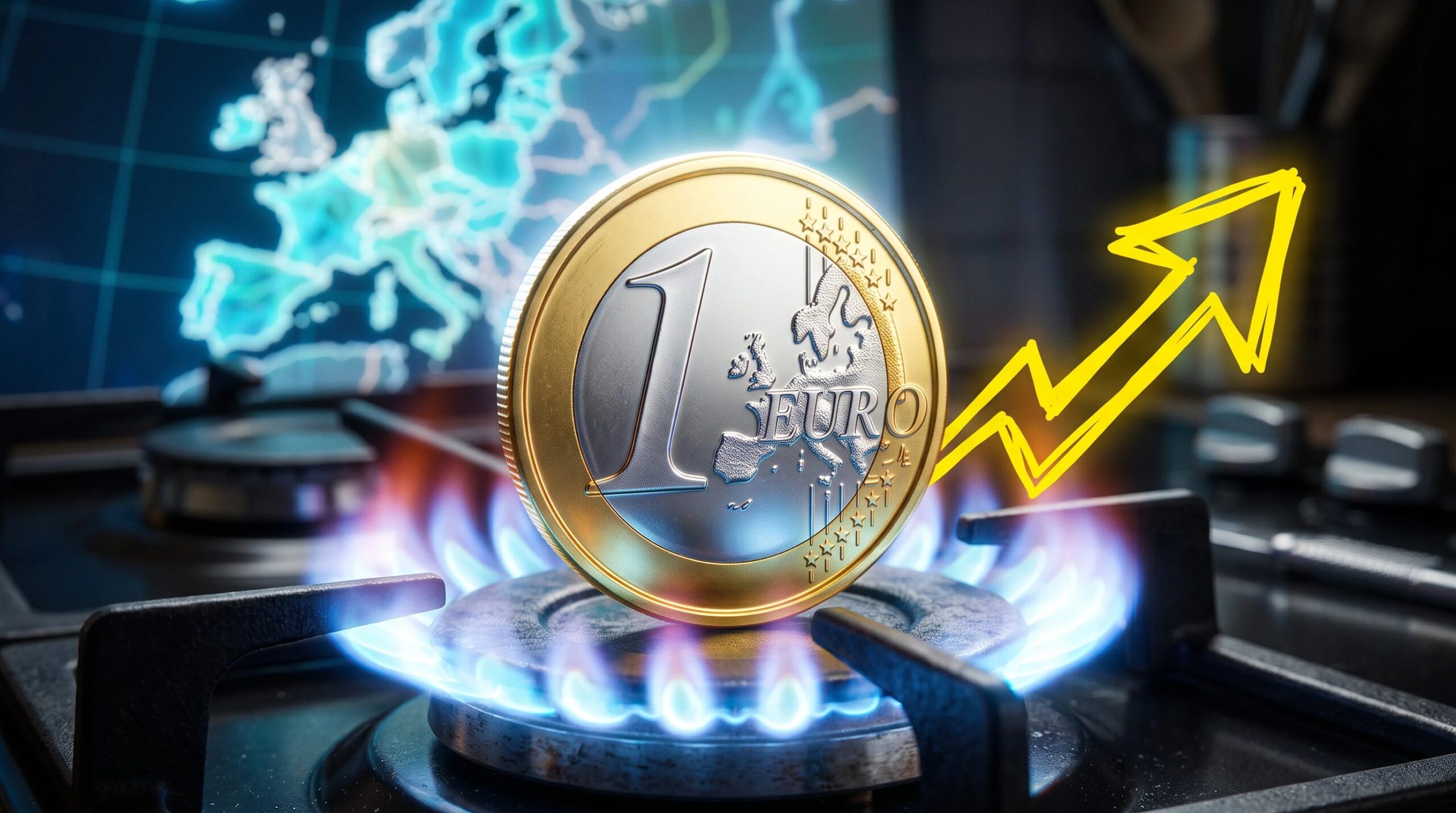
To explain the increase in energy goods we must explain that there are two components that run in parallel: in Italy, regulated energy, i.e. domestic users in the protected market, went from 18.6% to 25.9%, and unregulated energy, i.e. fuels and the free market, from 17.0% to 22.2%. In the month of September alone, these are the two items that weigh the most, with increases of 5.9% and 4.4% respectively. It is the same engine that drives the rest of the continent: in the euro area, energy is the component with the highest annual rate, at 18.8% from 14.3% in August.
At the origin there is the Middle Eastern crisis, but the mechanism is less linear than it seems. In September, 16.3 million barrels per day returned to flow through the Strait of Hormuz compared to 19.5 before the war, more than 80% of previous volumes, yet Brent remains around 100 dollars a barrel. So how is it possible that the price is still so high? The reason is simple: prices are still so high because there is a risk that the price of a barrel could rise again. And in cascade the cost of the barrel is then passed on to families.
The transition from international markets to families arrived on October 1st. Arera set a benchmark electricity price of 43.43 cents per kilowatt hour including taxes for the fourth quarter, up 37.3% from the previous three months. The Authority attributes the increase to supply costs, which have risen by 63.4%, and to the geopolitical instability that keeps gas prices high, to which electricity wholesale remains linked.
That 37.3%, however, only concerns the approximately three million vulnerable customers who remained in Greater Protection, not those who have switched to the free market, and measures the change between two quarters: over the entire year, the spending of the typical customer goes from 608.72 to 665.38 euros, i.e. 9.3% more. In euros, for a family of three the quarterly bill rises from 173 to 237 euros, a difference of 64 euros; for one of four the bill is close to one hundred euros.
Core inflation starts to rise again: price increases come from energy
The figure that says something new is not 4.2%, but underlying inflation. It is the indicator that is obtained by excluding the most volatile components from the basket, i.e. energy and fresh food, and which serves precisely to understand whether the price increases are taking root in the rest of the economy. In recent months it had stood still while the energy ran. In September it rose from 1.5% to 1.7%, and that calculated net of energy goods alone went from 1.7% to 2.0%.
That’s two tenths, not a surge. But they are the first sign that the energy shock is starting to spread to the rest of the basket, exactly what the ECB says it fears. It’s the classic mechanism: if producing and transporting a good costs more, sooner or later companies pass on the increase to the selling price.
And the movement is not just Italian. In the euro area, underlying inflation, calculated net of energy, food, alcohol and tobacco, rose to 2.5% from 2.4% in August, while that net of energy alone went from 2.1% to 2.3%.
How much the prices of different spending categories have increased
The indicator that the consumer perceives is the so-called shopping cart, the set of food and home and personal care products: in September it grew by 1.7% on an annual basis, almost double the 0.9% of August. High purchase frequency products, i.e. those that end up in the cart almost every week, went from 4.3% to 5.3%.
Above all, unprocessed foods are the driving force, from 3.8% to 5.5%: transport costs weigh heavily, but also a summer that compromised several harvests.
What to expect in the coming months, between winter and the ECB meeting on 29 October
The European Central Bank has already reacted. On 10 September the Governing Council raised the three reference rates by 25 basis points, the second increase of the year after that of June and the pause in July. Christine Lagarde, president of the ECB, explained that inflation will remain above the 2% target for a prolonged period. The next monetary policy meeting is October 29th.
Compared to the last major price crisis, that of 2022, the difference is in the nature of the shock. Then two crises came together, the supply crisis left by the pandemic and the energy crisis triggered by the invasion of Ukraine, and prices had already been rising for over a year when the increase in energy prices arrived. Today there is essentially only one shock, and the levels remain far from the peaks of three years ago.
But winter remains. European Energy Commissioner Dan Jørgensen warned that it will be a challenging season, with very high prices, and climate trends will be one of the decisive variables. And we will have to understand whether that cost, more or less high, will affect everyday lives.