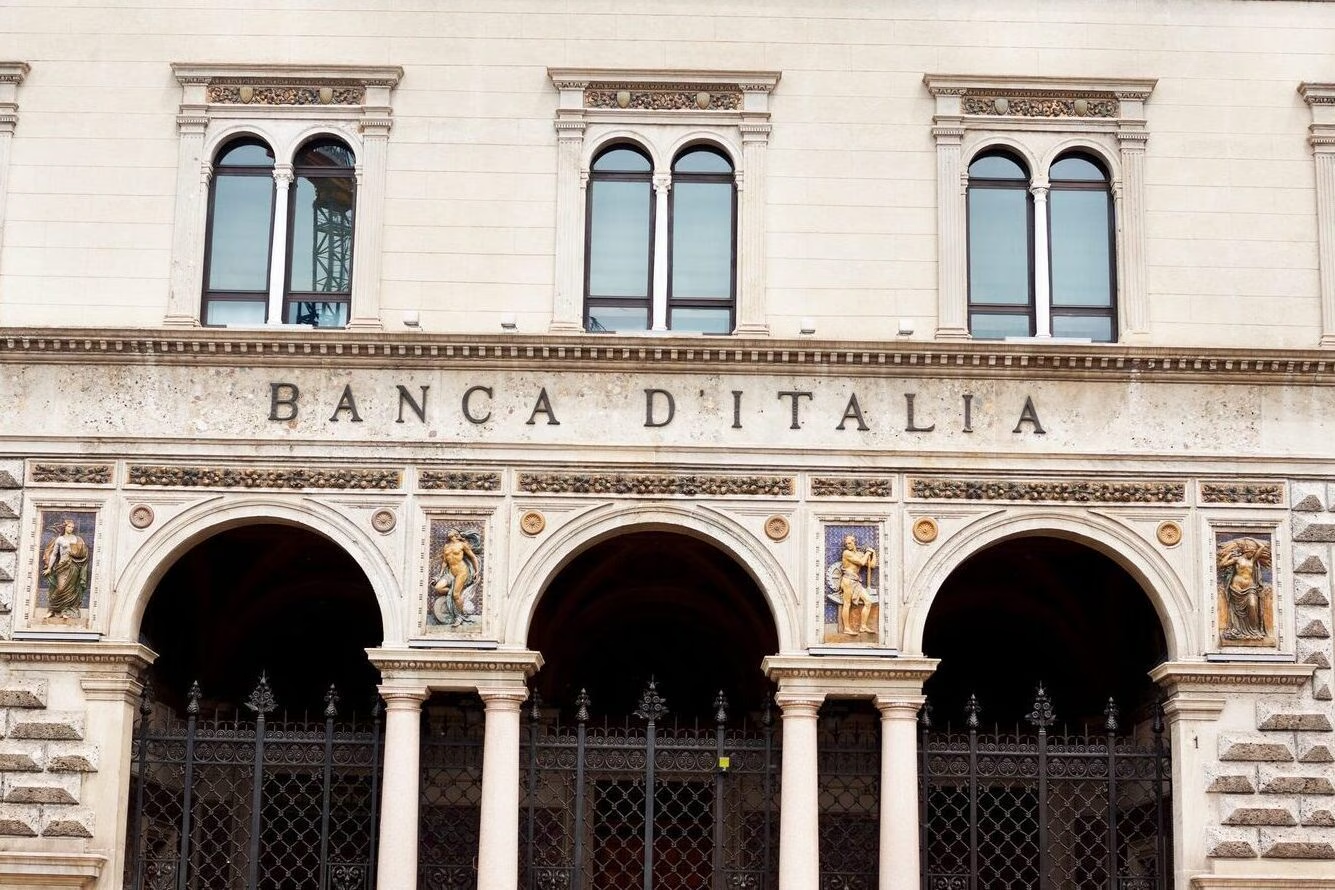
Each country has its own Central Bank, the Italian one is precisely the Bank of Italy. Unlike commercial banks, where citizens can request mortgages or make investments, the Bank of Italy does not address the public directly: its role is fundamental for the functioning of the economic system; maintains price stability, supervises the correctness and solidity of banks, manages the circulation of the euro and payments, collaborates with the State in the management of public finances and protects citizens’ savings.
The Bank of Italy works together with the other European central banks to decide how much money to print and therefore circulate, furthermore it has the task of keeping prices stable and avoiding sudden changes in excessive inflation. Issues banknotes in eurosmonitors their authenticity and disposes of damaged ones, manages the state’s money reserves. Check that the commercial branches, i.e. those where people keep their savings or ask for loans, behave correctly: if a bank risks failing, the Bank of Italy could intervene to “save” it.
Our Central Bank manages and supervises the systems that allow money to be moved safely between banks and people (transfers, payments); she is the state treasurer and is also responsible for collecting sums for taxes, salaries of public employees, pensions and other public expenses. It carries out some activities on behalf of the Ministry of Economy and Finance, including the placement of government bonds on the national market and also supervises the financial markets, with the aim of ensuring the stability of the systems, transparency and quality of services, to protect savers. It has a supervisory department that analyzes suspicious banking transactions and reports any illegal activities such as money laundering.
The Bank of Italy promotes financial education, especially among younger people, through dedicated channels that offer practical advice and information to learn how to consciously manage money. It also represents Italy in the main international economic forums, such as the International Monetary Fund or the World Bank, where it contributes to guiding global decisions and protecting the economic interests of our country. Finally, it should be remembered that the Bank of Italy is led by a governor and a governing body, and operates autonomously from politics, making decisions independently of external pressure.