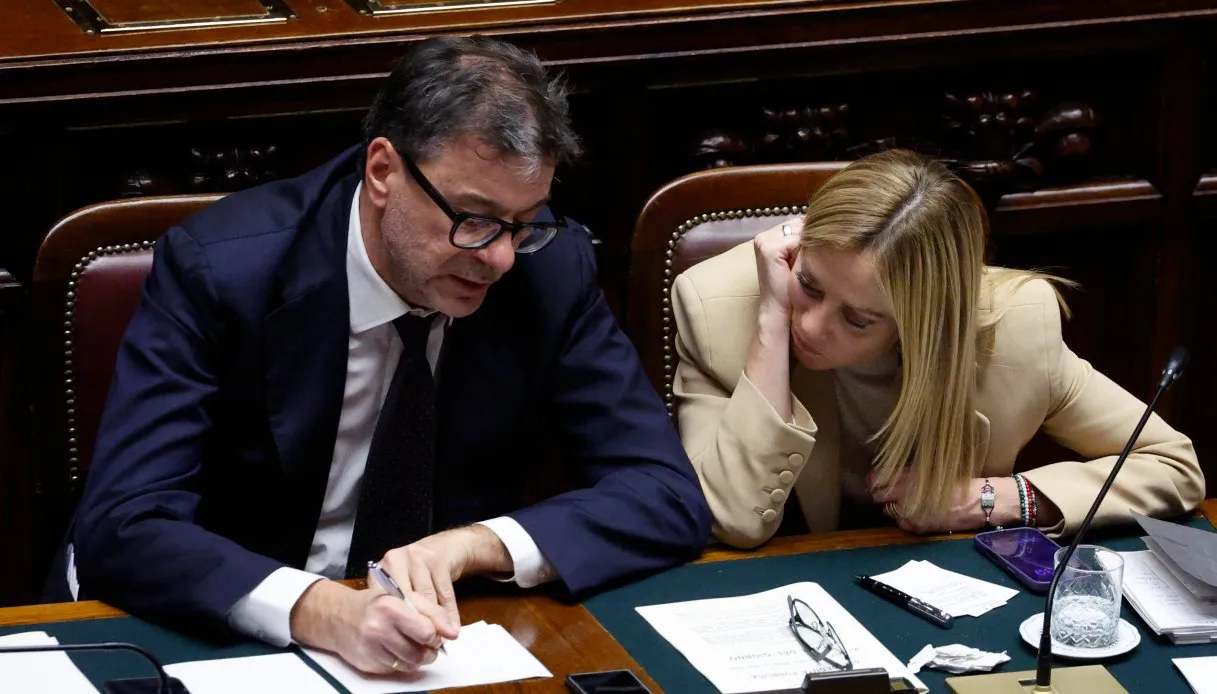
The government led by Giorgia Meloni has officially opened the construction site of the next Budget Law, the last of this legislature. The confrontation between the majority and the executive started with the parliamentary resolution on energy flexibility and with the debate on Safe, the European instrument for financing defense.
The timing and the crux of the deficit
Before knowing the definitive contents of the maneuver, we will have to wait for two key deadlines:
- on September 22, when the final certification on the 2025 deficit/GDP ratio will arrive;
- 15 October, the deadline for sending the budget planning document to Brussels.
If the deficit remains at 3.1%, as indicated in the preliminary estimate, it will not be possible to close the excessive deficit procedure opened by the EU in 2024 early. However, if it falls below 3%, greater public finance space will open up.
Giorgetti, for his part, continues to maintain a line of prudence on the accounts, while underlining the new estimates of the Parliamentary Budget Office, which has revised GDP growth upwards to 0.9% in 2026.
Flexibility on energy and defense
The government will ask Europe for the maximum flexibility granted: 0.6% of GDP for energy and 0.9% cumulative until 2028 for defence. The latter amount is included in the margin of 1.5% per year allowed. In absolute terms it is a total of 35-36 billion, of which around 14 billion for energy and 21-22 billion for defence. A part of the resources allocated to defense could also be used for measures financed under Safe.
According to some reconstructions, the executive is also studying a mechanism to free up resources, shifting expenses already made or planned to energy and defense items. The objective would be to obtain additional margins for the maneuver.
Pensions, the League match
Among the hottest topics is social security. With the farewell of Quota 103 and Opzione Donna, from 2027 the automatic adjustment of the requirements to life expectancy is expected, with the old-age pension rising to 67 years and one month and the early pension to 42 years and 11 months for men. The League, however, aims to avoid this step and introduce:
- an early exit set at 64 years;
- a flexible Quota 41, which would allow you to retire with 41 years of contributions regardless of age, but with entirely contributory recalculation of the allowance.
These are measures that divide the majority, also due to the high costs in the long term, and which would require a compromise so as not to burden the INPS accounts excessively.
The fiscal front: Irpef, car tax and other hypotheses
On a fiscal level, the objective shared by several parties is to extend the Irpef rate of 33% to incomes up to 60,000 euros, compared to the current threshold of 50,000, with an estimated cost of 3-4 billion euros, to be compensated with a reorganization of deductions for incomes above 200,000 euros. The other proposals on the table concern:
- Forza Italia is pushing for the extension of the incremental flat tax to VAT numbers, the healthcare cashback and the abolition of car tax;
- a possible reorganization of the car tax linked to polluting emissions, with the aim of penalizing older vehicles and encouraging the renewal of the fleet in circulation;
- the hypothesis of a preferential rate of 5% on rents for under 35s and a revision of VAT rates.
But the coverage unknown remains
For now, the overall value of the maneuver has not been officially quantified, as reiterated by the Deputy Minister of Economy Maurizio Leo. Some majority sources, however, speak of a figure between 15 and 40 billion euros, depending on the spaces that will open up with the exit from the excessive deficit procedure.
To finance the package, Giorgetti is looking at a review of ministerial spending and, according to some rumours, also at the contribution of banks, a hypothesis dear to the League. The basic issue remains: constructing a maneuver with an electoral flavor without affecting Italy’s financial credibility on international markets.