On the evening of October 9, Trade Commissioner Maroš Šefčovič announced that the EU had reached an agreement with China to limit exports of Chinese hybrid cars to Europe. The details are not known, but the number of cars arriving on the continent from Beijing is expected to halve.
The agreement was reached to defend European companies from Chinese competition, deemed unfair given that it is based above all on enormous amounts of public funds. The consequences, however, could be a further increase in the prices of hybrid cars in the EU.
The agreement to limit Chinese hybrid cars in the EU
Very little is known about the agreement itself. Šefčovič said he should halve the number of hybrid cars arriving in the European Union from China. In the first seven months of the year, 378,000 arrived, so the new limit could be close to this figure.
With this agreement, the EU and China seem to have avoided a trade war which, in recent months, seemed increasingly likely. In fact, the European Union accuses Beijing of having put European companies in difficulty through unfair competition.
The agreement that “saves” European companies
European car companies, such as Stellantis and Volkswagen, will be the first beneficiaries of this agreement. The blockade will not only decrease the number of Chinese cars arriving, reducing competition, but could also impose tariffs causing a price increase.
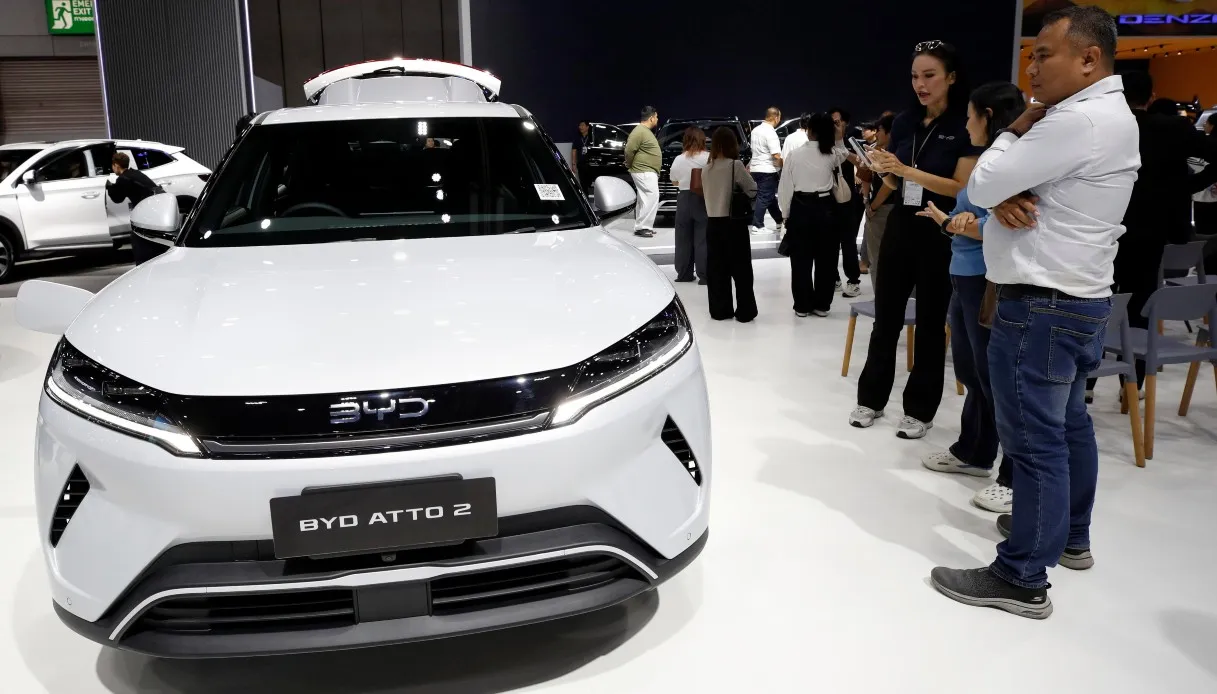
A necessary intervention, given that in recent months Chinese brands such as BYD and Geely had achieved market shares of 10% in both hybrid cars and electric cars in Europe. However, it is not just a question of price: Chinese hybrid cars tend to have better propulsion technology than European ones.
Because Chinese hybrids are better and cost less
The success of Chinese cars is based on enormous public spending. For years, the Chinese state has funded research and development in the field of electric car batteries and awarded subsidies to companies that produced hybrid and electric cars. Thanks to this program, companies such as Geely and BYD in the automotive sector and CATL in the battery sector were born.
The other consequence, however, was a price war at the expense of the state which led to the creation of a deflationary cycle which in turn contributed to depressing the country’s economy. Today, the Chinese government is actively promoting the closure of hundreds of smaller Chinese automotive companies to remedy the situation.
The consequences for consumers
If this agreement is good news for European companies in the automotive sector, which has been in crisis for some time, it is less so for European consumers. Without the influx of hybrid cars from China, there will be fewer low-price options on the market when it comes to these cars. As a result, the average cost of a hybrid car could increase.
Furthermore, given that some of the best hybrid technologies are in the hands of Chinese companies, consumers will be left with mostly European options, which do not have the same level of efficiency as electric batteries, at least until the car manufacturers of the Old Continent are able to compete in this sense with the Asian ones.
The rest of the deal
Šefčovič also announced that, as part of the deal, China would agree to remove some tariffs from European products. Among these there are also some very important categories for Italy, such as footwear and olive oil.