Every summer, when temperatures reach record levels and heat waves become more frequent, a question emerges that interests both science and social sciences: do all humans perceive heat in the same way? At first glance it might seem so, but the reality is much more complex.
The ability to support high temperatures depends in fact on a combination of biological, cultural, historical and environmental factors. Heat is not just a meteorological condition: it is an experience lived and interpreted in different ways by human societies.
How the climate influences society’s lifestyle: some examples
The idea that climate affects how we live is not new. Cultural ecology anthropologists, including Julian Steward, have highlighted how environmental conditions help shape social organization, economics, and even daily habits.
In the hottest regions of the planet, many cultural practices can be interpreted as real adaptation strategies to high temperatures.
The famous siesta widespread in many areas of the Mediterranean and Latin America, for example, does not arise simply from a cultural preference, but from the need to avoid the hottest hours of the day.
Likewise, in the countries of the Persian Gulf or North Africa, much of the traditional activities are concentrated at dawn or after sunset. Architecture also tells this story: the internal courtyards of Arab houses, the narrow streets of Moroccan medinas or the houses built in raw earth in the Sahel are the result of centuries of collective experimentation to create cooler environments without resorting to modern technologies.
In this sense, heat is not just something we suffer, but a force that contributes to shaping the way in which societies organize time, space and social relations.
Living with extreme heat: lessons from desert people
There are communities that inhabit some of the hottest areas on the planet, where temperatures can regularly exceed 45 or even 50 degrees. Studying these populations allows us to understand how humans have developed extraordinary forms of resilience.
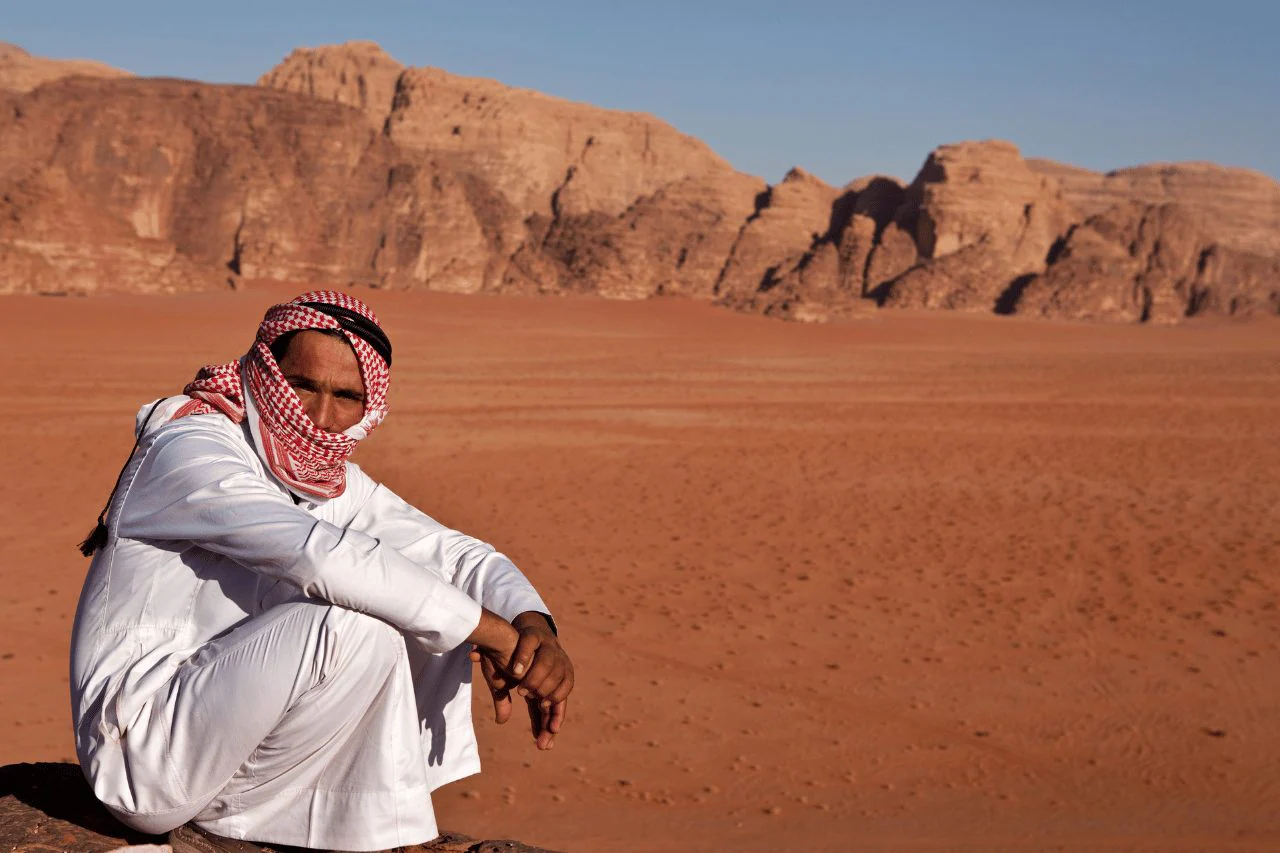
The Tuareg of the Sahara are often cited as a case in point. Their long dresses and the traditional veil covering the face may appear counterintuitive to those who associate the heat with the need to uncover themselves.
In reality these garments protect from direct solar radiation, reduce the loss of liquids and create a sort of microclimate around the body. Similarly, the Bedouins of the Arabian Peninsula have built up a detailed knowledge of the territory over time. of air currents and water sources that allows them to move in apparently hostile environments.
Australian Aborigines also developed amazing techniques for living with extreme heat. Some research has highlighted how traditional knowledge of the landscape, handed down orally for generations, allows us to identify natural refuges, safe routes and water resources invisible to external observers.
These examples demonstrate that climate resilience does not only depend on physiological, but above all on the accumulation of cultural knowledge that allows us to interpret and manage the environment.
The ability of the human body to adapt to high temperatures
One of the most fascinating findings of modern physiology concerns the human body’s ability to change in response to the environment. This process is called acclimatization.
Studies of agricultural workers, soldiers and athletes show that two to three weeks of regular heat exposure is enough to produce significant changes. Sweating becomes more efficient, blood circulates better to the skin and the heart works with less effort during physical activity.
Some researchers have observed that inhabitants of tropical regions begin to sweat earlier than those living in temperate climates and often have a greater efficiency in heat dissipation.
However, such differences are primarily the result of prolonged exposure to the environment and not of presumed biological superiority. This finding has important contemporary implications. A person born in Scandinavia who spends years in the Persian Gulf may develop a much higher tolerance for heat than someone who grew up in southern Europe but had little exposure to high temperatures. Biology, therefore, is less deterministic than previously thought.
Cultures’ adaptation strategies to the heat
The French anthropologist Marcel Mauss (1934) argued that every society develops “body techniques”, i.e. culturally learned ways of using one’s body in the environment. The relationship with heat is a perfect example of this.
Many practices that today we consider simple traditions can be reinterpreted as sophisticated climate adaptation strategies. The Mediterranean siesta, the white houses of Andalusia, the internal courtyards of Arab homes, the shuttered wind towers and the shaded spaces of North African markets represent solutions developed long before the invention of air conditioning.
Nutrition also plays an important role. In many tropical societies, minimally processed foods are consumed, rich in water, spices and fermented ingredients. Some studies suggest that the use of hot spices can promote sweating and indirectly contribute to body cooling.
Ultimately, heat is not just a matter of degrees Celsius. It is a biological, cultural and historical phenomenon. Societies that have lived for centuries in extreme environments demonstrate that climate resilience does not depend solely on genetics or technology, but also on the collective capacity to develop knowledge, practices and ways of inhabiting the world.