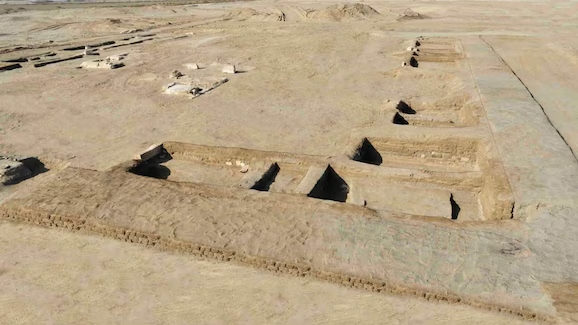
How were the millions of blocks used to build the stepped pyramid of Zoser (mid-27th century BC), at Saqqara, the oldest known in Egypt, raised? A study published in PLOS ONE proposed a possibility that had so far been little considered: the use of water power. A hydraulic system with wells, platforms and floats could have contributed to the creation of the pyramid 4,700 years ago. The step pyramid of Zoser was built around 2630 BC. C. by the architect Imhotep, using limestone blocks of local origin. It represents the final phase of a complex characterized by several phases, composed of a series of extensions of an original mastaba (the oldest form of Egyptian monumental tomb) to which the orders of steps were subsequently added. The structure is more than 60 meters high, and its base measures 125×109 meters.
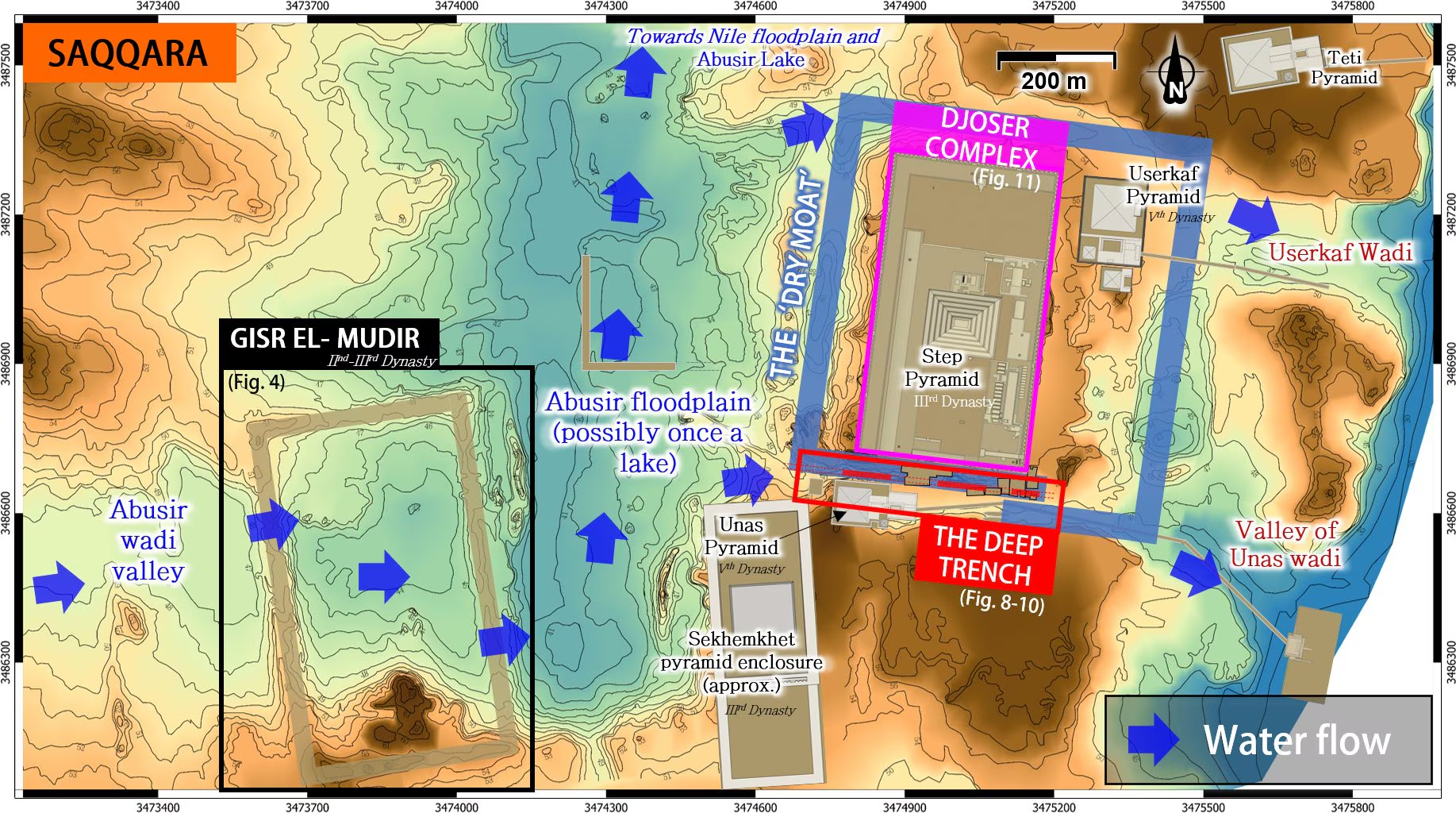
According to Xavier Landreau and his French interdisciplinary research team, some structures in the Saqqara landscape may have formed a hydraulic system. The monumental enclosure of Gisr el-Mudir could have retained water and sediment from temporary desert waterways, while the so-called Great Trench, surrounding the Zoser enclosure complex, would have performed sedimentation, retention and filtering functions. The water thus collected from a temporary lake could have reached the underground wells of the pyramid.
The most innovative part of the hypothesis concerns the large northern well. The authors propose that inside there could have been a float connected by ropes and pulleys to a lifting platform. By introducing water into the well, the float would have provided the force necessary to lift the blocks, allowing the pyramid to be built from the center outwards. The model, the authors point out, is compatible with the geometry of the underground structures, but remains a hypothetical reconstruction.
The proposal has aroused interest, but also important doubts. Archaeologist Oren Siegel noted that occasional rainfall may not have provided the Gisr el-Mudir with enough water to keep such a system functioning. Egyptologist Kamil Kuraszkiewicz also pointed out that the supposed temporary lake needed for the model is not attested by Egyptian sources and may never have existed. Another objection concerns the very necessity of the system: the blocks of Zoser’s pyramid weighed on average around 300 kg, dimensions that could have allowed them to be moved by human traction.
The study therefore does not prove that the pyramid was built thanks to water. Rather, it proposes a model in which topography, hydraulic structures and underground architecture could have been part of a single system. Its validity will depend on the possibility of archaeologically verifying the ancient hydrological regime of Saqqara and, above all, the effective connection between the water collection system and the pyramid wells. The authors themselves recognize that some of these links have not yet been identified.