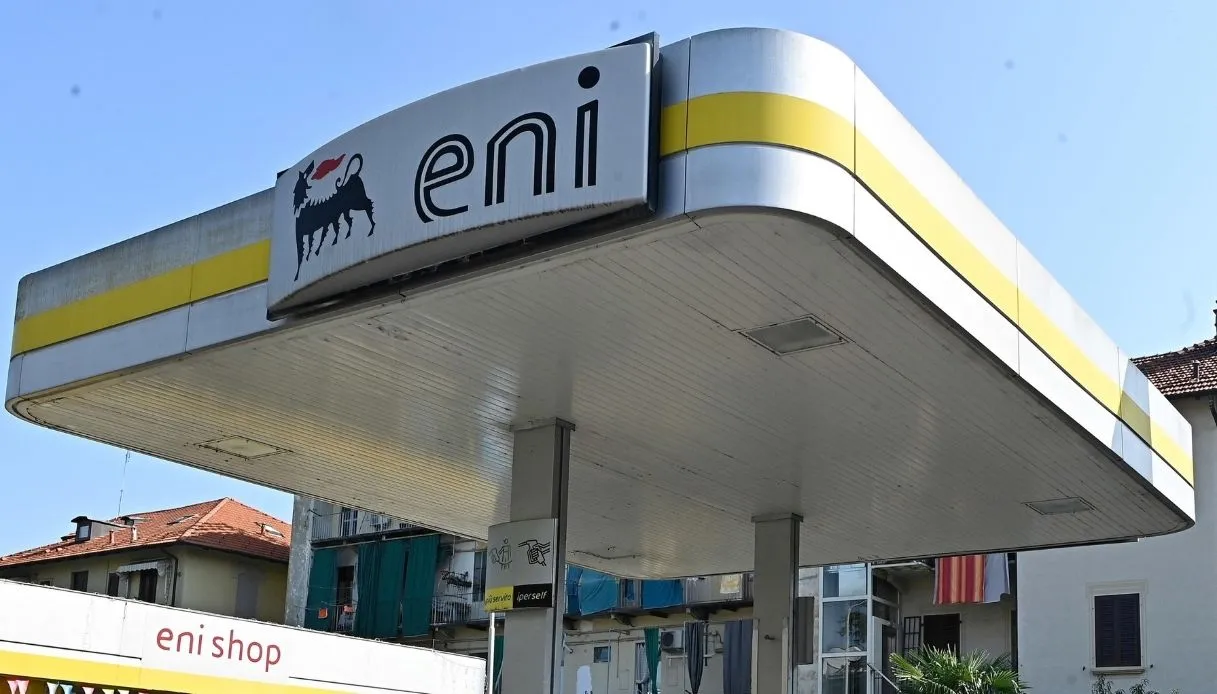
Eni announced a cap on the price of fuel, which suddenly became the main news (or almost) in Italy. Petrol at 1.99 euros per liter and diesel at 2.19. All for 30 days, starting from September 28, 2026.
A winning strategy, which could be extended until the end of the year. Help for families and businesses, this is how everything was presented. Behind the move, however, there is a specific economic interest of the company. Carlo Cottarelli explained it, numbers in hand.
What Cottarelli said about Eni and the fuel cap
Guest of A7the economist started from a premise: “Eni’s profits are very high at the moment, like those of the oil companies. It is clear that there was a fear that a tax would be placed on extra profits.”
From here began an interesting reading of this move, which “can be interpreted as ‘let’s change prices so we avoid the tax on extra profits’. Because now someone says ‘don’t put it on them anymore because they’ve already made the effort of good will'”.
He then underlined a profound doubt about the spontaneity of the operation, explaining how “it is difficult to think that Eni did it of its own free will. There must have been some pressure”. A method that recalls, he says, what happened with state shareholdings, or uses for political purposes.
How much does the discount cost Eni
Cottarelli himself does the calculation, explaining:
For every 10 cents discount, Eni has a lower revenue of approximately 60 million euros per month. Now we are talking about double, around 20 cents, which would be more or less 100-120 million euros.
If the cap remained in force only for the 30 days announced, the cost for Eni would therefore be around 100-120 million euros. In the event of an extension until the end of the year, however, the burden would rise proportionally, reaching 300-360 million.
To provide a point of comparison, in France the similar measure of TotalEnergies (cap of 1.99 euros on petrol and 2.25 euros on diesel) was estimated at 250-300 million. However, there is a substantial difference, since our neighbors have explained how the ceiling would be blown in the event of a tax on extra profits.
How much does Eni earn?
Beyond the preference that Italians will have for Eni distributors, the group will certainly have a notable image gain, which could also have an impact in the energy sector. This was hypothesized by Massimiliano Dona, president of the National Consumers Union who, commenting on the news of the cap on fuel, highlighted how a marketing wave seems to have started specifically with regards to Eni Plenitude electricity and gas.
The key point lies in the comparison between what Eni certainly loses with the discount and what it avoids if the tax on extra profits were really set aside:
- cost of the discount is today around 100-120 million;
- the tax avoided is not officially quantified but politics, with the League, comes to our aid and speaks of expected profits of 5 billion in 2026, with a state levy that could range from a few hundred million to over 1 billion euros.
From this reasoning it is very clear how Eni can break even in the worst case scenario or gain significantly in the best one.
Who really pays
Cottarelli then recalled that Eni is not the only one paying the bill. It is a state-controlled company and “about a third of the shares are in public hands” (via Mef and Cdp). The lower collection is therefore “in any case a lower collection for the Italian State in terms of dividends”. The losers are the large international investors and around 250 thousand small shareholders.
The downside, however, lies in the stop to the excise duty cuts. An operation which in the past has cost the treasury approximately 2.8 billion euros.
This reading then finds indirect confirmation in the reactions of the majority. Tajani claimed the line as a political victory, arguing that voluntary collaboration by businesses is preferable to taxing extra profits.
Salvini instead accepted the move but then relaunched, asking for a “more significant” contribution from the banks. In fact, he cited expected banking profits of around 50 billion in 2026, compared to the 5 expected for Eni.