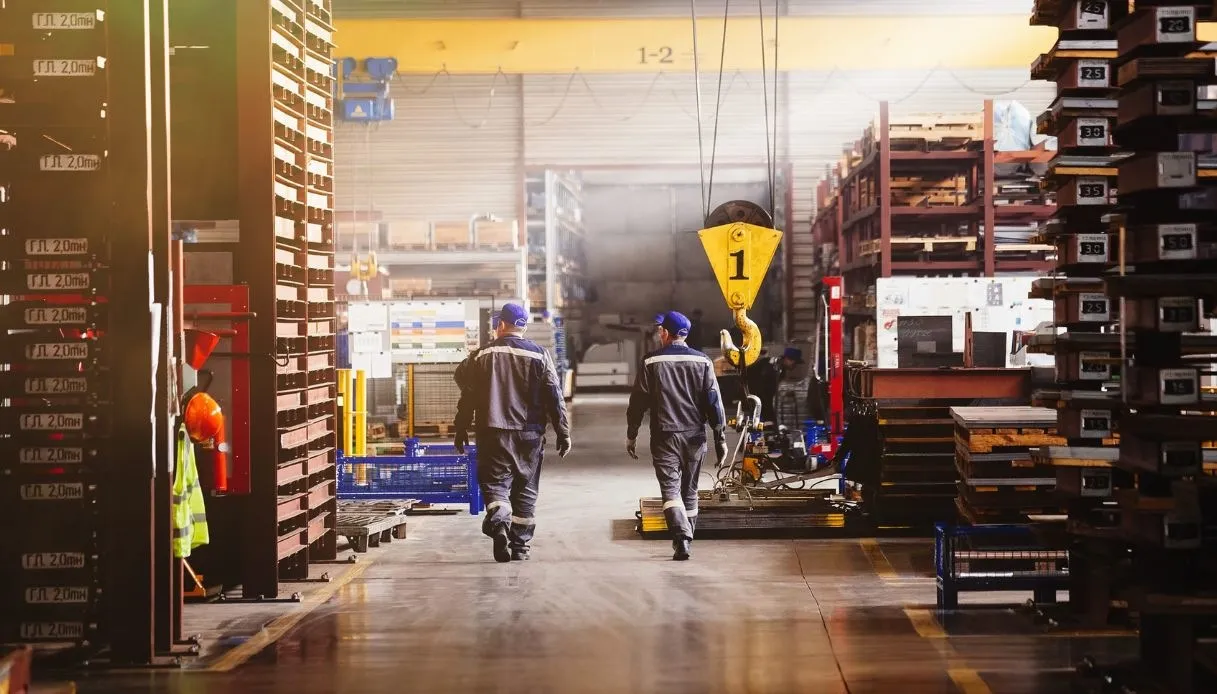
Increasingly higher electricity and gas costs can make production unsustainable and force several plants in Italy to shut down. According to experts, high energy prices are becoming an increasingly national problem. It is not just families who are in difficulty, but also large industrial centers which, if they actually were to close, would start a domino effect which would also have negative impacts on employment and the economy.
Dear energy, which plants are at risk of shutting down in Italy
The upward trend in energy prices represents one of the main threats for Italian industry today, especially for sectors characterized by particularly high consumption. Among these is the steel industry, a sector in which the cost of electricity and gas directly affects the possibility of keeping the plants active and competing on European and international markets.
The alarm was raised by Federacciai, who reported a worsening of the situation for Italian companies at the end of September and spoke of a further worsening in the coming months. And if the energy reaches levels that make the production process uneconomical, the risk is that the plants will temporarily stop, with consequences on:
- production;
- employment;
- and competitiveness of the entire supply chain.
The shutdown, even if not prolonged, would have repercussions on the entire country, considering the number of companies operating in the sector. In fact, Federacciai lists different types of processes (from integral cycle plants to steel mills with electric furnaces, as well as continuous casting and rolling plants). These are industrial centers distributed throughout the national territory, including steelworks and producers of common and special steels.
The issue of energy emission costs
Among the critical issues highlighted by Federacciai there is also the functioning of the ETS system, i.e. the European mechanism that requires industries to pay for their carbon dioxide emissions. According to the association, in the current crisis context the application of this tax on gas-fired power plants is difficult to justify. For this reason, the Italian government was asked to intervene in the appropriate EU bodies to request the temporary suspension of ETS quotas for the thermoelectric sector for as long as the emergency lasts.
While foreign competitors are able to produce at lower prices, there are two possible paths for Italian companies:
- absorb part of the increase by reducing margins;
- transfer the higher cost to the final prices.
This last possibility, however, risks losing orders and market shares. Companies thus find themselves crushed between unsustainable production costs and the need to remain competitive. In such a scenario, shutting down the plants ends up becoming an economically less onerous choice and, in the long run, almost inevitable.
For Federacciai, the time to intervene is now truly limited, because the energy issue has also become an industrial policy issue that risks dragging on well beyond the emergency period. For Italy, keeping energy-intensive plants competitive means preserving not only steel production, but also the numerous activities that depend on the steel industry, from metal transformation to mechanics, from automotive to machinery construction.