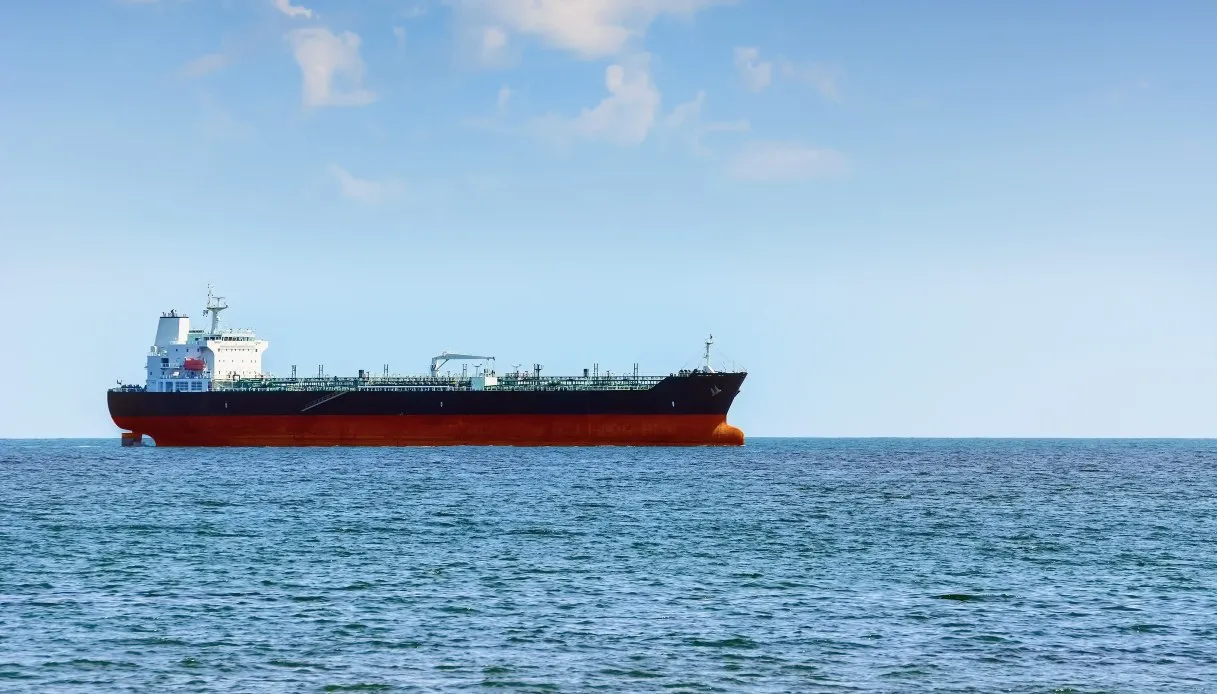
Preliminary data for September released by Kpler, a platform for monitoring global flows of raw materials, show that oil has returned to transit through the Strait of Hormuz. In September, around 16.3 million barrels per day flowed, compared to 19.5 at the average levels at the beginning of the year, before the war broke out between the US and Iran.
Despite this, the price of crude oil continues to remain very high, with Brent never moving away from $100 a barrel. If flows have resumed, what is inflating the price of a barrel?
Flows in Hormuz are at 80% of pre-war levels
According to the latest data, therefore, in September on average 83.5% of the oil that passed before the war in Iran passed through Hormuz. The Iranian blockade is proving to be less and less effective and several countries, especially Saudi Arabia, have increased exports while accepting the risk of incurring attacks by Tehran’s army.
The same routes would also have been followed by several methane tankers, those carrying liquefied natural gas, coming from Qatar. In this case, however, Kpler does not provide precise data, other than the comparison with August, when not even one of this type of vessel had passed through.
These numbers are primarily the result of US efforts to ensure cross-Strait security. The US military has cleared several routes of mines and appears able to prevent the most serious attacks.
However, there is also a certain degree of risk acceptance on the part of the crews. More and more often, oil tankers cross the Strait of Hormuz by simply making themselves invisible by turning off their transponders.
Because oil is still at 100 dollars if it passes through Hormuz
Despite these numbers, oil has undergone a new surge in recent days. Brent has returned to approaching the price of 100 dollars a barrel. Costs apparently meaningless, given that the supply of crude oil should be very similar to the pre-war one. However, it is not only the law of supply and demand on the raw material that determines the price of oil.
The markets are not thinking about today
In fact, international markets tend to calculate not only the current situation in the price of raw materials, but also short-term risks. The increase in the price of crude oil at the end of September coincided with an indiscretion by Axios which spoke of stalled negotiations between the US and Iran and an increasingly high possibility that Trump will decide on a new attack against Tehran after the mid-term elections. The markets also factor this into the price of oil.
The hidden costs that aren’t going down
When Iran began threatening to close the Strait of Hormuz, several skeptics pointed out that Tehran lacked the firepower to force such a blockade for long periods. Other observers have countered this analysis with a theory: Iran doesn’t really have to block Hormuz to get what it wants, it just needs to create a dangerous situation.
This is because even just giving the idea that an oil tanker crossing Hormuz could hit a mine or be sunk by a rocket is enough to increase a whole series of hidden costs in oil transport, such as:
- the rental prices of oil tankers, which today reach up to 1 million dollars a day;
- the costs of ship insurance.
These factors will not return to normal until the US and Iran have found a lasting agreement. Until then, oil prices are likely to remain high even as supply increases.