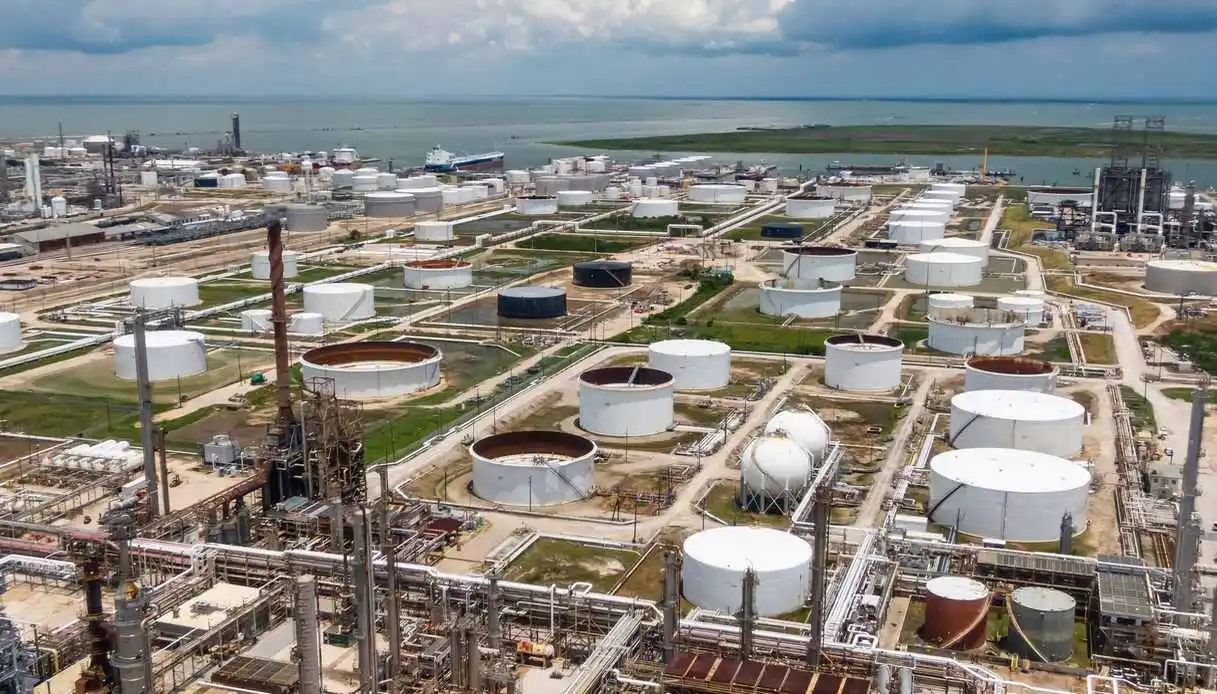
China temporarily closes the fuel tap to foreign countries and adds new tension to an already fragile energy market. The country’s major refiners have suspended exports of gasoline, diesel and aviation fuel to all destinations except Hong Kong and Macau, awaiting new guidance from Beijing.
At the moment, there is no public decree establishing a general ban. PetroChina reportedly canceled several cargoes of gasoline and jet fuel, while at least one large private refinery did not schedule exports for the month.
The decision does not mean that Italy will lack fuel. It can, however, take supply away from a market in which diesel and kerosene are already in short supply, increasing the cost of alternative supplies.
Because China stopped exports
Beijing’s priority is to rebuild domestic supplies. According to Kpler estimates, China’s commercial reserves of diesel and gas oil are about 20 million barrels lower than pre-war levels in Iran. For gasoline, the distance from the threshold deemed necessary by the authorities would be around 9 million barrels.
China has the largest refining capacity in the world and can influence the market even when it is not the main supplier of a single country. In fact, in periods of scarcity it becomes a “balance” producer: by increasing exports it helps to calm prices; keeping products within the country accentuates competition for available supplies.
| Product affected | First effect | Possible consequence |
|---|---|---|
| Diesel | Lower offer on the Asian market | More expensive transportation and logistics |
| Bna | Greater competition for cargo | Pressure on wholesale prices |
| Jet fuel | Fewer aviation supplies | Higher costs for companies |
| Marine diesel | Higher refining margins | Increase in navigation costs |
The greatest effects could concern so-called middle distillates, the category that includes diesel and jet fuel. The International Energy Agency found that diesel exports from Russia, the Middle East and Asia had already fallen by 1.3 million barrels a day from a year earlier, about 20% of global seaborne trade.
Because the problem can reach Europe
Europe does not depend exclusively on Chinese fuels. Its supplies also come from the United States, India, the Middle East and South Korea. Beijing’s blockade may, however, trigger a ripple effect: Asian buyers left without product seek cargoes in the same markets that European importers are targeting.
The result can be an increase in prices even before a real reduction in deliveries. In fact, the cost includes not only the refined product, but also transport, insurance and the time needed to get the ships from more distant suppliers.
On 1 October the Commission, together with Italy, France, Ireland and the United Kingdom, discussed the possibility of using part of the emergency diesel reserves. The comparison does not equate to a decision to immediately release stocks, but it shows that the authorities are evaluating tools to avoid further tightening of the market.
How much can petrol and diesel increase
On the morning of October 2, Brent moved around 102 dollars a barrel, while the American WTI was close to 93 dollars. Oil, however, does not alone tell how much motorists will pay.
The price at the pump depends on at least four components:
- cost of crude oil and refined products
- margin of the refineries
- transportation and distribution
- taxes and excise duties.
The Chinese suspension affects, above all, the second component.
| Market signal | Immediate effect | Arrival in Italy possible |
|---|---|---|
| Oil rise | The cost of raw materials increases | Prices at the pump with a certain delay |
| Higher refining margins | Wholesale fuel prices are rising | Pressure on petrol and diesel |
| Maritime freight rates on the rise | More expensive imports | Markup incorporated into distribution |
| Strategic stocks released | Increased temporary supply | Possible price reduction |
| Euro weaker | Oil more expensive in the European currency | Increase in import costs |
In Italy the tax factor also intervenes. The decree law of 17 September 2026 set the excise duty on diesel fuel at 622.90 euros per thousand liters until 5 October. Any failure to extend the measure could add to international tensions.