The results of the autopsies on the 5 Italian divers who died in the Maldives during a dive in the Devana Kandu cave confirmed death from anoxia, or lack of oxygen at the cellular level. The hypotheses regarding a possible shark attack were therefore completely discarded (the cave was in fact nicknamed “shark cave”), but also those linked to oxygen toxicity (due to an excess of oxygen at great depth due to the mixture of gas breathed through the tanks) or to nitrogen narcosis (an effect of this gas that appears beyond 30-40 meters of depth).
The outcome of the tests, therefore, clarifies the cause of death, but not the manner: the crucial question that the investigators still have to answer is what prevented the five expert divers from returning to the surface before exhausting the autonomy of their tanks.
What the autopsies revealed on the bodies of the 5 Italian divers
The medico-legal investigations were carried out on 25 and 26 May 2026, approximately 11 days after the death of the 5 divers, at the Gallarate hospital, an obligatory logistical choice after the return of the bodies to Italy via the Milan Malpensa airport.
The picture that emerged from the tests is clear. For all five divers the cause of death was the same: the air reserve ran out completely while the group was still inside the cave, at about 60 meters deep. The lack of oxygen progressively deprived the brain of an essential element, leading first to loss of consciousness and then to respiratory arrest.
The toxicological analyzes and the examination of the tissues also made it possible to categorically exclude some of the hypotheses circulated in the first hours after the tragedy. No traces of carbon monoxide or other harmful substances were detected, which eliminates the scenario of accidental contamination of the cylinders during refilling. At the same time, no lesions attributable to attacks by marine fauna, including sharks present in those waters, were found on the bodies: it must be said, however, that this last hypothesis was considered one of the most unlikely from the beginning.
Hypotheses still open on the dynamics of the accident
If the autopsies have defined the physiological cause of death, the reconstruction of the complete dynamics of the accident is still open. The basic question remains the same: why did five experienced divers, including two instructors who knew the area well, remain stuck in a cave until all the available air was exhausted?
To frame the story it is useful to remember the context. In the Maldives, recreational diving is generally allowed up to 30 meters deep, while the five would have gone much further, to at least 60 meters. Furthermore, the Devana Kandu cave is an extremely complex environment: the entrance is between 55 and 60 meters deep, with a deepest point exceeding 66 metres.
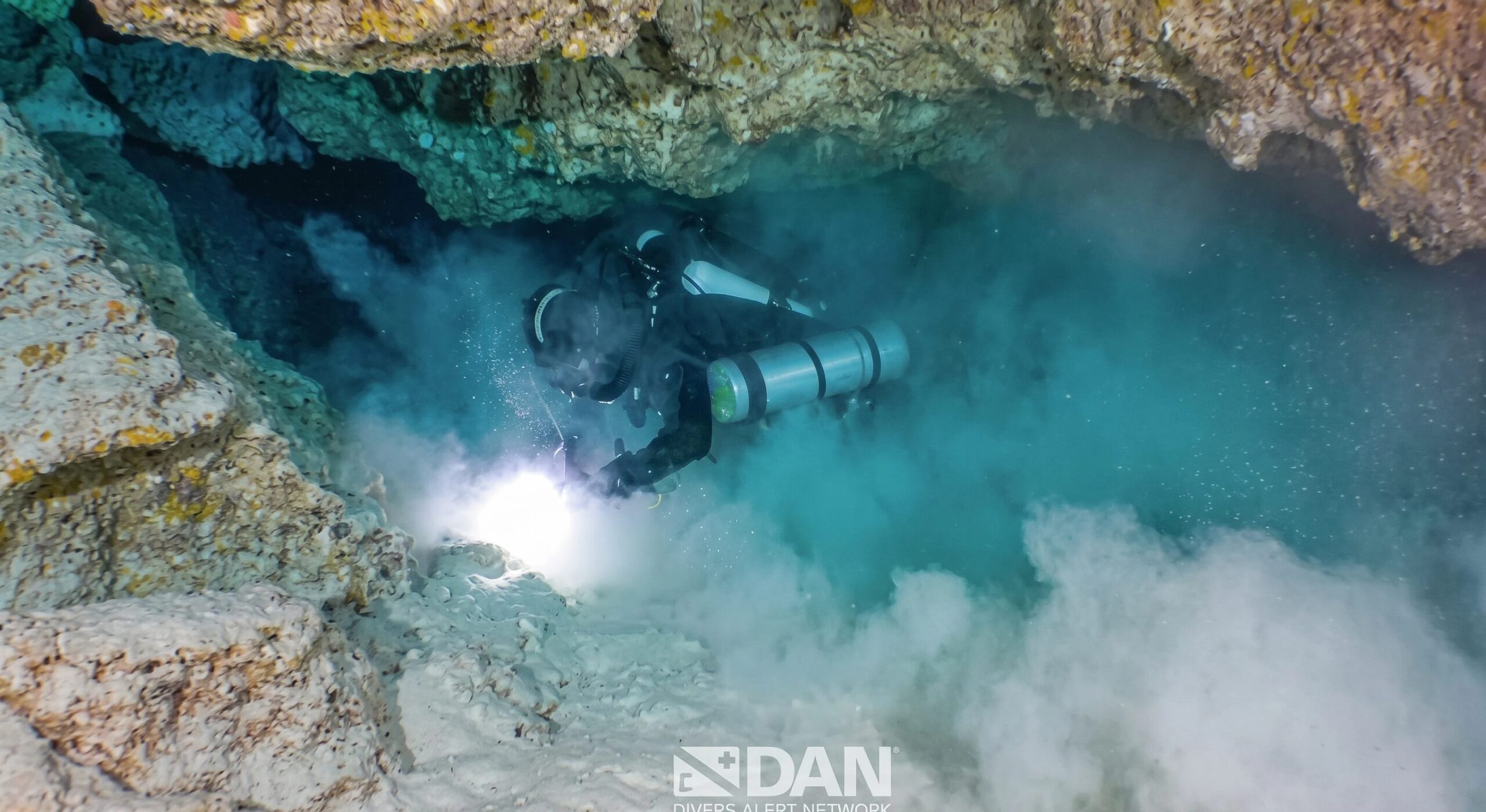
It is divided into three distinct environments: a horizontal opening in the coral wall (relatively illuminated), a completely dark chamber with an extension of approximately 70-78 meters and, finally, a third environment similar to a tunnel, completely dark and extremely narrow, in which even a single person struggles to move. Here the walls of the cave are entirely made up of limestone rocks, while on its floor there are sandy and even finer sediments, with a strong risk of sediment lifting, which could have eliminated visibility.
In short, the cave represented a risky environment even for the most experienced divers: not surprisingly, a military rescuer from the Maldives National Defense Forces had lost his life during the initial searches for the bodies, while the final operations (extremely complex) were carried out by a team of expert Finnish divers, who had used advanced technical systems supplied by the United Kingdom and Australia.
Then there is a relevant technical element: the group was using standard compressed air (without helium), a mixture which at 50-60 meters depth reaches a density of around 9 grams per litre, well above the physiological tolerance limit of 4 g/l. The divers therefore operated with a mixture at the limit and with very limited times (about half an hour of autonomy), in which any unexpected event could be fatal. In panic situations, among other things, breathing accelerates and oxygen consumption increases, with the risk of running out of air sooner than expected.
This is why the hypothesis of the loss of orientation inside the cave remains one of the most probable, with the five victims remaining trapped in one of the rooms of the cave without being able to find the exit: the Finnish divers who recovered the bodies in the innermost part of the cavity have in fact described an environment with extremely narrow and totally dark passages.
Then there is a second hypothesis, put forward already last May by Dr. Pasquale Longobardi (vice president of the Italian Society of Underwater and Hyperbaric Medicine, SIMSI), relating to an unexpected underwater current. On May 14, the day of the tragedy, the southwest monsoon was already intensifying and the Maldivian meteorological service had issued a yellow weather warning. Added to this was a syzygy tidal condition (the new moon was only two days away), which amplifies the volume of water passing through the channels between the atolls (the so-called kandu), increasing the intensity and unpredictability of the currents. The strong currents, amplified by the syzygy, would have been conveyed inside the cave by the shape of the canal. The incoming flow of water would have pushed the divers towards the innermost chambers, making it impossible to swim against the current to reach the exit and effectively trapping them inside the cavity.
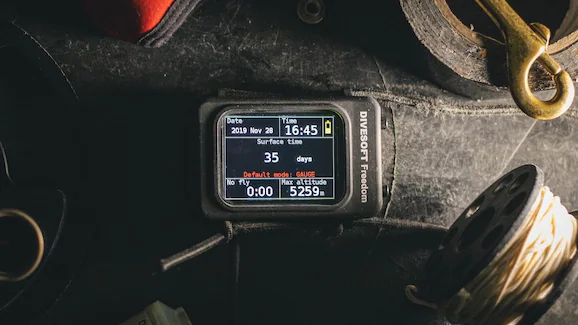
To close the circle, investigators will now have to analyze the key elements seized: the wrist computers, which record the complete profile of the dive and which in the event of an accident function as a sort of “black box”, together with the depth gauges, helmet cameras and delivery systems.