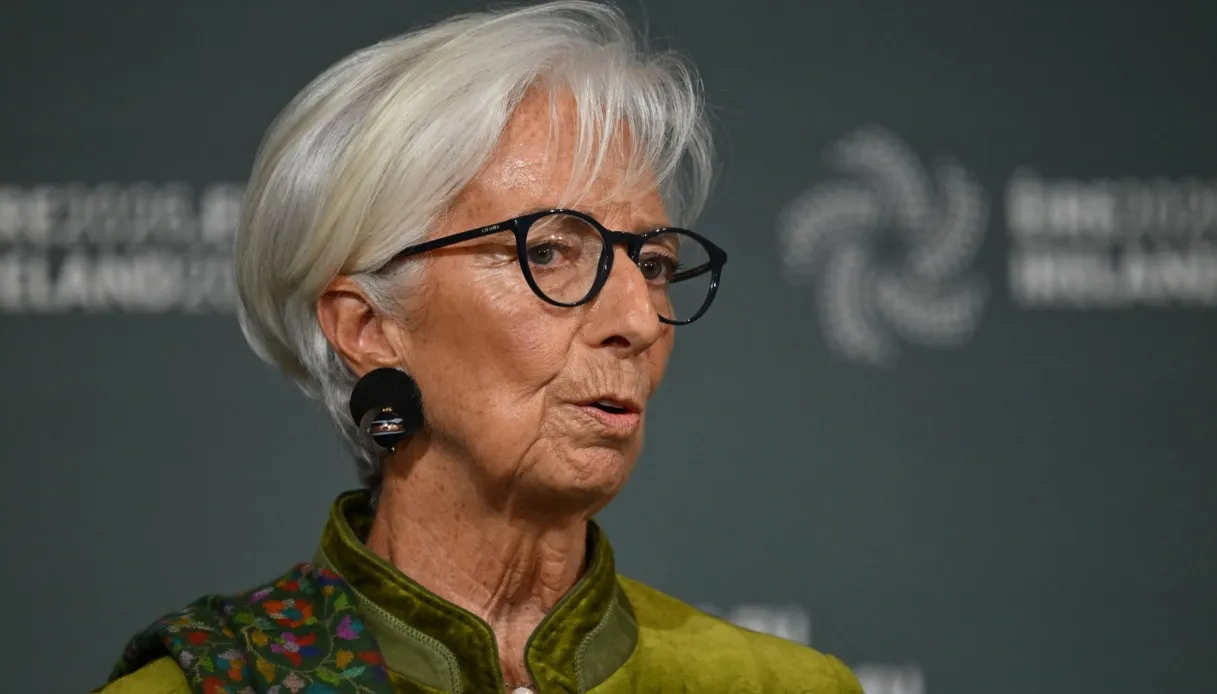
In Europe there is a wind called early resignation. After Sanchez, Christine Lagarde, President of the ECB, also once again expresses the possibility of bringing forward the end of her mandate, scheduled for October 2027.
He told the French newspaper La Croix in an interview given during the last week of September. Lagarde scales back the scope of the choice, but upon closer inspection, a broader strategic plan could be hidden behind her exit.
The reasons for early resignation and the implications
Responding to rumors about her possible resignation before the end of her mandate, the Eurotower number one specified:
If I were to leave the ECB before the end of my mandate, it would only be a matter of a few months. It won’t change the world.
Regardless of how the President downplayed her exit, the institutional implications that will follow are different:
- the exclusion of a female component in the senior management of the ECB;
- prevent the results of the presidential elections in France from influencing the appointment of whoever will succeed her.
The strategic reason behind a possible step back of a few months in fact responds to the need to secure the succession process in view of the French presidential elections in spring 2027, in relation to which Lagarde excludes a possible candidacy, saying she is too old to be able to play such a demanding role. In any case, the objective of European diplomacy is to complete the process of appointing the new president before the outcome of the vote in France could complicate negotiations between member countries.
Added to this dynamic is the exit of Isabel Schnabel, a member of the Executive Committee who will leave her position in January 2027 a year early to take up a role at the International Monetary Fund.
The times and institutional procedure for the new appointment
The formal process for electing the members of the Executive Committee of the ECB lasts three to four months. Therefore Christine Lagarde will most likely remain in office until at least March 2027 so as not to leave the chair vacant.
The assignment of the presidency, with all the other supporting figures, must take into account the geographical origin of the candidates and the overall composition of the Committee. There cannot be more than a certain number of members from the same country in the Union.
Who are the possible candidates for the presidency of the ECB
In the debate for the succession to Christine Lagarde, the profiles currently indicated by the European chancelleries are:
- Klaas Knot, former governor of the Dutch central bank;
- Joachim Nagel, current president of the German Bundesbank;
- Pablo Hernández de Cos, general manager of the Bank for International Settlements and former governor of the Spanish central bank;
- Mário Centeno, former governor of the Portuguese central bank.
The issue of gender representation
A crucial issue in the negotiation concerns the presence of women at the top. With the departures of Christine Lagarde and Isabel Schnabel, the Executive Committee risks being left without female members, considering that the governors of the 21 central banks of the Eurozone are currently all men.
To rebalance gender representation, France is evaluating and proposing the profiles of Agnès Bénassy-Quéré, current number two of the Bank of Franceand the economist Hélène Rey.