Europe is going through weeks of strong social tension. From the blockades in Southern Italy to the clashes in Milan, from the protests in France and Albania to the camps in Spain, hundreds of thousands of people took to the streets for different reasons, linked by a common thread: the cost of living has become unsustainable for an ever-increasing part of the population.
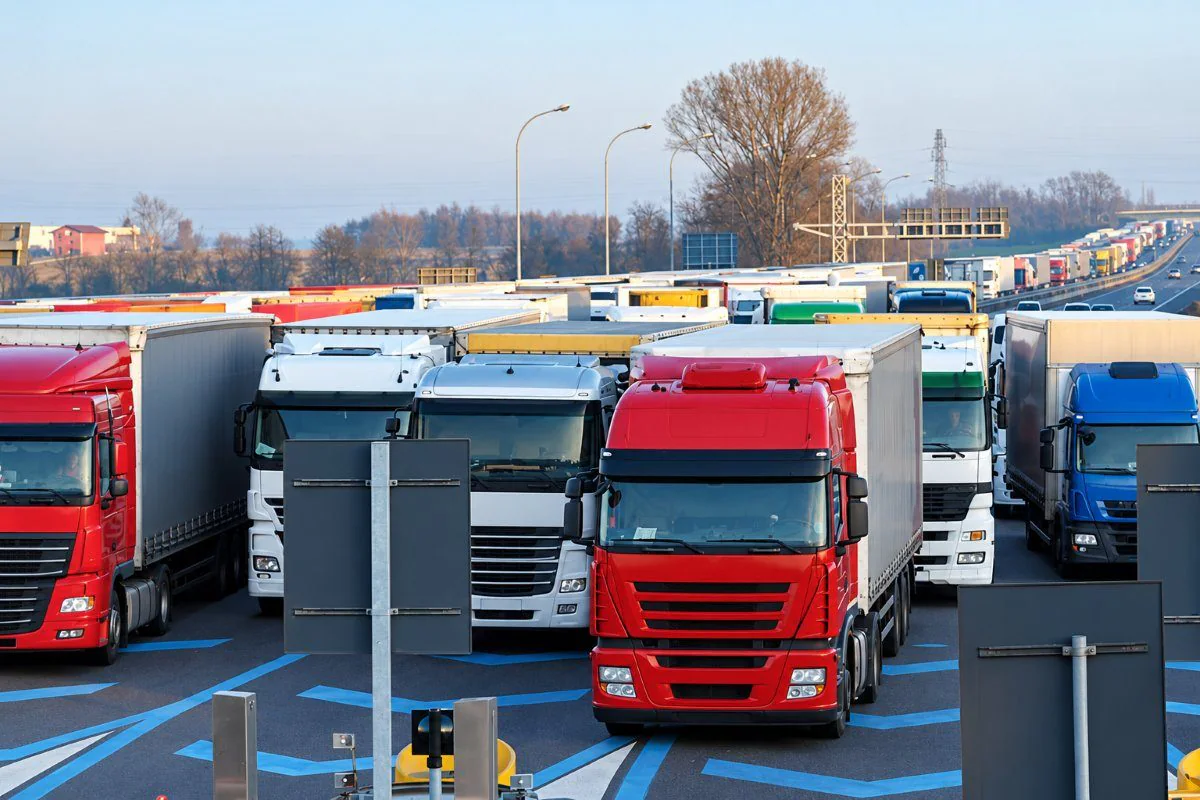
In Italy, the protest of hauliers against high fuel prices has paralyzed Southern Italy and continues today: as reported by Autostrade per l’Italia, on the A1 Milan-Naples the junction with the A30 Caserta-Salerno has been temporarily closed for those coming from Naples. Milan, on the other hand, is dealing with two consecutive days of urban warfare in the center, which have led to hundreds of arrests, with 80% of those arrested being minors.
In France, demonstrations against the high cost of living have degenerated into very violent clashes, with almost 2,400 people arrested in a single day. In Albania, however, students have been taking to the streets for days to ask for the resignation of Prime Minister Edi Rama. Last but not least, Spain, where protests over the housing crisis led to an encampment in the main square of Madrid which has lasted for three weeks now.
What unites all these squares goes beyond individual demands: as highlighted by some experts, the protests have a common basis, that is, a generation incapable of imagining its own future. According to the latest Eurobarometer data, more than half of European citizens have little confidence in the functioning of continental democracy and in national parliaments. And the young people themselves seem to believe it less and less, as they are looking in the streets for answers that the institutions are unable to give them.
Protests in Southern Italy
Despite the limited media coverage, the South has been protesting for days: the spark was above all the price of fuel. Diesel has in fact reached the threshold of 2.30 euros per litre, according to the findings of the Ministry of Business and Made in Italy, with an estimated increase of almost 40% compared to the same period in 2025. For hauliers, who have fuel among their main costs, these are exorbitant increases.
For days, trucks and tractors have been patrolling the main road junctions of Calabria, Sicily and Puglia. In Calabria the first spontaneous protests had already begun at the beginning of October: now the mobilization also involves farmers, with 17 initiatives to block truck drivers organized by the Regional Logistics Federation, which also involved the port of Gioia Tauro, the Lamezia Terme airport area and the A2 junctions in the province of Cosenza.
In Sicily, however, the situation risks becoming an emergency. The blocking of heavy vehicles is compromising fuel supplies at service stations, public road transport and food distribution. Antonio Graffagnini, president of Anav Sicilia (the association of traveler transport companies), reported that already on Friday some tankers had not made deliveries to the depots, bringing reserves close to the limit.
Meanwhile, fresh products (such as fruit, vegetables, milk, meat) are starting to run out in supermarkets. In Palermo there were queues at petrol stations, with citizens having to fill up early for fear of running out of gas.
Today, 19 October, the hauliers’ protest also reached Basilicata. Truck stations at the entrances to Potenza Est and Ovest and in the Tito industrial area on the Potenza-Sicignano connection. Traffic disruptions, but without road blocks, are also recorded in the Metaponto area, on the Lucanian section of the Jonica state road 106 on the border with Puglia and Calabria.
Infrastructure Minister Matteo Salvini has brought forward the meeting with the hauliers’ representatives to tomorrow, 20 October (initially scheduled for 27 October). The outcome of the roundtable will be decisive: the demonstrators have made it known that, in the absence of concrete answers, the mobilization could intensify.
The clashes in Milan in the Duomo area and the supermarkets attacked by young people
While the South protested with demonstrations and road blocks, in Milan there were violent clashes in the historic centre.
Hundreds of young people smashed windows, looted shops (including a Carrefour in via Torino, a Footlocker, a Decathlon in Piazza Castello, a Levi’s and an Under Armor near Cordusio), destroyed bus shelters and set fire to bins.
The violent groups clashed with the police, who responded with water cannons and tear gas: in total, over 270 young people were stopped, 80% of whom were minors. The clashes, which thus overshadowed the protests that began peacefully on Saturday 17 October, led Prime Minister Giorgia Meloni to call a meeting on public order for today, for which a second “Caivano decree” is being evaluated.
In the meantime, controversy broke out between the mayor Giuseppe Sala (who spoke of insufficient law enforcement) and the Minister of the Interior Matteo Piantedosi, who accused the Milanese mayor of being a “radical chic”.
The situation in France
In France the situation is even more serious. According to government estimates, Saturday’s large demonstrations against the high cost of living involved around 550,000 people across the country, degenerating into clashes with police, looting and fires in several cities, including Paris, Lyon and Marseille.
The numbers give the measure of what happened: 2,397 people stopped and 997 policemen and gendarmes were injured, seven of them seriously. Numbers much higher than the provisional toll communicated on Saturday evening, when the government spoke of 1,200 arrests and 150 injured officers. In the square there were not only students, who have been protesting for days, but also trade unions, political parties and exponents of the “yellow vest” movement, which eight years ago organized widespread protests across the country.
Clashes continued in Paris on Sunday, especially in the Place de la République area: hundreds of people gathered despite the large police deployment, officers used tear gas and stun grenades and groups of demonstrators looted shops in the surrounding streets.
Today, October 19, protesters also blocked access to the Louvre in support of the student movement.
Interior Minister Laurent Nuñez has publicly admitted that the police have lost control in some cities, speaking of a “lack of foresight” in their preparations for managing public order. The authorities’ estimates indicated around 200,000 demonstrators, but the actual number reached 500,000. Nuñez submitted his resignation to President Emmanuel Macron, who rejected it.
In a speech to the nation on Sunday evening, Macron announced that prefects could ban some demonstrations in the coming days to protect cities.
Albania in flames against the Rama government
Albania is also experiencing days of very strong tension: anti-government protests continue in the capital Tirana, with violent clashes between demonstrators and police.
The demonstrations began last Tuesday, triggered by the situation at universities and high tuition fees. The central demand is clear: the resignation of Edi Rama’s government. In a symbolic gesture, protesters set fire to a suitcase and threw it in the courtyard of the Ministry of Education, to denounce what they say is an attempt by the government to force them to leave the country.
On Saturday the clashes began near the Ministry of Education, where hundreds of people had gathered with their faces covered. Protesters threw stones at police forces and set fire to bins, while officers responded with tear gas and water cannons. The tension then spread to the entire capital, with protests also in other Albanian cities: in Lezha and Durres the police made dozens of arrests.
Alongside the students, protesters from the “Flamingo” movement also took to the streets, mobilized since last June.
Despite the pressure, Prime Minister Edi Rama has made it clear that he does not intend to take steps backwards, maintaining that his responsibility is to protect citizens and continue with the government mandate, which according to him aims for Albania’s entry into the European Union by 2030. Criticism, however, also comes from within his party. Socialist Party deputy Elisa Spiropali, Foreign Minister, sent a personal letter to Rama, writing that “the crisis cannot be resolved with declarations from the offices” and asking for “immediate listening and assumption of political responsibility”.
Spain against the housing crisis
In Spain the protest front has a different face: the direct clashes with the police actually seem to have ended, but for three weeks a camp of demonstrators has occupied the Puerta del Sol, the symbolic square of Madrid, to denounce the housing crisis.
It all started on the evening of September 26, after a demonstration called by the Sindicato de Inquilinas (the tenants’ union) of Madrid. The case that acted as the trigger was that of Maricarmen Abascal, an 87-year-old woman evicted from the apartment where she had lived for seventy years and who died a few days later in hospital. His story has become a symbol of the difficulties in accessing housing in Spain and has triggered mostly peaceful mobilisations in dozens of cities.
More than 20 days later, hundreds of people continue to occupy kilometer zero of the capital, even resisting the rain and the drop in temperatures. The protest has generated an institutional tug-of-war: the Community of Madrid (led by the centre-right) insists on the eviction and has ordered the closure of the Sol metro station under the pretext of cleaning work due to alleged unhealthy conditions, while the central government (led by Pedro Sánchez’s socialist party until the next elections on 29 November) refuses to dismantle the encampment, claiming that it does not represent a public order problem. Justice, for its part, rejected the precautionary measures requested by the Region for the immediate eviction.