The blanket is increasingly shorter and the 2027 budget law is thus slowing down its path towards the Council of Ministers.
The text should have arrived in CDM by October 23rd, but everything will probably be postponed until October 28th.
Towards Maneuver 2027
The finish line towards some of the most awaited proposals (primarily the cut in personal income tax for the middle class) appears increasingly uphill. Now the utmost urgency is to control the cost of energy.
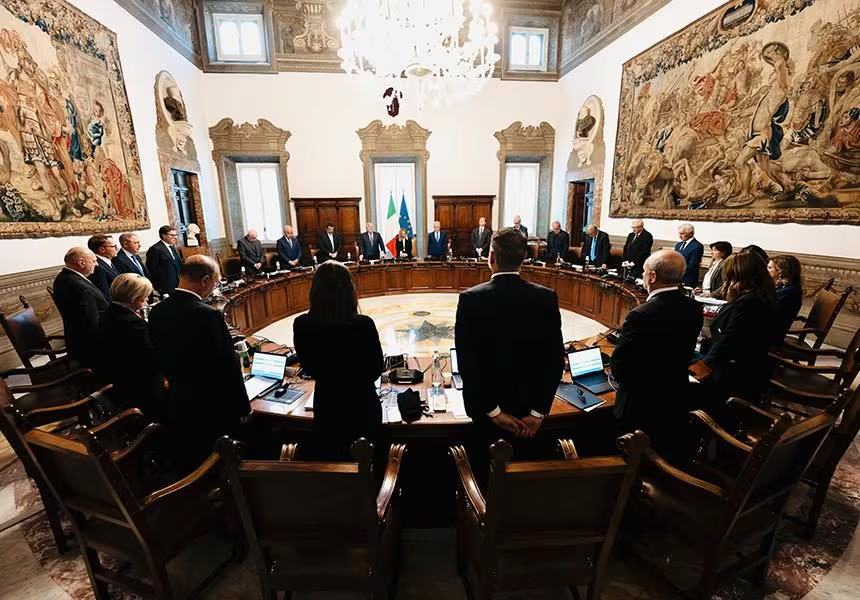
The decision was made after more than two hours of discussion between Prime Minister Giorgia Meloni and the other leaders of the government alliance: Antonio Tajani (Forza Italia), Matteo Salvini (Lega) and Maurizio Lupi (Noi Moderati). With them, also the Minister of Economy Giancarlo Giorgetti.
The Prime Minister and her helmsman Giorgetti find themselves navigating troubled waters: on the one hand they must understand the extent of the coverage, which can only be quantified at the end of the negotiations with the European Union on flexibility and at the end of the negotiations with the banks and insurance companies to obtain a plus of 5 billion. On the banking issue, Meloni and Tajani are softer while Salvini is adamant.
On the other hand, once the actual coverage has been quantified, internal negotiations will begin between the majority parties, with the classic race for amendments.
The overall budget of the 2027 budget law is equal to 23.4 billion euros. Of these, 14.4 billion derive from the extradeficit authorized for expenditure related to energy and defense.
The priorities of the 2027 Budget
The priorities of the 2027 maneuver are different. The issue of security and treatment of the police forces is in the foreground in these days of revolts in the large cities of the North. There is talk of resources for new hires, new equipment and a potential intervention on early pensions for those belonging to the category.
Attention is then paid to young people, the elderly, healthcare, support for families and the fight against high energy costs.
For the home sector, there is the hypothesis of a 5% rate for the flat rate tax on long-term and agreed-upon rentals. The proposal is particularly dear to We Moderates and Brothers of Italy. The aim is to encourage the transition from short-term to long-term rentals to put more properties on the market, taking them away from tourism. So as to calm down, as much as possible, the movement of the brick.
Then there is the business and ecological transition chapter: a package is planned for SMEs with vouchers for the use of artificial intelligence and inclusion of the cloud in Transition 5.0. The goal is to make everything structural.
Irpef, Ecobonus and pensions mystery
The Government’s wishes also included a cut in Irpef to 33% for incomes up to 60 thousand euros. But the topic could be put on hold for now.
And the feasibility of another initiative is also being assessed, the one concerning the 65% Ecobonus. For 2026, for subsidized interventions, an ordinary deduction of 36% is foreseen, increased to 50% for interventions carried out on the main residence by owners of property or other real right of enjoyment. Upon testing the coverage, it will be seen whether the deduction can actually be raised.
Then there is the pension chapter, with the League pushing hard on the possibility of leaving at 64 with the contributory method only.