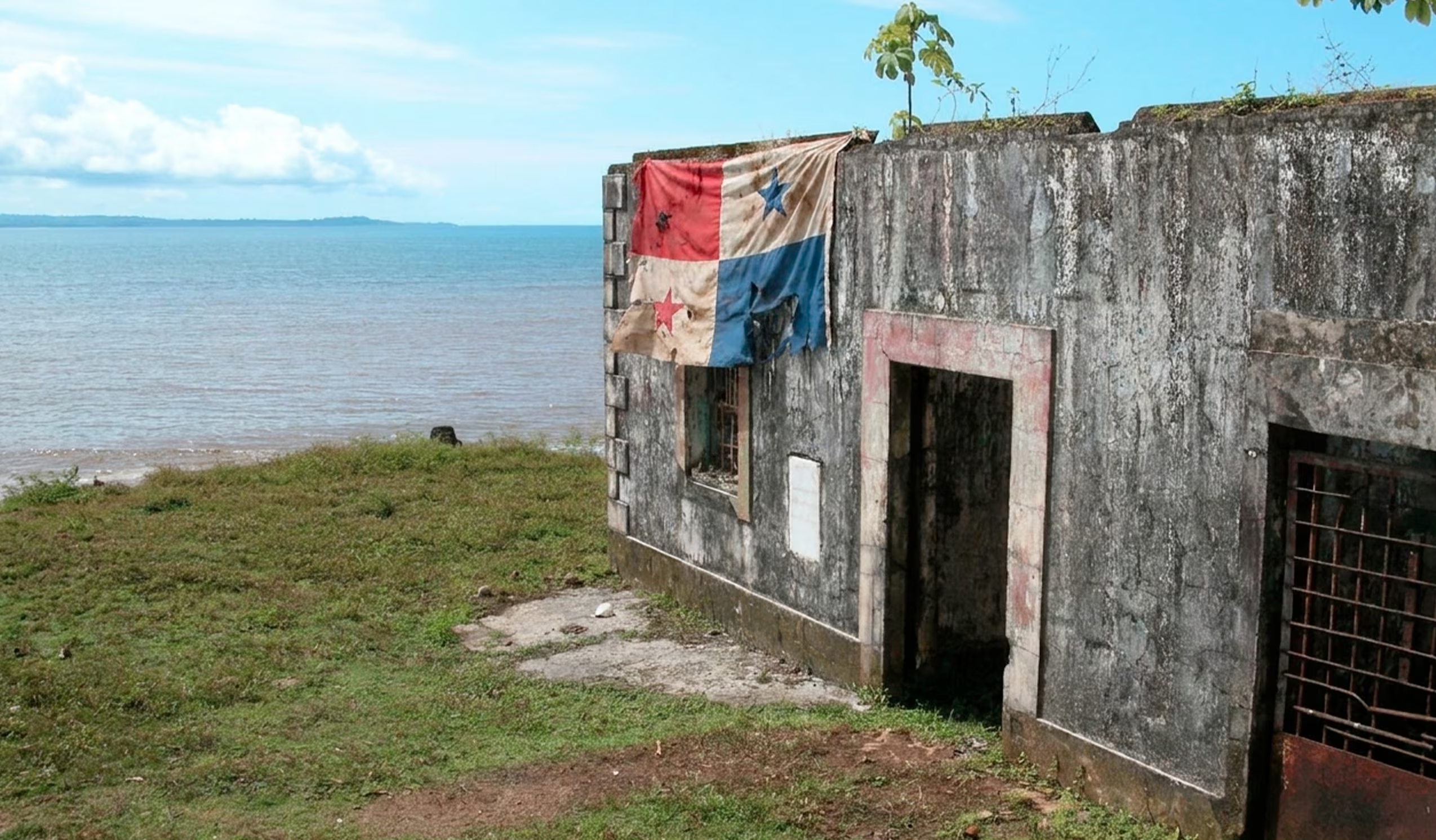
Coiba Island, once known by the nickname “Panama’s Alcatraz” or Panamanian “Devil’s Island”, has long been a place of terror, imprisonment, torture and mysterious disappearances. In fact, here was one of the harshest and most ruthless penal colonies in the Americas. Today, however, fear has given way to amazement: the former prison has been permanently closed and the entire area has become the Coiba National Park, a pristine ecological sanctuary declared a World Heritage Site by UNESCO.
What was the penal colony like?
The penal colony of Isla Coiba was not a single armored building, but a vast open-air prison system. At the height of its activity, the prison housed approximately 3,000 inmates divided into approximately 30 camps, distributed throughout various parts of the island. One of the hubs was the main camp known as “La Central”, located near the Punta Damas trail. This area included numerous buildings surrounded by stands of palm trees, a beach, a pier and grassy areas, where both inmates and probation officers lived and worked. Although told this way it might not seem so bad, the reality was very different.
The prison exploited the extreme characteristics of the territory to prevent escapes and inflict punishments. The cells, for example, were outdoors, which continually exposed the inmates not only to the suffocating temperatures but also to the violence of the storms. Deterrence against escape was guaranteed not only by surveillance and the sea surrounding the island, but also by the presence of crocodiles and caimans that populated those areas. However, on the island there were not only prison cells: civilian structures could also be found, such as offices, a chapel and warehouses. Furthermore, in the final phases of the colony, agricultural areas were also created, cultivated and managed directly by the prisoners to ensure the self-sufficiency of the island.
History and periods of the Isla Coiba prison
The Isla Coiba penal colony remained active from 1919 to 2004. Initially designed to isolate the country’s most dangerous criminals, the prison soon took on a much more sinister role during the military regimes of dictators Omar Torrijos and Manuel Noriega in the 1970s and 1980s. In that period, Coiba became the favorite place of detention for political opponents of the military government. Thus was born the tragic phenomenon of “Los Desaparecidos” (the disappeared): hundreds or perhaps thousands of dissidents arrested or kidnapped by the regime vanished into thin air right in Coiba. Popular belief and testimony suggest that many of these victims were buried in unmarked graves near the colony or dismembered and thrown to the island’s numerous sharks and crocodiles.
After the fall of the military dictatorship (which occurred with the deposition of Noriega in 1989), the prison returned to its original function as a common prison. The penal colony was officially closed in 2004, when the remaining inmates were transferred to other facilities and any valuables were removed from the site.
The terror surrounding the penal colony had an unexpected and extraordinary side effect: it preserved the island from human intervention for almost a century. As fear discouraged human settlement and the influx of visitors, approximately 80% of the island’s rainforest remained completely virgin and untouched. In 2004, immediately after the closure of the prison, the government of Panama established the Coiba National Park (which covers an area of 1743 km2 including the main island and 38 other surrounding islets) to protect its extraordinary biodiversity. In 2005, the park was declared a UNESCO World Heritage Site and Special Marine Protection Area.