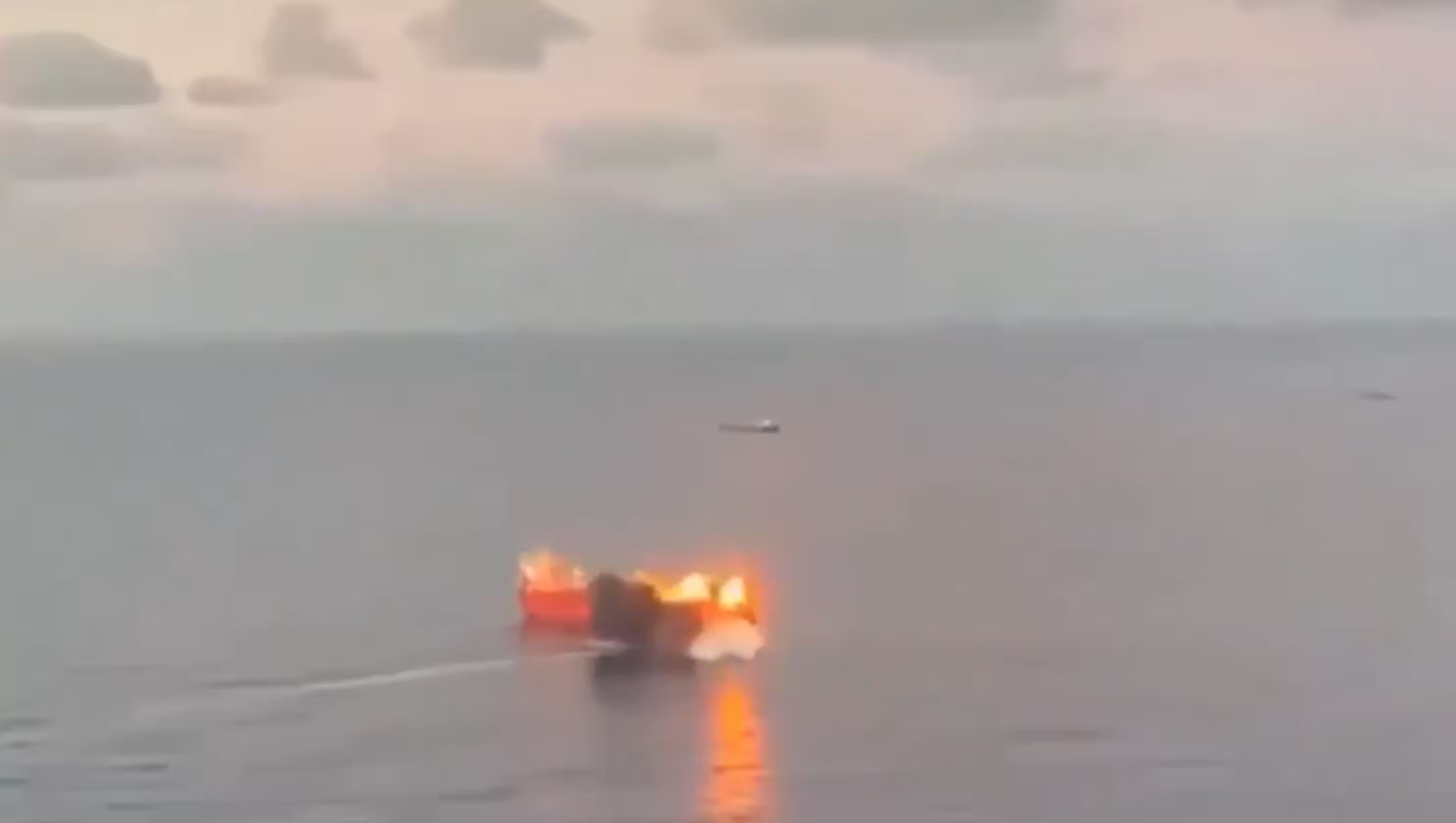
The Russo-Ukrainian War is progressively widening, especially after the Ukrainian attack carried out through the use of USV drones against Russian naval units moored in Libya.
This is only the latest in a long series of events that are spreading the war well beyond the borders of the two belligerent countries, starting to touch areas where Italian national interests are of primary importance.
The operation, in fact, represents an important development in the conflict, as it affects the central Mediterranean, an area of particular strategic importance for Italy, which summoned the Ukrainian ambassador Ihor Brusylo. Libya plays a central role for our country in terms of energy, economic and maritime security.
It is no coincidence that Defense Minister Guido Crosetto is apparently considering a possible increase in security measures for the approximately 200 Italian soldiers involved in the Miasit mission, who operate in Libya, between Tripoli and Misurata.
The extension of military operations to the territory of third countries, among other things, raises questions about the risk of further escalation of the conflict. But why did Ukraine strike Russian targets in Libya and what could be the consequences for Italy and for the geopolitical balance of the Mediterranean?
The reconstruction of Kiev’s attack in Libya
On 22 November 2026, a warship of the Russian Navy, the corvette “Merkury” (Меркурий) belonging to the Steregushchiy class, and a cargo ship suspected of carrying military equipment, the MV Angara, were attacked: the Merkury was anchored in the port of Benghazi, the political center of that part of Libya under the control of the so-called “Stability Government National” (one of the two governments that claim control over the entire country), supported by General Khalifa Haftar’s army. The MV Angara, however, was located off the Libyan coast.
It was Ukrainian President Zelensky himself who claimed responsibility for the attacks, defining the entire action as “an exemplary operation”. The photographic evidence has confirmed the sinking of the “Merkury” and the damage to the MV Angara, which will hardly be able to set sail again.
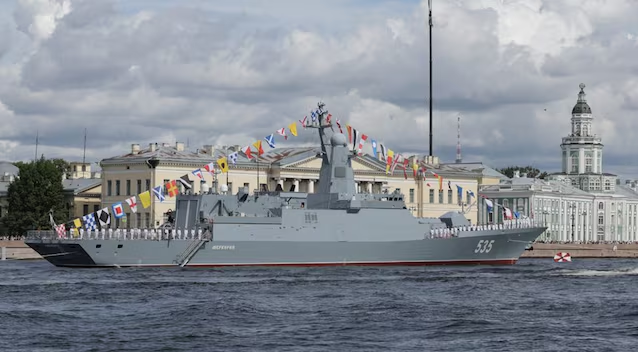
According to what was communicated by the Ukrainian authorities, the operation was conducted by the Defense Forces of Ukraine in collaboration with the Ukrainian Security Service (SBU), the secret services that also control large formations of special forces and paramilitary/irregular forces.
The vehicles used during the attack were Unmanned Surface Vehicles (USVs), essentially fast boats converted to act as explosive boats. The Ukrainians claim to have deployed 7, while the Libyans report having located 20, of which one was damaged and captured before it could crash into its target.
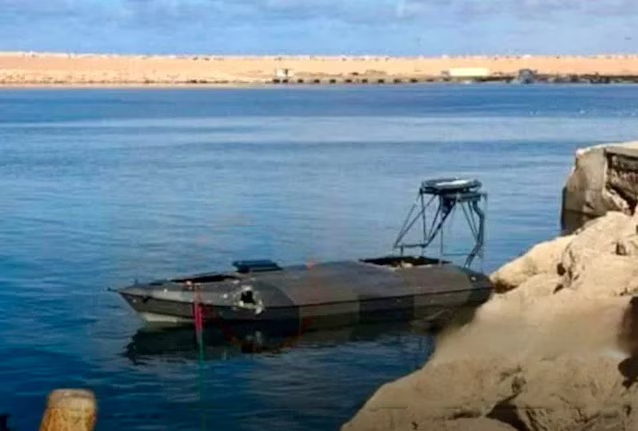
The attack point used by the Ukrainians to coordinate the operation and release the vehicles also remains unknown, given that the various sources consulted speak of Tripolitania, Albania or even a cargo ship used as a “mother ship” for the vehicles and their operators.
These are crucial points that will have to be thoroughly investigated also to understand whether there was a very probable involvement of one or more foreign powers. Making the geopolitical picture even more complex is the role of Turkey, historically a supporter of the Tripoli government, but protagonist in recent years of a progressive rapprochement with the rival Benghazi government and the military forces led by Khalifa Haftar, historically supported by Russia.
On November 25, a few days after the attack, Turkish President Recep Tayyip Erdoğan met Khalifa Haftar, commander of the armed forces of eastern Libya, for the first time in Ankara, as part of a process of diplomatic rapprochement. At the moment, however, there is no evidence of Turkey’s direct involvement in the Ukrainian operation.
The escalation of hybrid warfare
The Benghazi attack is only the latest in a long series of actions (some of which are high profile while others are decidedly more ambiguous), which pitted the Russian Federation on one side and Ukraine and its allies/supporters of the so-called “broader West” on the other.
Although it is by no means the first time that the Ukrainians have struck targets clearly belonging to the Russian state (in this case, ships) with their armed and/or security forces (in this case, the SBU), it is also true that in this specific case this occurred on the territory of a state which, as far as we know officially, is not involved in the Russo-Ukrainian War and which has complained of human losses. The Libyan press, controlled by the Benghazi government, spoke openly about deaths and injuries among Libyan National Army (LNA) personnel, stationed at the military section of the port of the city of Benghazi.
Nor is it an attack that happens like the proverbial “bolt from the blue”, given that almost simultaneously with the Benghazi action the Ukrainians also launched attacks against Russian shipping sailing in the Gulf of Finland and against some refineries located deep in Russia.
Italy’s dilemmas: what we can expect
The Benghazi attack touched an open issue for Italy because it occurred in an area that has always been vital to our national interests. Since 2011, when it collapsed into two dramatic civil wars that followed one after the other, Libya has emerged as a potentially dangerous “instability factory” not only for the security of the Mediterranean, but also for world peace in general, pushing Rome to sponsor a series of wide-ranging initiatives aimed at promoting the process of dialogue and national reconciliation.
Although Italy has vigorously supported the Ukrainian resistance since the beginning of the Russian invasion, adhering to the sanctions regime against Moscow and sending armaments to Kiev, Ukrainian action on Libyan soil risks further destabilizing that chessboard, making our geopolitical posture precarious and raising suspicions that Italian deterrence capabilities are irrelevant, so much so as to push the Ukrainians to strike their targets with complete disregard for Rome’s wishes.
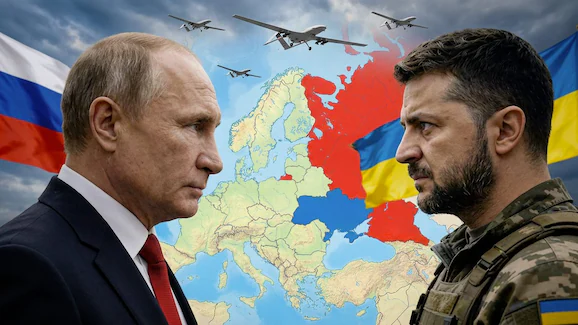
As the failures of all the rounds of peace negotiations from 2022 to today have abundantly shown, the opposing political leaderships are more determined than ever to raise the stakes as in a macabre casino tournament.
Rather than acting as limiting elements, these further attacks have the effect of further raising both the stakes and the bar of the conflict, with the result that the flow of events, no longer confined to individual Russia and Ukraine, risks degenerating into a general conflagration for the entire European continent. In short, it remains to be understood what the diplomatic and military consequences of the attack will be and whether this episode will remain isolated or represent the beginning of a wider geographical extension of the conflict.
ANSA Covert Shores Naval News BBC ANSA