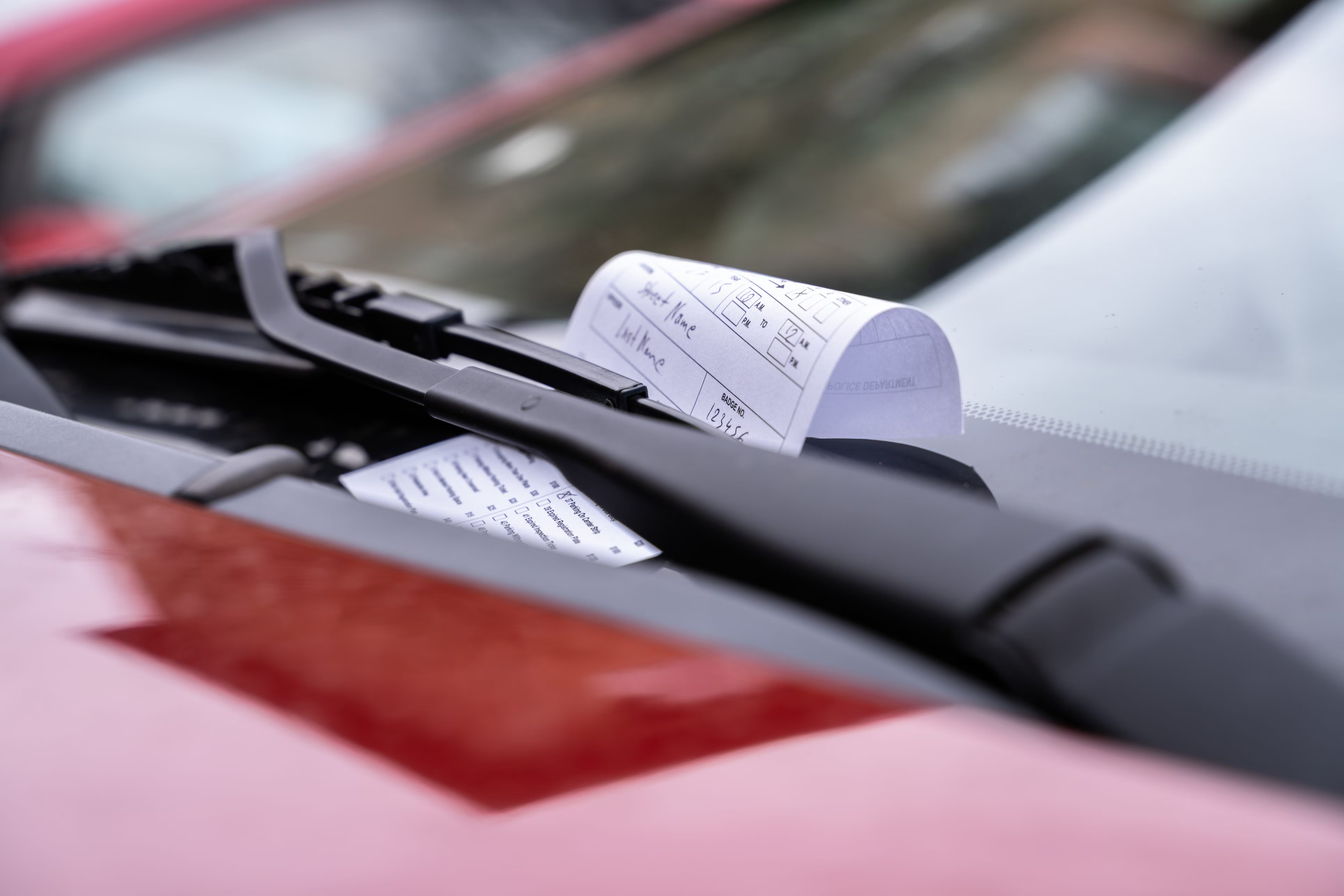
We are back to talking about the Highway Code, after the issue of fines has re-emerged in the draft of the new reform: in particular the basic text, still in public consultation, would contain the abolition of the 10% penalty which is triggered automatically every six months of delay.
This is a provision that dates back to 1981, which received a partial correction in 2024, setting a ceiling of 60% on the overall increases (without however eliminating the 10% increase every six months) and which for more than forty years has meant that a payment postponed for a few months turns into a much heavier bill than the initial one.
How the calculation of the unpaid fine works today
In Italy, when a fine is not paid within 60 days of notification, the amount is recalculated and the sum due becomes equal to half the maximum established by law for that violation, less what has already been paid. Since the report usually states the minimum amount, in practice the bill often ends up doubled.
If the debt remains unpaid, before the case passes to the collection agent, an increase of 10% is added to the sum due for each semester of delay, in addition to the procedural costs. It is an increase that is repeated over time and which causes the sum to rise continuously, regardless of the severity of the original infringement.
A mechanism whose limits had been known for some time, considering that with a 10% increase every six months and no brakes, a fine left in oblivion could multiply its value in the space of a few years, and a fine of a few tens of euros ended up becoming a debt out of proportion to the infringement committed. As we were saying, a corrective rule was introduced in 2024 which set a maximum ceiling, establishing that the increases cannot exceed 60% (three fifths) of the amount of the fine. A corrective that, however, did not solve the root problem.
What would change with the New Highway Code: the draft reform
It is precisely from here that the choice to intervene with the reform arises. If the draft of the new Code is approved without substantial changes, the 10% semi-annual increase will be eliminated completely. And therefore those who do not pay will only have to pay the fine recalculated at double the original amount, i.e. half the maximum established by law, plus any costs of investigation, notification and collection.
The debt will stop growing due to the simple passage of time: the substantial difference is that this figure will be defined once and for all.
The draft also intervenes on the way in which citizens are informed. The new Highway Code explicitly regulates the good-natured warning for the first time. Before starting the recovery, the police body that ascertained the violation must send the transgressor a communication with the details of the charges, the exact amount to be paid and the warning that, without payment within 30 days, the tax bill will arrive.
The notice thus becomes a mandatory step and its failure to transmit could weigh on the validity of the entire collection procedure. The citizen will therefore always have a final, clear and documented opportunity to regularize his position before the debt goes to compulsory collection.
A further innovation concerns installment payments. According to the text being consulted, once collection has started the debtor will be able to ask the administration to defer the sums due. It is a tool designed for those who have accumulated a debt that has become difficult to pay off in a single solution and offers another way to get into compliance.