In the ideal construction site of the bridge over the Strait, designed on the Cipess paper, everything row: construction sites that open at the end of the year, cars that dart between the banks in 2032, ferries passed by a vision of steel and concrete. Still, the institutional framework appears less lucid.
The approval of the project, for now, has not yet fully activated the declaration of public utility: for this to happen, the formal passage in general accounting of the State, registration at the Court of Auditors and finally the publication in the Official Gazette is needed. Only then will the expropriation car really start. Behind this formula there is the possibility that hundreds of families lose home, land, activities.
At Villa San Giovanni and Torre Faro, two names now recurring in the geography of resistance, the perspective is already reality. The notifications have started, the offices are active, the executive plans are promoted as inevitable. But the word “inevitable” in Italy, especially when it comes to great works, is at least premature.
The bridge will be done, of course, but at what price and on what foundations, it remains to be seen. Also because political enthusiasm does not cancel the social contours of a transformation that, before being technical, is profoundly human.
Bridge on the Strait, all the numbers of the record work
The approval of the Cipess follows the signing of an additional act to the contract with the company in charge of the execution, the Eurolink Consortium, under the guidance of Webuild. The value of the intervention exceeds 10 billion euros.
According to the manufacturer, the bridge will be an expression of technological and industrial excellence on a global scale. With its 3,300 meters of suspended light, it will exceed the current holder of the world record, the Canakkale bridge in Türkiye, distancing it by over 1,000 meters.
According to Webuild, the bridge will be much more than a road connection: a physical and symbolic passage between Sicily and the continent, from which growth, work and a newfound dynamism should pass throughout the south. Those who sign the project ensures that the viaduct will contribute to modernizing rail transport and rubber, to simplify logistics and attract capital.
The industrial narrative, as we see, is that of a turning point, of a work destined to transform the South into a hub of movement and business.
The disputes to the project and the doubts of the local committees
The opposition to the intervention did not wait. The Calabrian Committee “No bridge”, Through his spokesman Peppe Marra, he defined the recent resolution “yet another political forcing disguised as a technical act”, complaining that the project has been approved despite “62 substantial prescriptions” emerged during environmental evaluation.
According to the detractors, these observations would be such as to make a renovation of the entire design design necessary, starting from the geological analyzes.
The problem of expropriations between Sicily and Calabria
Talking about progress, relaunch, strategic infrastructure sounds well in press releases. But the bridge over the Strait, even before being a connection between two sides, is already a fracture today. The expropriations started, the offices have been opened. In Messina and Villa San Giovanni there is no more hypotheses: there are houses, land, activities to be sacrificed on the altar of the general interest.
The figures speak of 291 properties to be acquired only on the Sicilian bank, many of which are the first houses. Someone will be compensated, others will dispute, almost everyone will feel put on the corner. The rhetoric of the necessary work is badly reconciled with the concrete experience of who is receiving letters that begin with “expropriation procedure”.
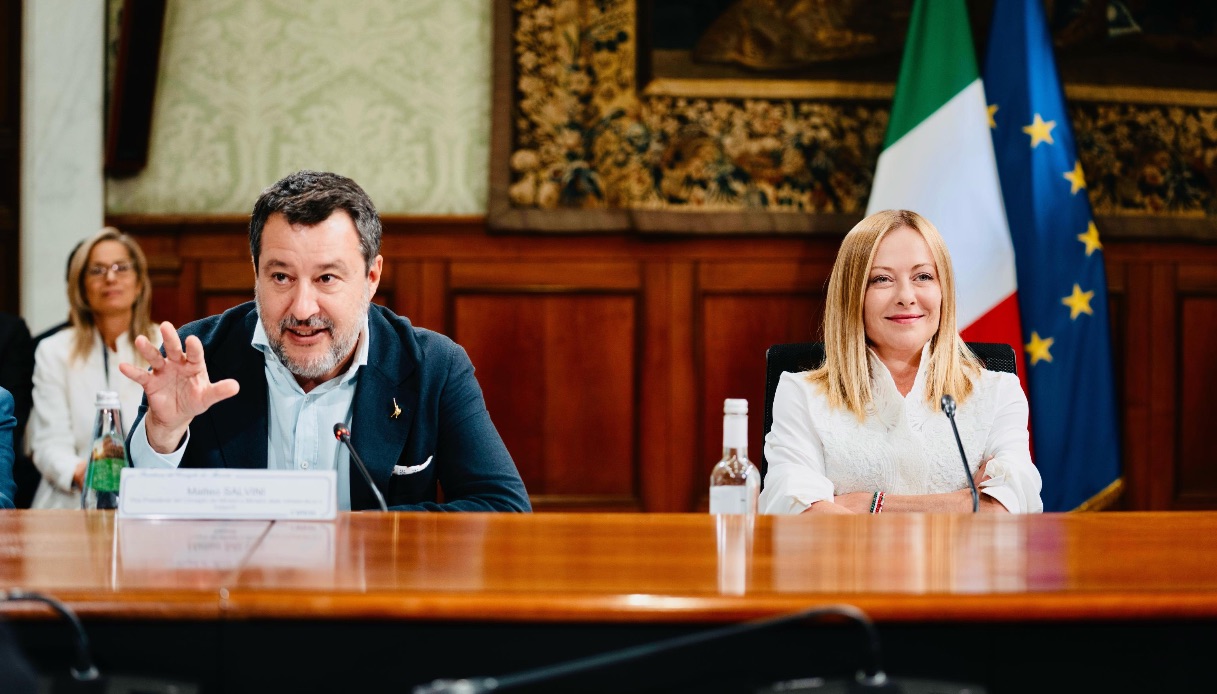
The words of Minister Salvini were expected regarding the expropriations. It is one of the most delicate themes around the bridge, even more than the issue of feasibility or environmental impact, because it affects the private and working life of many. The Minister of Infrastructure has ensured that for the expropriated there will be higher compensation than those of other public works (for example in the case of the works of Terna in Sardinia, Campania and Sicily). To the expropriation issue is also added that of organized crime: in the list of expropriated there are also bosses of bosses.
The risk of retaliation against the public structure, against the very first works (which will begin in about a month), the workers or other infiltrations get up.
How much it will cost to cross the bridge over the Strait
A further dispute element concerns the rate for crossing the future viaduct. According to what has been known by the Strait Company of Messina, the cost provided for cars will be around 10 euros. Codacons has already defined the figure “probably the highest in the world”. A cost per kilometer of about 2.73 euros is estimated, well higher than the national average, with a percentage increase greater than 3,500% compared to the average toll on Italian highways.
According to government forecasts, the cost to cross the return bridge will be around 9 euros, a figure considered lower than the current price of the ferry.
But, if compared with other European examples, such as the Eurotunnel, the price per kilometer is significantly higher. To ensure economic sustainability, the work should be self -financed with the proceeds of the tolls: a projection processed on a government level indicates that the return on investment could arrive not before 2062, also considering the extraordinary expenses for maintenance, estimated at around 1.6 billion between 2034 and 2060.
Ponte di Messina between environmental, appeals and criminal constraints
A dossier drawn up by the technical structure of Palazzo Chigi highlighted several knots still to be resolved. First of all, the transition to the Court of Auditors: the final approval of the project will depend on the outcome of the analysis conducted by two sections of accounting control. In case of non -agreement between the colleges, the decision will move on to a plenary seat. Only after this step can the measure be published in the Official Gazette.
Environmental issues also remain open. The executive document is yet complete: it will be ready only after the integration of the 62 observations formulated by the evaluation bodies. Among the most sensitive themes there are emissions, noise, vibrations, the impact on the sea system and the unrecognizability of some protected areas.
The Italian authorities have sent a package of compensatory measures to the EU Commission, but a formal response from Brussels cannot be excluded.
Finally, the contractual update between the Strait Company of Messina and the Eurolink Consortium involves the activation of penalties if the construction site is stopped. Initially there had been talk of over one and a half billion, but the most probable figure, calculated on the value of the contracts already signed, as reported Republicwould be around 400 million euros.