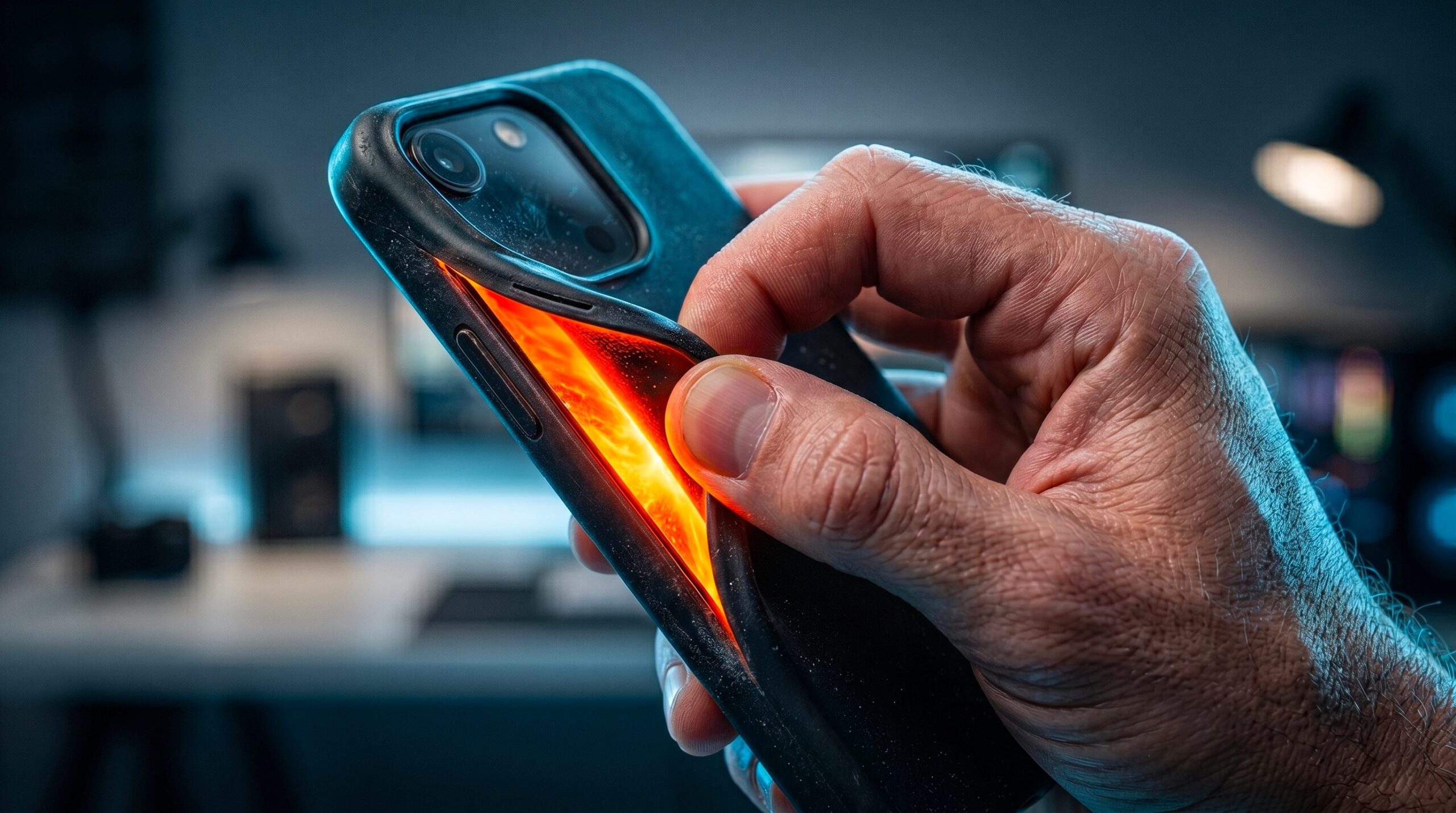
Smartphone cases were created to satisfy a very specific need: to protect the device from scratches and falls. When we completely wrap a phone with a cover, however, we also add a layer of material between the device and the external environment, and this can affect how heat is dissipated. Here the question that is the theme of our article can arise absolutely spontaneously: can a case make the phone overheat? In short, yes. But with some important clarifications to make.
Covers do not in themselves represent “absolute evil”, but they can slow down the dispersion of the heat generated by the device, especially when they are thick or made with insulating materials. This could lead to the phone retaining more thermal energy than when uncased. To really understand the relationship between cover and heat we must therefore observe three fundamental elements: the material of the case, its thickness and the context of use of the phone. By analyzing these factors we discover that not all covers behave in the same way and that some design choices can make a real difference in thermal management. And as we well know, thermal management is one of the most important factors in preserving the health of the lithium batteries integrated into our smartphones.
The cover materials: anti-overheating and non-overheating
The material of the case is therefore one of the most important factors. Silicone or TPU (thermoplastic polyurethane, an elastic polymer very common in smartphone accessories) covers have a rather low thermal conductivity, in the order of around 0.15-0.3 watts per meter-kelvin. This means that thermal energy slowly passes through the material, promoting heat accumulation. Leather cases also exhibit similar behavior. Hard plastic covers, often made of polycarbonate or ABS, can conduct heat slightly better than elastomeric materials.
On the contrary, metallic materials such as aluminum can transfer heat much more quickly to the surrounding environment (it is no coincidence that aluminum is one of the materials most used by manufacturers to make the body of the device). The downside is that the case surface can become hotter to the touch and shock protection is lower, because metals transmit the vibrations of an impact more easily. Some cases use composite materials such as carbon fiber or aramid fibers (the family of materials to which Kevlar belongs). Carbon fiber can partially conduct heat along the direction of the fibers, but in commercially available covers it is almost always embedded in insulating resins, which reduces the effectiveness of its ability to dissipate heat.
The thickness of smartphone cases and the heat
In addition to the material, the thickness also matters. A very sturdy case, designed to withstand major drops, inevitably increases the insulation layer around the phone. The thicker the coating, the longer it takes for heat to reach the outside. Some designs try to mitigate this effect by leaving parts of the device exposed or by introducing openings that promote air circulation. In terms of heat transfer this helps convectionthat is, the movement of air that takes heat away from the surface of the phone. In contrast, fully enveloping covers with no openings can act as a small insulating barrier.
The context of use of the device
The context of use of the device is another element that is often underestimated. Very processor-intensive tasks (gaming, 4K video recording, continuous Wi-Fi hotspot, fast charging, etc.) generate a significant amount of heat. In these conditions the internal temperature of the smartphone can approach or exceed 45°C within a few minutes. If we add to this scenario an already hot environment, such as the inside of a car in the sun, the presence of an insulating case can accelerate the achievement of safety limits. When this happens, protection mechanisms called thermal throttling: The system automatically reduces processor speed or limits charging to lower the temperature.
Wireless charging introduces another aspect to consider. This technology transfers energy via an electromagnetic field between two coils (one in the charger and one in the phone) and is not perfectly efficient: some of the energy inevitably turns into heat. If the case is very thick or contains metal inserts not designed for this purpose, energy transfer can become less efficient and generate even more heat. This is why many manufacturers recommend not leaving credit cards, metal plates or small magnets inside the case during wireless charging. These objects can interfere with the electromagnetic field and overheat.