The Minister of Transport and Infrastructure Matteo Salvini spoke in the press conference at the headquarters of the Foreign Press on various hot topics: from the high price of energy to the hypothesis of Russian gas, up to the price of fuel and energy rationing or lockdown plans. The deputy prime minister ruled out some hypotheses, such as resorting to smart working or returning to dad.
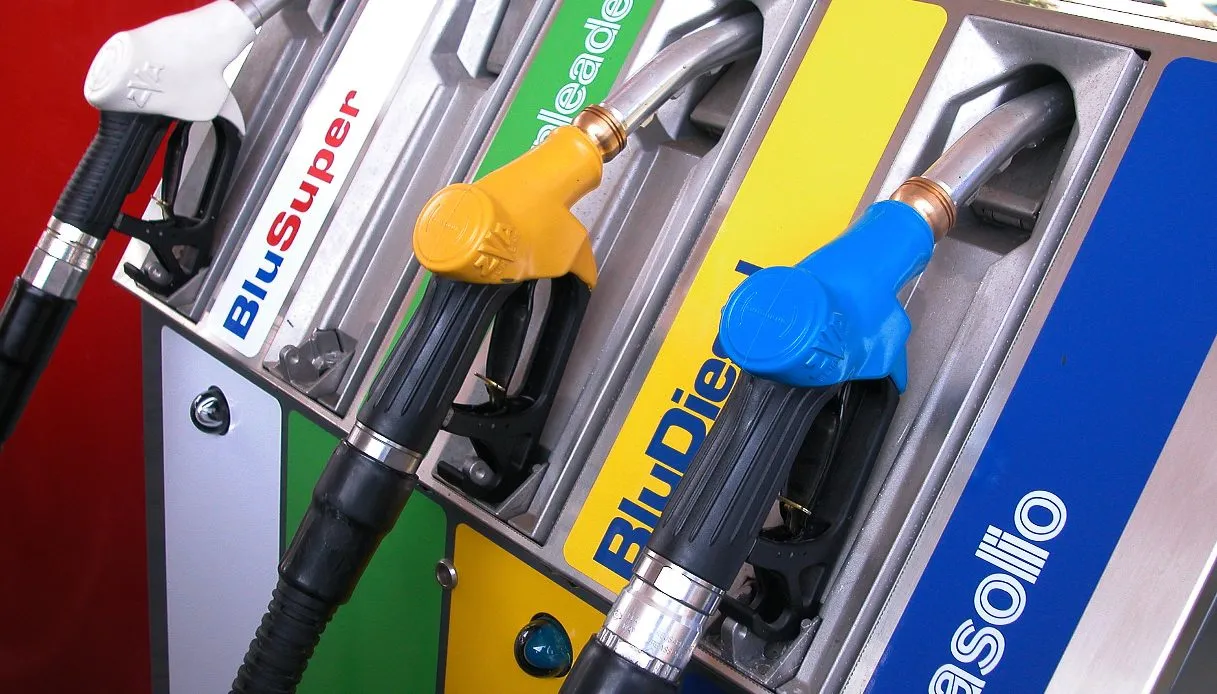
Regarding the developments in the war between the United States and Iran, the minister admits that he breathed a sigh of relief, even if temporary “because every day things change”. He then leaves the topic to return to the topic of price increases and explains that he has spoken with ministers Giorgetti and Urso regarding fuel prices. This unfortunately takes little to increase, but much longer to decrease. Salvini hopes that there will be an equally rapid decrease at the pump, because now the price of diesel, despite the cut in excise duties that the Italian government has extended, is close to 2.2-2.3 euros per litre.
Russian gas only after the conflict is over
Among the many topics touched on by Infrastructure Minister Matteo Salvini, there is that of the possibility of returning to trade with Russia. After the stop, Vladimir Putin’s proposal on the sale of gas and oil arrives, but the response from Europe and Italy is still rather mild. We are trying to understand what could happen with respect to this opening, such as a fracture within NATO.
Even the deputy prime minister does not go out of his way, remaining in the same position of prudence as other voices in the government. Declares:
I hope that resuming energy supplies, particularly gas, from Russia could be a no-holds-barred prospect between Kiev and Moscow.
He adds that at the moment talking about business with an ongoing war is complicated and Italy can hardly choose on its own in the European context.
Energy priority: Italy and nuclear power
On the topic of high energy prices (which led to the reopening of coal power plants), Salvini becomes the Government’s spokesperson when he declares that the priority remains that of helping businesses and families in difficulty, going beyond the stability pact. This is defined as a “straitjacket”, but Salvini also says he is confident and thinks that Italy and Germany can become a majority.
He adds:
We ask that the pact can be waived to help businesses and families with heating, electricity and gas, as is the case for buying weapons.
Still within the macro theme of energy there is the possibility of returning to looking at nuclear power. For Salvini, Italy should invest more in clean and safe energy, and nuclear power is one of these.
Fuel: no to dad, smart working and rationing
Salvini underlined how the cost of fuel is directly linked to what is happening in the Middle East and for this reason the truce immediately lowered the cost of oil and gas.
Regarding the lowering of prices also at the petrol pump, he explained that he had spoken to Minister Giorgetti and Minister Urso to understand how quickly prices will fall. Because the rule is this: prices rise quickly, but to fall you have to wait for the fuel purchased at the highest price to be sold.
The hope is to see a rapid reduction in prices, because:
We are approaching 2.20 euros per liter for diesel despite the discount that the Italian government, one of the few in Europe, has given of 0.25 euros per litre; without that discount we would be close to 2.50 euros.
Faced with the shortage and the price increase, Salvini is confident in stating that there is no fuel rationing plan in sight, not even kerosene for the planes which has been so much discussed.
Furthermore, unlike the rumors of a hypothetical energy lockdown, Salvini states:
There is no plan under study on fuel rationing, nor on the closure of schools, offices, factories and shops. Smart working is not to be taken into consideration.









