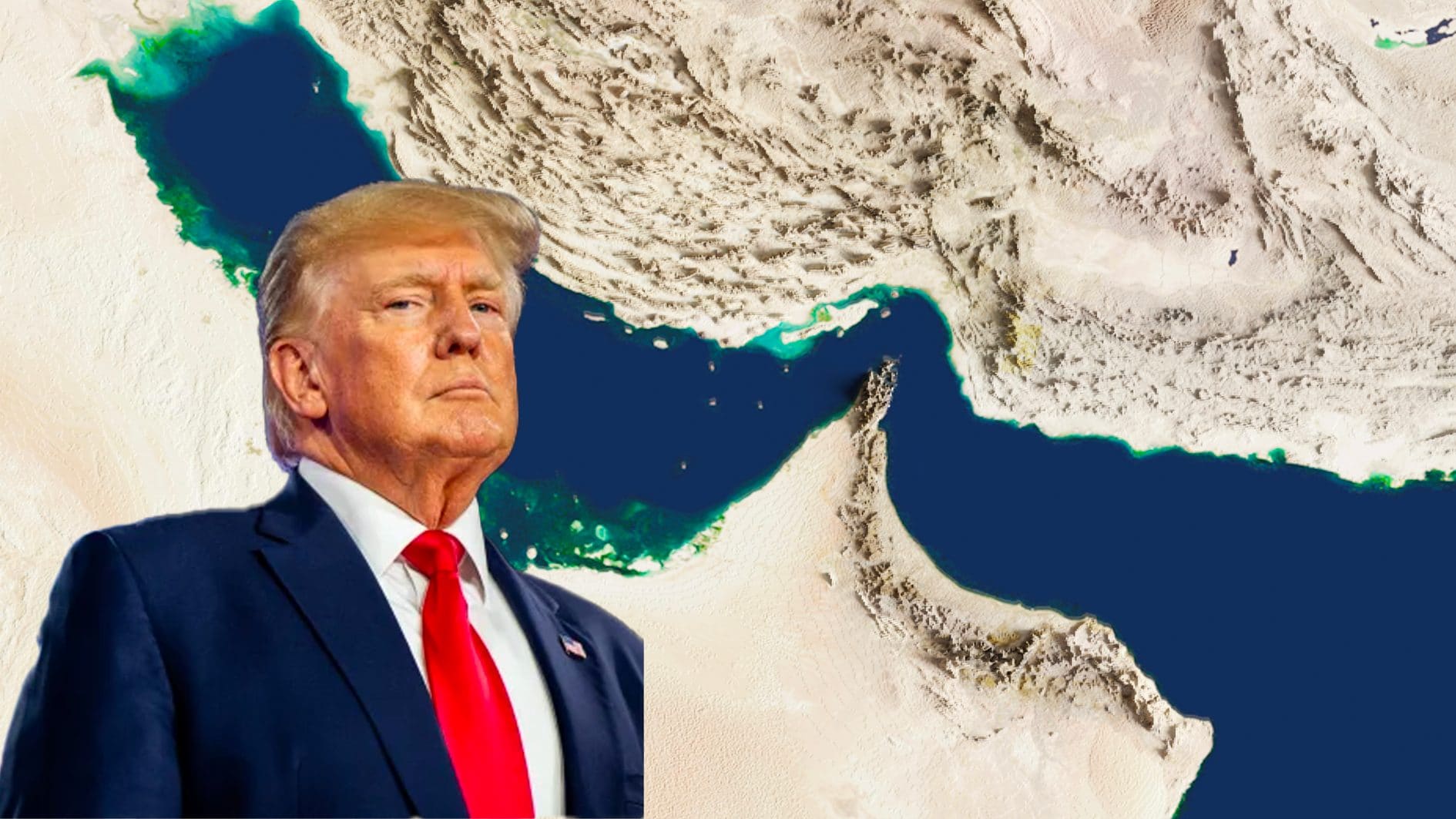
The United States has officially initiated a naval blockade in the Strait of Hormuz. Despite the fragile two-week truce, ongoing since April 7, the failure of negotiations in Islamabad, Pakistan, pushed Donald Trump to an unprecedented move. In practical terms, the blockade involves deploying military forces with the aim of intercepting and physically preventing the entry and exit of goods and commercial ships from ports. The president of the USA, as reported by ANSA, notified shortly after the start of the blockade: «If Iranian ships attempt to violate the blockade they will be eliminated». The potential risks of such an operation are multiple, both from an economic and military point of view.
What Trump’s naval blockade in the Strait of Hormuz consists of
The CENTCOM (US Central Command), after Trump’s statements last weekend, announced the start of operations Monday 13 April at 2pm GMT (4pm in Italy). According to what was reported by Reuters, the area of operation is very vast: it is not limited to the Strait, but extends to Gulf of Oman et al Arabian Sea. Unlike a total shutdown, the United States has opted for a selective block:
- Target: the target is all ships entering or leaving Iranian ports and boats that pay “illegal tolls” to Tehran.
- Free passage: ships headed for other Gulf ports (Emirates, Kuwait, Iraq) should be able to pass, but the operational reality is much more complex.
- Exceptions: Humanitarian cargoes (food and medicine) will be permitted, but only after US inspection at sea.
How it works: The US Navy “filter”.
A naval blockade is defined by the US Navy Commander’s Manual as awar operation. To be effective, it requires a massive and constant military presence. Trump ordered to stop any ships that paid tolls to Iran. Logistically, this means that the Navy must monitor not only the routes, but also the financial flows and communications of shipping companies to identify who has “bought” safe passage from Tehran.
According to CNN, one of the biggest challenges is demining, or clearing the mines that Iran has placed in the Strait. The US is using hi-tech minehunters to map the seabed. Until the routes are certified “clean”, no insurance company will give the green light to the tankers, effectively blocking the strait more than the military operation itself.
If a suspicious ship doesn’t stop, special forces come into play. Getting on an oil tanker (boarding – boarding) of 300 meters while under fire from Iranian coastal missile batteries is an operation with a very high risk of human or tactical error.
The isolation of the USA: the “no” of the allies
One of the weaknesses of the blockade’s feasibility concerns international support. As pointed out by Defense Analysisa solitary block is difficult to maintain:
- NATO and UK: although Trump has announced the involvement of allies, the United Kingdom, France and Germany have already distanced themselves. London has made it clear that will not participate in the blocklimiting itself to protecting general freedom of navigation.
- Bases and supplies: without the full logistical support of the Gulf Arab countries (who fear Iranian retaliation), the Fifth Fleet must manage a very long supply chain, increasing the costs and operational stress of its assets.
The risks between legal fragility and the shadow of escalation
The operation walks a tightrope between law and strategy. Experts consulted by BBC warn that the blockade could constitute a violation of international maritime law and undermine the April 7 ceasefire. Shipping expert Lars Jensen points out a logistical paradox: since traffic has already collapsed from 138 to just 19 ships per daythe US blockade affects only a small number of vessels.
While the immediate economic impact may seem limited (although oil has already surpassed 100 dollars), the potential for escalation is enormous. Tehran has warned that any unauthorized transit will be “targeted and destroyed” while China has already called the operation “illegal”. If Beijing decides to militarily escort its oil tankers, the risk of a clash between superpowers could become a reality.
In addition to diplomatic complications, the bloc has to deal with heavy material limitations. US logistics in the area is currently orphaned aircraft carrier Gerald R. Fordstopped for emergency repairs in the Mediterranean: an absence that deprives CENTCOM of immediate and massive air coverage. At the same time, many bases in the Gulf have been evacuated to avoid providing Iran with easy targets.
This operational void makes units engaged in mine clearance extremely vulnerable to drones and coastal missiles. The risk is so high that the “closure” of the Strait could feed itself: shipping companies will prefer to keep ships at a distance to avoid crossfire. As he also points out the Postit is likely that the United States will maintain its naval units outside the Straittrying to control it “remotely”, in a logistical paradox where a fleet must control traffic that, out of fear, might not show up at all.
What can happen now
Despite the firmness of the White House, many analysts see the blockade as a strategic gamble. If Trump’s strategy succeeds, it would eliminate Iran’s main negotiating leverage, reopening the strait and lowering oil prices in the long run. However, the operational reality painted by experts could be different.
To date, the Pentagon has not yet provided important details, such as the number of ships deployed or the role of the air force. While the mere presence of the US Navy may intimidate many commercial companies, doubt remains. Is the United States really ready to strike, seize or even sink ships that attempt to force the blockade? We’ll find out in the next few hours.