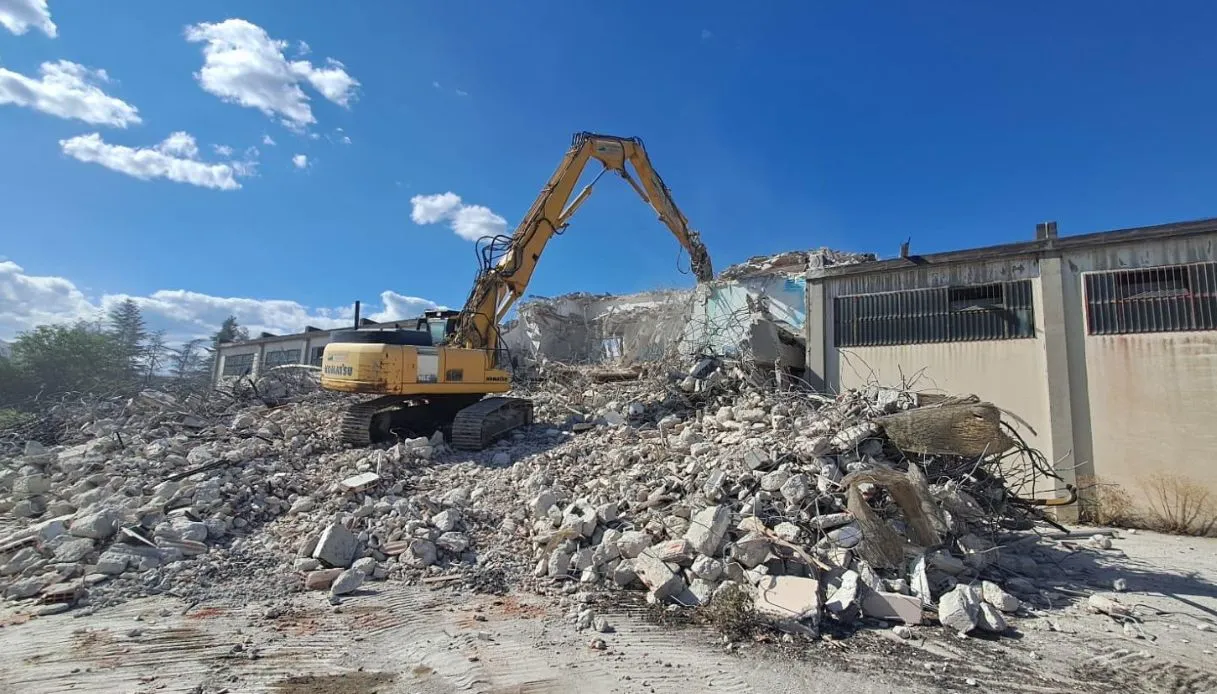
The disposal of construction waste is not an ancillary practice to be addressed when the work is almost finished. On the contrary, it is a substantial part of the construction site organization, because it directly affects operations, safety, compliance and delivery times.
Every demolition, excavation or processing produces waste materials that must be managed with precise criteria, so as to avoid delays, additional costs and environmental criticalities.
For construction companies, artisans, companies and site managers, the point is not just to “take away” the material. The point is to know what is being produced, how it should be separated, who can transport it and where it can be delivered.
When these steps are not planned, the risk is simple: the construction site slows down, documentation becomes complicated and waste management becomes an operational problem rather than an orderly process.
In an area like Basilicata, where execution times, logistics and coordination between multiple subjects matter a lot, a well-organized supply chain makes the difference between a controlled job and one full of variables. This is the case of So. Co. Ecologica, with operational headquarters in Potenza.
Not all waste materials are managed in the same way
One of the most common mistakes is to consider construction waste as an indistinct whole. In reality, the materials can be very different from each other: aggregates, bricks, concrete, asphalt, metals, wood, plastics, packaging, plasterboard or residues deriving from demolitions and mixed processes. And different materials require different evaluations.
Correct management therefore starts from a serious initial characterization, useful for understanding the nature, composition and destination of the materials. This step is fundamental both on an operational and documentary level, because it allows you to set up the subsequent phases of collection, separation, loading, transport and disposal without margins of ambiguity.
Separating what can be recovered from what must be disposed of, however, allows you to work better, reduce waste and keep the entire management of the construction site more linear.
From characterization to delivery: a clear supply chain is needed
After the initial characterization, it is necessary to prepare a collection consistent with the types of material, organize the storage on site in an orderly manner and plan the transport to authorized plants. The risk, otherwise, is to make mistakes, or perhaps produce contamination between materials and slowdowns in processing.
In parallel, the theme of recovery must be considered. When conditions allow it, valorising recoverable materials is an efficient choice from both an environmental and economic point of view.
It is in this logic that a structured interlocutor like So. Co. Ecologica can represent a concrete support: not only for transport or delivery, but for the management of the entire supply chain, from the initial verification of the materials to recovery when possible.
Traceability and compliance are not bureaucracy, but operational protection
In the construction sector, talking about waste also means talking about traceability. Any waste material must be managed in a compliant manner, with consistent and verifiable documentation. It is not a formal detail: it is what protects the producer of the waste, the site manager and all those involved in the intervention.
In fact, rough management doesn’t just create problems on paper. It can block the works, generate disputes, make it more difficult to demonstrate the correctness of the operations carried out and complicate the relationship with works management, clients and control subjects. For this reason, compliance should not be seen as an administrative burden, but as an essential component of good execution.
Because a single partner reduces critical issues and dispersions
Entrusting the waste cycle to multiple uncoordinated entities may seem, on paper, to be a flexible choice.
In practice, however, it fragments responsibilities, extends time and increases the risk of errors. On the contrary, having a single reference for characterization, management of inert materials, transport, delivery to authorized plants and recovery allows the entire process to be simplified.
For companies this means fewer steps to coordinate, less margin for misunderstanding and greater continuity between the different phases of the work. It also means being able to count on more realistic planning, with flows managed according to the needs of the construction site and not adapted at the last minute.
In this sense, the availability of a company collection center and an organized structure to follow the intervention from start to finish represents a clear operational advantage. It’s not just a question of service: it’s a question of control.
Managing waste materials well means managing the construction site better
The disposal of construction waste in Potenza must be approached with a simple criterion: considering it an integral part of the construction site strategy. The more correct, traceable and compliant the management is, the lower the risks of downtime, disputes and inefficiencies. The more improvised it is, the greater the possibility that an apparently secondary activity will become a concrete obstacle to the progress of the work.
For this reason, companies that want to work with continuity and method have an interest in choosing partners capable of following the entire process, without limiting themselves to collecting the material.