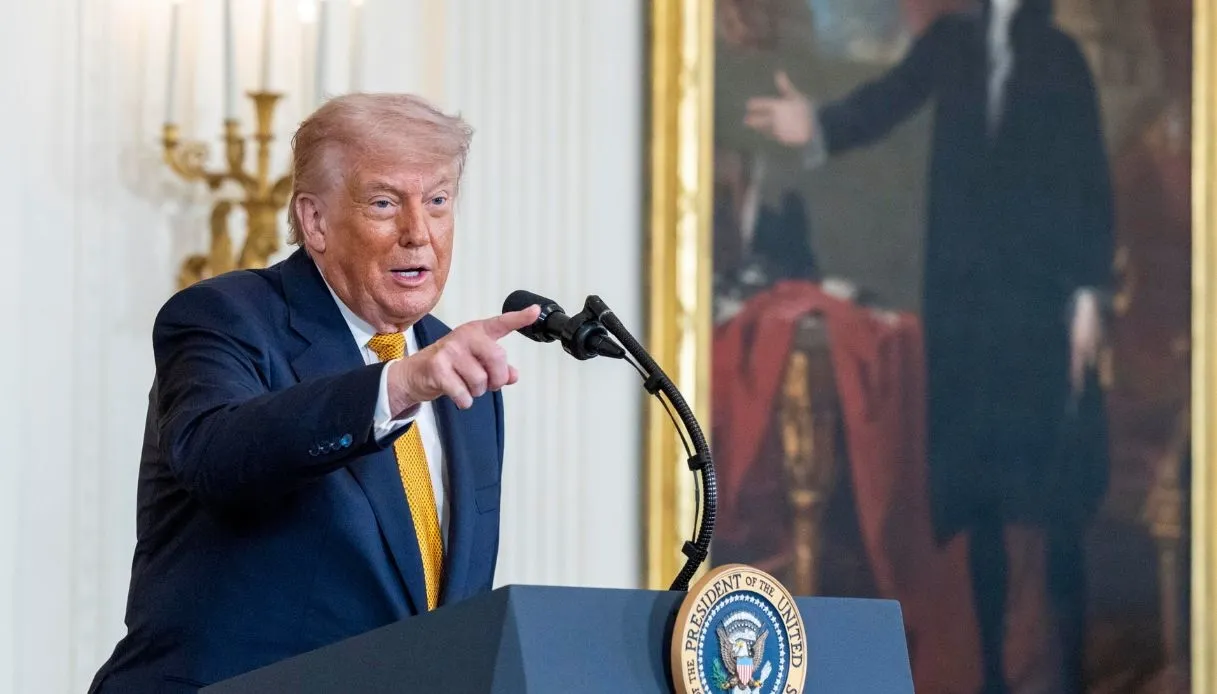
After weeks of diplomatic tensions, threats of new tariffs and slowed negotiations, the European Union and the United States will return to the negotiating table to try to unblock the trade agreement on tariffs. However, the first discussion table between EU leaders (Commission, Council and European Parliament) ended without a definitive agreement. So the parties decided to adjourn to May 19, 2026 after more than five hours of discussion. Meanwhile, very strong pressure continues to come from the United States. Donald Trump has explicitly threatened a new tariff increase.
EU-US tariff agreement: why May 19th is an important date for Italy too
The United States represents one of the main outlet markets for Made in Italy: automotive, agri-food, pharmaceuticals, mechanics, fashion and luxury are all sectors that could be directly affected by any new tariff measures. The meeting on May 19 will serve to understand whether Europe will finally be able to complete the legislative process necessary to apply the Turnberry agreement (signed in July 2025 by US President Donald Trump and the President of the European Commission Ursula von der Leyen in Scotland to avoid a transatlantic tariff war).
Although the political agreement was reached last year and the European Parliament voted in favor of most of the implementation measures in March 2026, no decisions taken have yet fully entered into force due to the complex EU ratification deadlines. However, the president of the European Parliament’s Trade Committee, Bernd Lange, spoke of “significant progress”, although he admitted that there was still a long way to go.
Some political groups are calling for greater caution and greater guarantees against possible aggressive moves by Washington. Others are pushing to close the deal quickly and avoid a trade war with the United States. And precisely to find a meeting point, work will resume on May 19th.
Meanwhile, the Trump administration turns up the diplomatic pressure.
Trump’s threats and the risk of new tariffs
In recent days Donald Trump has once again attacked Europe on the trade issue. In a message published on the social network Truth, the American president recalled that the EU has until 4 July 2026 to fully respect the commitments made in the Turnberry agreement.
According to Trump, Brussels is slowing down the implementation of the agreement too much. For this reason, the tycoon threatened an immediate new increase in customs tariffs if Europe does not accelerate.
The most concrete threat concerns the automotive sector. The US ambassador to the EU, Andrew Puzder, said Europeans should expect an increase in tariffs on cars and trucks relatively soon.
The Turnberry Agreement currently includes a 15% tariff cap on most European goods exported to the US, including cars. However, Trump has already hypothesized an increase of up to 25%.
What the Turnberry Agreement provides
The agreement, signed on July 27, 2025 at the Turnberry golf resort, provides:
- 15% tariffs on most European goods exported to the United States;
- the elimination of European tariffs on American industrial products;
- zero tariffs on some goods considered strategic;
- preferential access for various US agricultural and seafood products.
The European products involved include:
- cars;
- semiconductors;
- pharmaceutical products;
- industrial components.
However, some strategic categories are excluded from duties such as:
- aircraft and components;
- some chemicals;
- semiconductor equipment;
- some critical raw materials.
Which Italian sectors are most at risk
In addition to the auto sector, the Italian food sector is looking at the negotiations with great concern. In fact, the United States represents one of the most important markets for wine, oil, cheese, pasta and processed products. An increase in duties would risk increasing final prices for American consumers and reducing the competitiveness of Italian products, favoring non-European competitors and especially penalizing small and medium-sized exporting companies.
In previous years, American duties had already hit several symbolic products of Made in Italy, creating strong tensions in the agri-food sector. However, the pharmaceutical sector is also following developments carefully. The Turnberry agreement in fact includes various medical and technological products, while Italian machinery – another pillar of national exports – instead fears possible indirect effects on industrial supplies to the USA.