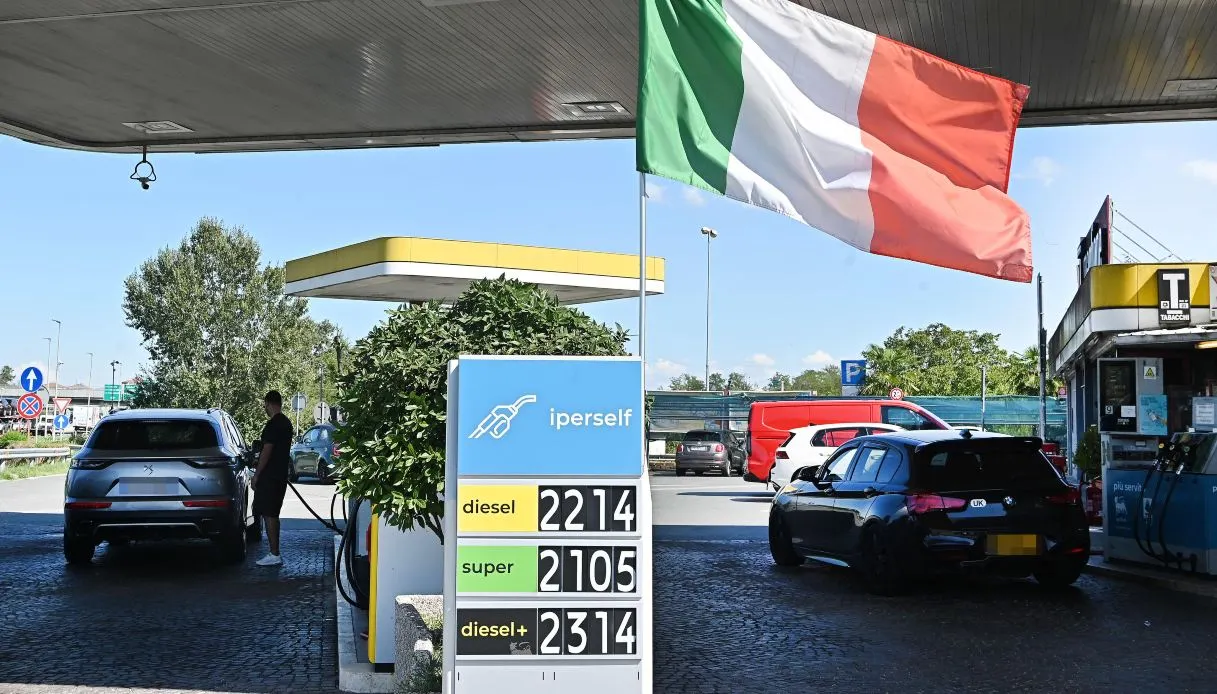
This afternoon, September 16th, a new Council of Ministers was held and decided to extend the discount on diesel excise duties until October 5th. However, the discounts will change, which will be 12.2 cents until September 26th and will be reduced to 6.1 cents until October 5th, when they will definitively expire.
Targeted aid should instead arrive from October. The Executive is thinking of a petrol bonus for families in difficulty, which includes workers and the self-employed, but not pensioners. Public employees could also be excluded and measures to reduce demand do not appear to have been taken into consideration.
The excise tax discount towards another extension
A new discount on excise duties for diesel has arrived. The Council of Ministers approved a new extension, which however actually increases the price of diesel at the pump. The new deadline is October 5, but the discounts will be reduced from the current 17.1 euro cents to:
- 12.2 cents from September 18 to 26;
- 6.1 euro cents from 26 September to 5 October.
The Executive finds itself in the difficult situation of having to move from a general discount to more targeted measures, announced for October.
The wait for the Istat data of September 22nd
On September 22, Istat is expected to publish new estimates of Italian GDP. Those for April will almost certainly be revised upwards and this could give the Government more spending capacity. The objective remains a deficit-to-GDP ratio of less than 3%, which would allow it to exit the European infringement procedure.
This in turn would unlock the possibility of making deficits in derogation to counter the energy crisis. These funds cannot be used directly to reduce excise duties, but would still represent support for Government initiatives.
October’s targeted aid
In October, the excise duty discounts should end and be replaced with a 150 euro petrol voucher. Employed and self-employed workers with an ISEE under 28 thousand euros can have it. However, pensioners will be excluded, despite pressure from Forza Italia to include them. Public employees also risk being excluded.
Meloni then returned to calling for action at a European level to combat the energy crisis, but it remains very difficult for the EU to agree to make its funds available to cut taxes in member countries.
Because prices increase despite discounts
The discounts are also seen as counterproductive by energy industry experts. Artificially cutting the price of a good increases demand for it. More demand means higher prices, making measures such as cutting excise duties counterproductive. In fact, fuel prices have never stopped increasing, even when oil was not at almost 110 dollars a barrel, as in recent days.
In this sense, the petrol voucher could slow down the increases, because it would create less demand than a general discount. However, there would be other alternatives.
Other possible measures
If demand is causing prices to rise, a fall in demand should cause them to fall. The alternative hypothesis to the reduction in excise duties is precisely measures that push people to use cars less. The options can be of various types. There are incentives, such as:
- discounted or free public transport that encourages people to move around without a car;
- more remote working to reduce traffic.
However, there are also more coercive methods, similar to those that were adopted in the 1970s, during the oil crisis:
- alternate license plates;
- Sundays walking in the city.
The ban on circulation in the city for Euro 5 diesel engines, designed to improve air quality in some particularly polluted regions, could also help in this sense.