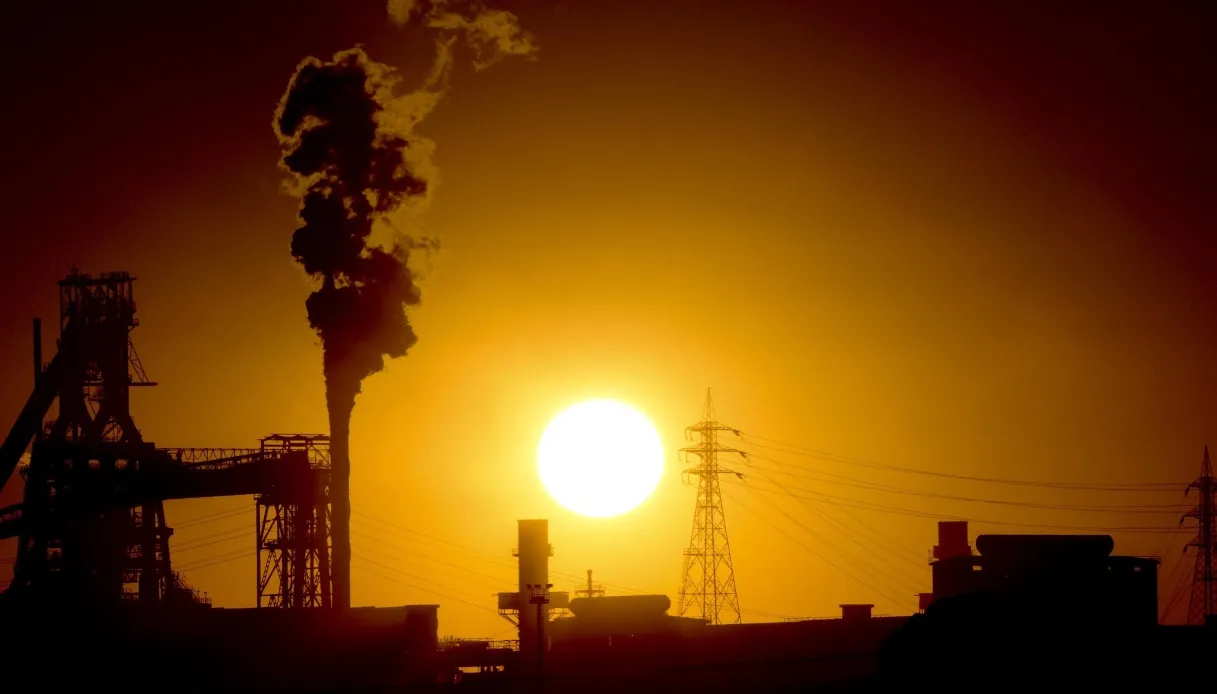
This morning, 16 September, a meeting will be held between the Government and the unions to find a way to manage the over 4,000 workers, including related industries and employees, who risk losing their jobs after the closure of the hot area of the former Ilva steelworks in Taranto. Any measures on which the two parties agree should be included in a decree that the Council of Ministers would approve in the afternoon.
In the meantime, the Government awaits the offer of the Italian consortium for the cold area of the plant, which would give a future prospect, albeit reduced compared to the current one, for the steelworks. The first official proposal could arrive at the beginning of October.
What does the Government want to do for the workers of the former Ilva
The Milan court has definitively decreed that the hot area of the former Ilva plant in Taranto, the one that produces steel starting from the raw material, must be closed by 28 October. The judges accepted the appeal of the city’s inhabitants, who have been protesting for years against the pollution caused by the steelworks.
This creates two very serious problems:
- hundreds of former Ilva employees will no longer be able to work;
- related companies will resume the layoffs of 2,500 workers.
Acciaierie d’Italia, the state company that controls the plant, has already exhausted the redundancy fund at its disposal. The employees of the hot area of Taranto therefore do not have a social safety net that can avoid their dismissal at the moment.
To find a solution, the Government convened a table with the unions on the morning of 16 September. The ideas are:
- an extraordinary redundancy fund to manage the emergency situation;
- a plan for sliding towards retirement for older workers.
Any approved ideas would be included in a law decree that would be approved by the Council of Ministers at 4.30 pm, the same one that should approve the new extension of excise duty discounts.
Because the former Ilva was closed
There are two reasons why the judges of Milan accepted the appeal of the citizens of Taranto and imposed the closure of the former Ilva hot area:
- the production of steel through blast furnaces produces too many pollutants, which have caused the anomalous cancer rate recorded in Taranto;
- There is a lot of asbestos in the plant, which puts workers at risk.
If these problems were resolved, steel production in the city could resume. Solutions, however, require time and above all a lot of money.
The offer from the Italian consortium could arrive in October
This is why the Government has been trying to sell the former Ilva for some time. The latest expression of interest, in chronological order, is that of Italian steel entrepreneurs. In Italy, in fact, there are many private steelworks, especially in the North, which however produce steel from scrap, through processes that are much less polluting than melting in blast furnaces.
This consortium could submit an offer for the cold processing area of the former Ilva in Taranto, the one in which steel is processed, not produced. According to what was reported by the Ansa news agency, the proposal could arrive at the beginning of October. The Government has also said it is willing to remain in the company with state participation to help the transition.
And the hot area?
The proposal of the Italian entrepreneurs, however, does not concern the hot area whose shutdown has been imposed. This is a problem, because relighting a deactivated blast furnace is very difficult and expensive. For years the State has been trying to sell the Taranto hot area, without success, also due to the fact that the blast furnaces will hardly be able to continue to function.
Even by clearing the area of asbestos, there is no simple way to limit emissions from a plant as old as the one in Taranto. The solution identified by the Government is to replace the blast furnaces with electric arc furnaces, which use a different raw material, Dri. The only concrete interest in Ilva’s hot area at the moment is that of the Indian Jindal, but the negotiation has been at a standstill for some time.