New data on the environment, technology and human behavior during the Middle Paleolithic have been provided by a new study published in PNAS, led by the Ethiopian archaeologist Yonas Beyene, who analyzed the deposits of the Halibee site in the Ethiopian Rift Valley, the cradle of mankind. The research focused in particular on sediments deposited around 100,000 years ago. Thousands of lithic artefacts and numerous fossil remains have been found in these sediments, including remains of fauna and partial skeletons of Homo sapiens. The conditions of deposition and conservation indicate that many finds are still in primary positions, with limited subsequent alterations.
The environment and fauna of Halibee 100,000 years ago
From an environmental point of view, sedimentological and faunal data indicate that the area was an alluvial plain influenced by the paleo-river Awash, which today flows with a different course. The context was characterized by seasonal flooding and vegetation that varied from forests to more open and arid savannah areas. The presence of fossilized plant remains and traces of combustion suggests that this was a dynamic landscape, with availability of water and biological resources distributed variably in space and time, populated and exploited by nomadic hunter-gatherer communities.
Faunal assemblages include a large variety of vertebrates, including primates, bovids, rodents, birds and reptiles. The abundance of some species, such as monkeys of the genus Colobus and semiaquatic rodents, is consistent with forested environments subject to periodic flooding, as inferred from sedimentological data. However, taphonomic analyzes (taphonomy is the discipline that deals with the study of the processes that occur to a body after death) conducted on animal remains do not show clear evidence of systematic exploitation of carcasses by humans, and many bones instead show traces of natural or carnivorous agents.
Lithic technology and nomadic habits
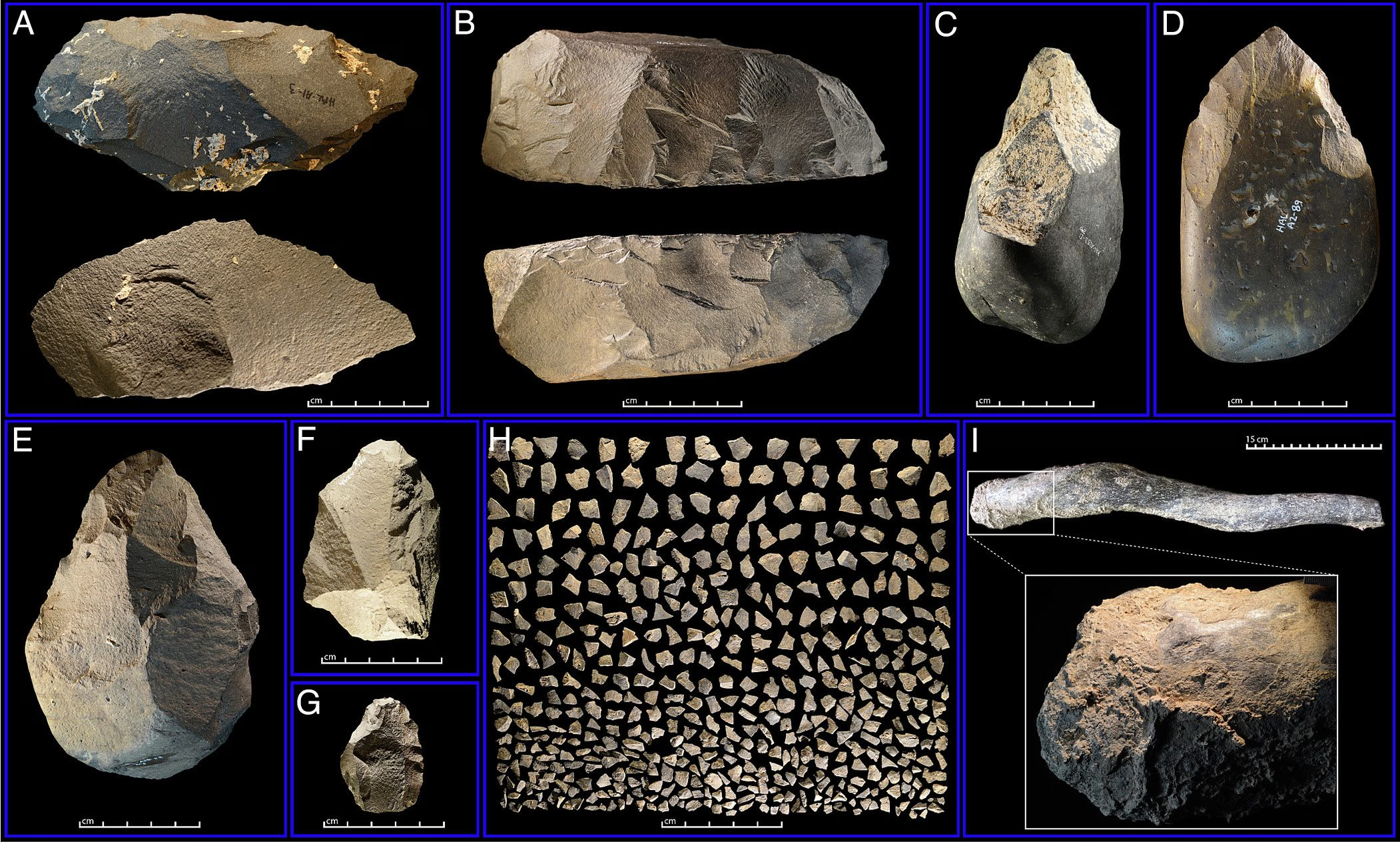
Regarding Paleolithic technology, lithic artefacts show a wide variety of raw materials, predominantly local, such as basalts and other volcanic rocks. The most widespread stone working technique is the Levallois technique, named after the French site where it was identified for the first time, which spread during the Middle Paleolithic. Retouched tools are rare, while the presence of processing waste is frequent, indicating chipping activities carried out on site. Some materials, such as obsidian, are rare and probably come from distant sources.
Archaeological evidence suggests episodic and short-term human occupations, rather than permanent settlements, consistent with the lifestyle of hunter-gatherer communities. The spatial distribution of the finds and the presence of small lithic fragments indicate good preservation of the original activities, with limited post-depositional reworking.
The human remains found are of particular importance, as they show different methods of alteration post-mortem. One skeleton appears relatively complete, suggesting rapid burial, with no evidence of direct human intervention. On the contrary, a second individual shows signs of predation by carnivores. A third set of human remains shows traces of intense burning. However, it is not possible to establish with certainty whether this is due to human activities or natural processes, considering how numerous traces of fires have been detected.
Overall, the site provides a rare example of a well-preserved open-air context of the African Middle Paleolithic. The integrated data indicates that groups of Homo sapiens they frequented seasonally flooded river environments, exploiting local resources and producing tools, without clear evidence of prolonged occupations or complex symbolic practices.