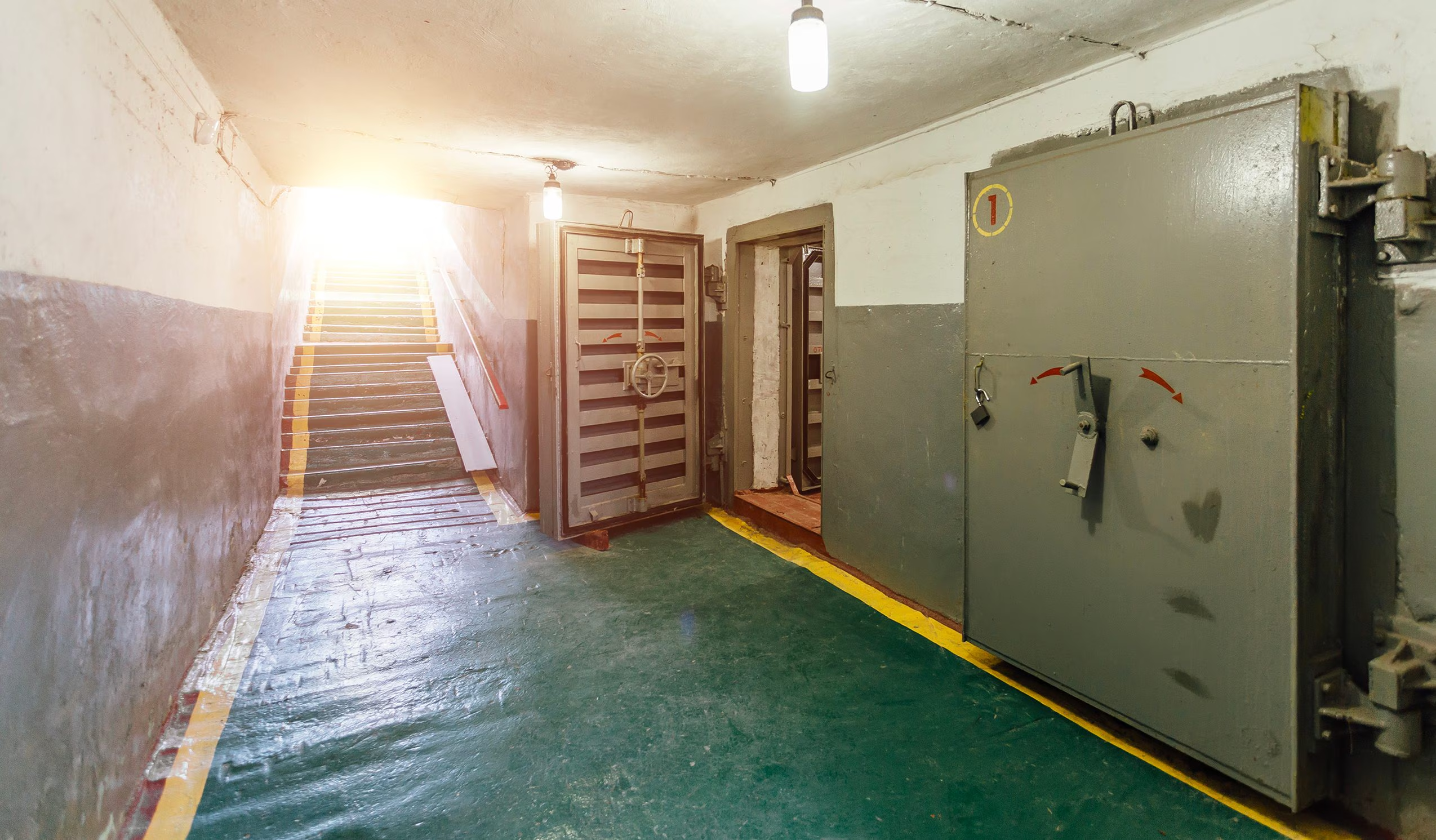
After the outbreak of the conflict between Russia and Ukraine, Finland carried out a census of all the underground bunkers present on its territory and the latest data confirms the presence of as many as 50,500 units. But why are there so many of them? As also confirmed by an in-depth study by Reutersthe answer has its roots in World War II.
Already at the time the country feared a possible Russian invasion: as soon as the conflict ended, the law required builders to build reinforced concrete bunkers underneath the buildings capable of housing all the inhabitants, similar to what also happens in Switzerland, which is the country with the most anti-atomic bunkers in the world compared to the population. This, in the space of a few years, led the nation to have over 50,000 bunkers, capable of hosting approximately 87% of the entire population. But not only that: the Government has also confirmed that 91% of these are sufficiently robust to resist attacks with conventional weapons, while 83% to resist gas releases or nuclear emergencies.
Most of these shelters are private in nature. The legislation provides for mandatory construction for buildings – or groups of buildings located on the same lot – with a useful surface area equal to or greater than 1,200 m², if they are used as a home, a permanent workplace or in any case permanently occupied. For industrial installations, however, the threshold is set at 1,500 m².
Each of these bunkers must be equipped with fans, airtight doors, stackable beds and dry toilets. In times of peace these places are often used for other activities, such as cellars for private individuals or recreational areas for public ones. But the law is clear: if necessary, they must be ready to operate as bunkers within 72 hours.









