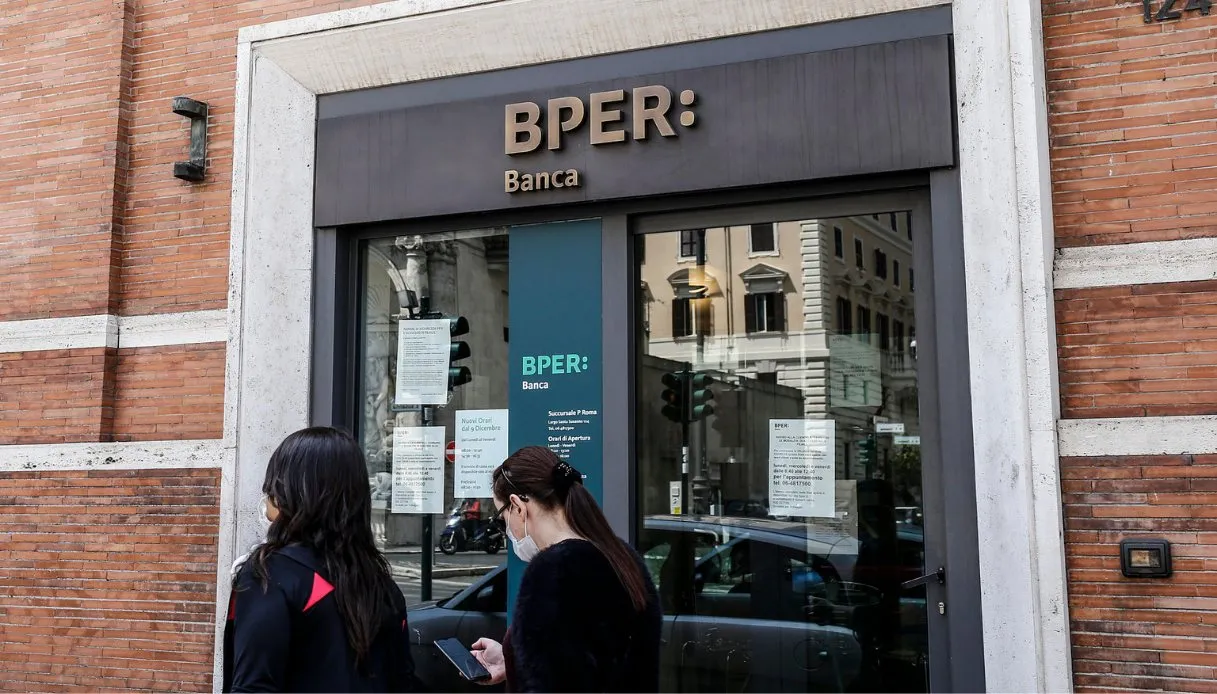
JPMorgan Chase has a potential stake of more than 10% in BPER, a share that caused a sensation due to its size, but which did not produce major effects on the Bank’s stock, which is trading down 0.75% at 11.185 euros. Upon closer inspection, the participation is largely represented by derivative instruments, which are added to a 6.74% stake held in shares with voting rights, therefore only this fraction is capable of impacting the governance of the Institute. The potential participation, however, testifies to the trust that the investment bank has towards the Institute, which has come to the fore in the field of banking risk with the acquisition of Popolare di Sondrio.
Participation in BPER
From the latest Consob update on significant shareholdings, it emerges that JPMorgan Chase has a potential shareholding of 10.342% in BPER Banca. The participation, updated to 3 March 2026, is made up of 6.740% of shares with voting rights, 0.050% are convertible bonds and rights with no expiry date, to which are added other long positions (derivative instruments): 0.104% resulting from the possession of Call Options with expiry date 02/08/2027 and Put Options with expiry date 18/12/2026; 3.448% in Equity Swaps with maturities between 08/05/2026 and 09/09/2032, Call Options with maturities between 21/12/2028 and 16/03/2029 and Put Options with maturities between 21/12/2028 and 16/03/2029.
The reasons for possession
In communications to Consob on the intentions relating to exceeding the 10% quota, the US investment bank explained that the acquisition was financed using the usual sources of capital and financing. “The acquisition of voting rights – explained JP Morgan – is related to the provision of liquidity, exposure or hedging resulting from transactions with clients on cash products (including shares and ETFs) or derivatives (including options, swaps and futures), carried out both on the regulated market (stock exchange) and on the non-regulated market (over the counter)”.
No intention of taking control
JPMorgan also said that it acted alone, without any agreements with other parties, and that it does not intend to acquire control or otherwise influence the management of the company, but may buy and sell shares as necessary, to manage the risk associated with transactions concluded with customers or to satisfy customer demand. This possibility is linked to the ways in which it chooses, from time to time, to cover customer transactions.